Astable Multivibrator - Answers to Questions
34K views · May 31, 2023 · People & Blogs

Comments · 83
@GGgenerals · 2 years ago
The best teacher in the world.<br>we need more man like you that explains with simple words.
22
@Calm142 · 2 years ago
At the 5, 10 and 15 volts explanation I was like this is some bull!! Then I grab my breadboard and surely enough hes right.. great video
11
@shahraj1918 · 2 years ago
Perhaps the best explanation across YouTube for transistorised astable multivibrator.👏👏
8
@benjaminrich9396 · 2 years ago
This was a superb video. It beggars belief that given the quality of your content you don't have more subscribers.
7
@kabandajamir9844 · 2 years ago
The world's best teacher thanks sir nice illustrations and explanation
8
@NeilsNonsense · 2 years ago
By far the greatest video I've seen on YouTube for this circuit - and I've watched quite a few! Doing it from first principles was the key. Many thanks!
4
@dougfoster445 · 2 years ago
Te best astable multivibrator explanation on the internet. Love your thoroughness and repeating parts multiple times. Perfect explanation. Wish you had online courses for more circuits!
25
@heitian_boyi · 2 months ago
You are god-sent, seriously. I've watched so many explanations about the astable multivibrator, but it's only after watching your video that I finally start to understand things. I love how you start from basic elements, explaining how small changes in the circuits affect things, which helps later to understand how it all works together. 👏 What a brilliant teacher you are!
@petopeter4832 · 2 years ago
brilliant....greetings from Slovakia,sir!
5
@mikesale8155 · 2 years ago
Brilliant explanation. And entertaining. I wish I’d had you as my tutor in the 1980’s when I first studied this circuit.
2
@köpek_jake · 2 years ago
My brain has short circuited while i listening.İ could see even some sparks.
3
@tensor131 · 2 years ago
brilliant thank you. That idea that a discharged cap is effectively a short and a charged cap is effectively an open circuit ... never thought of that before .. such a powerful idea thank you.
1
Up next

AC Basics Capacitors in AC Circuits
Vocademy - Electronics Technology · 61K views

What is Multivibrator ? Astable, Monostable and Bistable Multivibrators Explained
ALL ABOUT ELECTRONICS · 573K views

Capacitors Part 1 - Introduction
Vocademy - Electronics Technology · 57K views

AC Basics Capacitors and Inductors in Parallel
Vocademy - Electronics Technology · 19K views

Bistable Multivibrator circuit (Flip-Flop) explained in detail | What is symmetrical triggering?
HK CircuitEdu · 12K views

Astable Multivibrator - Solid-state Devices and Analog Circuits - Day 6, Part 5
Vocademy - Electronics Technology · 24K views

Isolation Transformers Answers to Questions
Vocademy - Electronics Technology · 27K views

Zener Diodes
Vocademy - Electronics Technology · 50K views

Detailed Walkthrough - Astable Multivibrator - Oscillator - Simply Put
Simply Put · 21K views

AC Basics Why AC Circuits have a Phase Angle
Vocademy - Electronics Technology · 65K views

Transistor Basics - Solid-state Devices and Analog Circuits - Day 4, Part 1
Vocademy - Electronics Technology · 17K views

Grounded Confusion Mark II Answers to Questions
Vocademy - Electronics Technology · 5.5K views

Inductors Part 1 - Introduction
Vocademy - Electronics Technology · 41K views
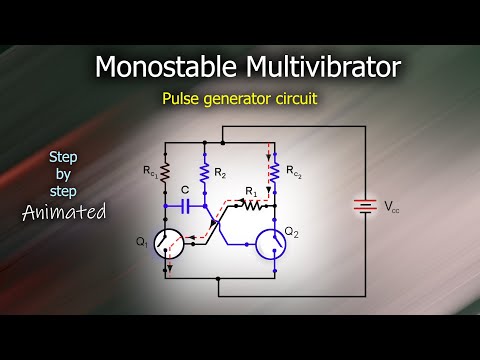
Monostable Multivibrator circuit explained in detail | Using BJT
HK CircuitEdu · 15K views

Small Signal Amplifiers
Vocademy - Electronics Technology · 777K views
Classic Circuits You Should Know: Astable Multivibrator
learnelectronics · 113K views

What is Saturation
Vocademy - Electronics Technology · 80K views

EEVblog 1771 - A Tricky OpAmp Exam Question
EEVblog · 292K views

Voltage Dividers
Vocademy - Electronics Technology · 83K views

The Astable Multivibrator
Skinny R&D · 18K views
Why Put A Capacitor Across The Diode? Here's Why!
Mr Carlson's Lab · 1.2M views
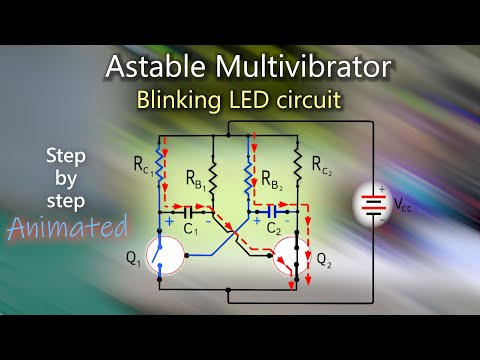
Astable Multivibrator circuit explained in detail | Using BJT
HK CircuitEdu · 62K views

Coupling and Decoupling Capacitors
Vocademy - Electronics Technology · 83K views

EEVblog #279 - How NOT To Blow Up Your Oscilloscope!
EEVblog · 1.1M views

WHY Put A Coil Across The Capacitor? Here's Why!
Mr Carlson's Lab · 296K views

7 Capacitors You Should NEVER Use in a Product
Predictable Designs with John Teel · 80K views