AC Basics Capacitors and Inductors in Parallel
19K views · Jun 30, 2023 · People & Blogs

Comments · 50
@ryanguit · 1 year ago
I really feel that you explained the "why" perfectly.
1
@bacasholimited2617 · 3 weeks ago
Awesome 👍🏽
@jboy4real · 3 years ago
Kindly do a practical video on EMI filter for ac mains
3
@BharatGyanee · 2 years ago
U r true teacher of electronic. My best wishes from India .
2
@vaakdemandante8772 · 1 year ago (edited)
Why in an ideal situation no current flow is happening is because the oscillations between L and C "clog the wires" so to speak. They form a looping/sloshing current that does carry and contain all the energy of the system in a standing wave. A standing wave does not allow for current to pass because it traps it within itself.<br><br>So the explanation for the infinite impedance is that the LC circuit @ resonant frequency creates a standing wave that takes in all the energy of the system.<br><br>That is what you observe in the square-wave source with the ringing in liquid nitrogen - the standing wave just persist indefinitely. In non ideal circuits in normal conditions the additional resistance impedes creation of the perfect standing wave, so some of the energy both bleeds through and gets dissipated through heat.<br><br>You are a great teacher, because of the clear though in-depth explanations that inspire me to think about those topics, even though I have only very basic formal education about electricity. You make complex topics accessible to the lay people, which is a masterful skill for a teacher to have.
2
@DekaTech · 10 months ago
You are the best! Congratulations
1
@rabilkurniawan8099 · 1 year ago
Once again, thank you very much Mr. Love you from indonesua
1
@bradleyr4451 · 2 years ago
Thanks these are so well done. at <a href="https://www.youtube.com/watch?v=VfWOXcCUuqs&t=1140">19:00</a> this is the reality of digital circuits at high speed, used to test TTL circuits all day and you look at pins of the ICs and what should be a square wave is like what you show, because every circuit line has L/C/R in there so this is a very important concept.
2
@patrickfox-roberts7528 · 1 year ago
I always preferred 'CIVIL' to indicate leading/lagging currents in Cs and Ls eg Cap I leads V, V leads I in L
1
@piggyjuice9485 · 11 months ago
The reason you get infinite impedance is because XL is equal and opposite to XC so the denominator tends to zero.
1
@mikejones-vd3fg · 1 year ago
awesome
@pboston6RR · 2 years ago
Thanks. This helps a little when I’m trying to stop the signal reflectance in model railroad control systems. There are places along the track where the signal meets the reflected signal and we have a result of NO signal.
2
Up next

AC Basics Inductors and Capacitors in Series
Vocademy - Electronics Technology · 7.5K views

AC Basics Capacitors in AC Circuits
Vocademy - Electronics Technology · 61K views

WHY Put A Coil Across The Capacitor? Here's Why!
Mr Carlson's Lab · 296K views

How Inverters Turn Battery Power into AC
Prof MAD · 337K views

Inductors Part 1 - Introduction
Vocademy - Electronics Technology · 41K views
Electronic Filters - Vocademy
Vocademy - Electronics Technology · 37K views

EEVblog 1771 - A Tricky OpAmp Exam Question
EEVblog · 292K views

AC Basics Inductors in AC Circuits
Vocademy - Electronics Technology · 23K views

Capacitors Part 1 - Introduction
Vocademy - Electronics Technology · 57K views
Why Put A Capacitor Across The Diode? Here's Why!
Mr Carlson's Lab · 1.2M views

AC Basics Why AC Circuits have a Phase Angle
Vocademy - Electronics Technology · 65K views

7 Capacitors You Should NEVER Use in a Product
Predictable Designs with John Teel · 80K views

Why Is Coax 50 Ohms? The Real Reason Explained
Telecom Training · 127K views

Why are Capacitors Used in almost EVERY Circuit?
Math and Science · 129K views

Voltage Dividers
Vocademy - Electronics Technology · 83K views
Capacitors Part 5 -Phase
Vocademy - Electronics Technology · 13K views

Why is Electrical Power Transmitted at High Voltage AC and Three Phases
Vocademy - Electronics Technology · 11K views
Capacitors Explained - The basics how capacitors work working principle
The Engineering Mindset · 10M views

Resistor vs Capacitor vs Inductor — Why They Behave So Differently ?
Prof MAD · 16K views

Lecture 1: Introduction to Power Electronics
MIT OpenCourseWare · 2.5M views

What are Resistance Reactance Impedance
Prof MAD · 1.8M views
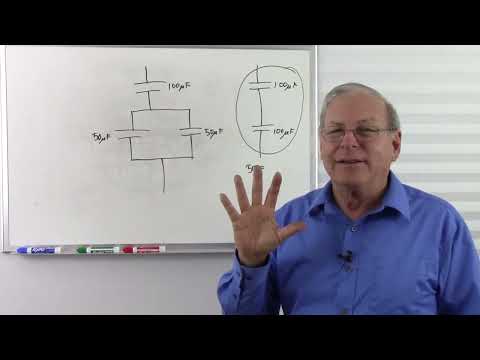
Capacitors Part 3 - Capacitors in Series and Parallel
Vocademy - Electronics Technology · 14K views

The Wire Is Not Where Electricity Flows
The Roger Physics · 27K views

The Hidden Power of Inductors — Why Coils Resist Change!
Prof MAD · 143K views

How AC Circuits Really Work — The Geometry Hidden Inside Every Equation
Prof MAD · 61K views