7 Capacitors You Should NEVER Use in a Product
126K views · Sep 24, 2026 · Science & Technology

Comments · 242
@PredictableDesigns · 2 months ago · pinned
Capacitor Swap List: <a href="https://predictabledesigns.com/capacitor-swap-list-yt1">https://predictabledesigns.com/capacitor-swap-list-yt1</a>
9
@Ingaiza_da · 1 month ago
This channel is a goldmine
50
@nckofalltrades · 1 month ago
Not me watching/listening to this while hand soldering 01005 components on iphones 😅
37
@steverobbins4872 · 1 month ago (edited)
Here's a fun cap story. Back in 2002 I was designing a Bit Error Rate Tester (BERT) that had to go up to 43 Gbps. This was achieved by aggregating 17 lanes, each at 2.5 Gbps. Each lane needed a dedicated PLL to produce its clock from a lower reference frequency. Each PLL circuit had a low-noise LDO tthat supplied voltage to the VCO, and the LDO data sheet (I think it was Micrel) said to use a 1uF cap at it's output, and I'm pretty sure it said ceramics were OK. I think I used X7R, and the voltage was very stable.<br>Anyway, I started noticing my eye patterns suddenly became cloudy for no apparent reason. It seemed random, until I noticed that it happened reliably when I lightly tapped the side of the chassis with a screw driver. Long story short, it was piezoelectric effect. It shifted the supply voltage to the VCO by around 10 microvolts, which pushed its output frequency ever so slightly. It only took a few microseconds for feedback to correct it, but that's a lot of bit periods at these frequencies, and the phase errors accumulated. I replaced the ceramic caps with plastic (I don't remember what kind) and the problem went away.
21
@davidpacholok8935 · 1 month ago
Great video John! <br>Here's an electrolytic fire for you. 1n 1992 I designed a solid state neon power supply. <br>Standard FWB and 330 uf 200 volt 105C electrolytic filter. This was sourced from Sprague as primary and a Japanese company as secondary. After 2 years of production, about 250K units we a few fires that were traced to open neutral in electric service or possibly a huge Long ac voltage surge.<br>None of the fires involved Sprague units which had the pressure vent on the side. The Japanese units were 3 petal top vents. So during the overvoltage the Al2O3 dielectric failed causing capacitor overheat. This softened the V0 rated fire retarded plastic case which sat 1.5mm above capacitor top. So when the Japanese caps failed they blew their guts out the top through the softened plastic. The organic electrolyte soaked paper ignited. Basically like a Flaming Party Favor. I was able to reproduce this failure under out fume hood in the presence of two employees of the Japanese company. One was a state side engineer the other the sales rep. Eyes big as saucers and Jaws near dropped to the floor.<br>So we found another 2nd supplier CDE that also used a side vent which kept the guts inside while venting.
29
@timun4493 · 1 month ago (edited)
I will admit that I mostly watch your channel for the opportunity to nit-pick at your overgeneralizations rather than expecting to hear anything new. But that is still enjoyable and educational so I guess there is nothing wrong the right kind of rage-bait :)
18
@snakesocks · 1 month ago
These are the kinda insights that would take 10yrs to learn yourself the hard way.
7
@eIektrinis · 1 month ago
I've had a fire due to tantalum. It was a small cap on 5V rail in old 286 PC, but it threw a fire half a meter high.
37
@woddynsk · 1 month ago
I encountered most of these issues along the way. Ultimately, I abandoned tantalum capacitors entirely. I also stopped using linear regulators that aren't compatible with ceramic capacitors (except for ultra-low-cost designs). However, I still use Y5V capacitors, but with a generous margin—using 2.2µF instead of the standard 0.1µF.
12
@OntiCastro7 · 1 month ago
Another thing about class 2 mlccs is that their temperature variation gets worse with DC bias
7
@FlyingShotsman · 1 month ago
Re ceramic cap microphonics, it's absolutely real. I designed a switcher several years ago that dropped a 12V rail down to 5V at around 6A. Something on the input side caused an oscillation on the prototype board, and the input caps made a squealing noise that rose and fell in pitch with changes in input voltage. It was so loud that you could hear it across the room.
9
@embeddedautomation2464 · 1 month ago
I learned something new today about the C0G capacitors from you today! Great video, John!
5
Up next

9 Power Supply Design Rules to NEVER Break
Predictable Designs with John Teel · 91K views

7 Batteries You Should NEVER Use in a Product
Predictable Designs with John Teel · 50K views

9 Voltage Regulators You Should NEVER Use in Your Product
Predictable Designs with John Teel · 58K views

Every Type of Capacitor for Power Electronics Compared & Analysed
ElectrArc240 · 315K views

How To Remove Electrolytic Capacitors - 3 Great Methods
Mr SolderFix · 54K views

10 Components You Should NEVER Use in a Product
Predictable Designs with John Teel · 71K views

9 Reasons Your 3D Printed Enclosure Can NEVER Be Mass Produced
Predictable Designs with John Teel · 88K views

9 PCB Grounding Rules to NEVER Break
Predictable Designs with John Teel · 61K views

9 Firmware Shortcuts You Should NEVER Ship in a Product
Predictable Designs with John Teel · 71K views

Choosing Capacitors to Recap Old Electronics
JDW · 128K views

7 Things You MUST Do Before Building Your First 100 Units
Predictable Designs with John Teel · 22K views
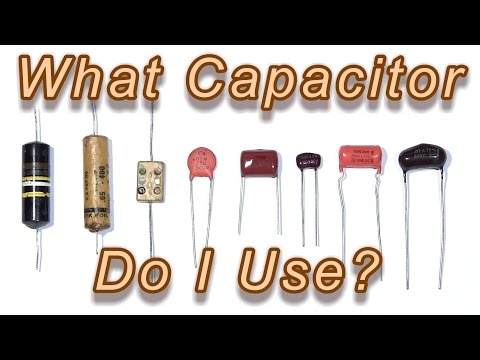
Which Capacitor Do I Use? Tech Tips Tuesday
Mr Carlson's Lab · 1M views

9 AliExpress Components You Should NEVER Use in a Product
Predictable Designs with John Teel · 51K views

Everything is Better: GaN vs Silicon Power Supplies
ElectrArc240 · 822K views

What Happened to Litz Wire? The Strange Wire That Made Radio Coils More Efficient
Fallen America FM · 53K views

The most misunderstood concept in decoupling
Hans Rosenberg · 366K views

EEVblog 1771 - A Tricky OpAmp Exam Question
EEVblog · 361K views

9 Schematic Rules to NEVER Break
Predictable Designs with John Teel · 359K views

10 Technologies You Should NEVER Use in a Product
Predictable Designs with John Teel · 140K views

7 Protection Circuits You Should NEVER Ship a Product Without
Predictable Designs with John Teel · 244K views