The Fortified Edge of Europe (800–500 BC)
12K views · Jun 4, 2026 · Education

Comments · 36
@Ruazzzer67 · 3 months ago · pinned
These videos are very well done - absolutely pleasure to watch
10
@EricAnderson-x9f · 2 months ago
I love where this is going. Brilliant
1
@SarahTheRebelOfficial · 2 months ago
In all the years I have enjoyed learning history, I have never seen the pattern of these settlements mapped out like this. Thank you!
@jhonfisher8910 · 3 months ago
Defense is never excessive. Prevention is better than cure.
4
@rvaviima · 2 months ago
I love the huge number of picture examples from sites I've never heard about. Everyone knows Athens and Rome, but there are dozens of important and pictoresque archeological sites around Europe that don't get the attention they deserve.
1
@prototropo · 3 months ago
I’m especially fascinated by your these Atlantic coastal communities, which might have been where the first, or oldest Europeans settled. I think my ancestry starts there.
1
@LewisPulsipher · 3 months ago
Didn't these hill forts exist all over Britain and France and Iberia? That is, not just along the coast.
17
@dancefeast · 3 months ago
Forts indeed existed all over Britain and France, and indeed as far east as 2,500 miles east of Moscow. A promontory saved work because it needed a wall only across the neck, but inland locations as well would sometimes have natural cliffs, rivers, or lakes which saved some of the work of surrounding the fort with walls. There was nothing unique about the Atlantic coast of Europe as far as hilllforts are concerned.<br><br>This video considers the walls of the forts to be for defense. I agree, indeed it seems obvious they are for defense. But some scholars say that there is no evidence of fighting, such as dropped weapons or skeletons with bashed in skulls in the ditch below the walls. To understand battle at a hillfort, it is helpful to consider the fort of Alesia in France, which was taken by Julius Caesar.. Walls don't keep out attackers by themselves, they act as force multipliers, so the attackers must outnumber the defenders by some ratio (5 to 1 in modern war) in order to prevail. That is the defenders' advantage. The attackers advantage is that each set of defenders is defending their own fort, while the raiding party can concentrate all their force on one fort. Thus the raiding party can have the 5 to 1 numerical advantage they need. The attacker will win this battle, but not quickly -- in effect they besiege the fort. In the time the siege takes, the warriors of a neighboring hillfort, if they are allies, can come to the aid of the attacked fort. As more and more allies arrive, they equal and then surpass the raiding party in numbers. The attackers are trapped between the defenders within the fort (who sally forth to fight, but can duck back inside as needed), and the arriving allies. At the fort of Alesia, Caesar built a double wall around the fort -- the inner wall served to keep the Gauls withing the fort in, while the outer wall served to keep the arriving allies out. Caesar won that battle. It has been noted, and was mentioned in this video, that each hillfort usually had another hillfort within view. Perhaps they used beacons, or smoke signals, to send the request for aid. Against the mighty Roman army, the Gauls had no choice to make Britain their fort, from which they could sally forth across the channel. Caesar tried to take Britain, but failed. Based on this understanding of how hillfort walls functioned to defend the fort, we do not expect to find a lot of skeletons in the ditch below the walls. The decisive battle would take place some distance outside the fort, between the defenders, the attackers, and the arriving allies. It would be suicidal for the attackers to have that battle take place under the shadow of the fort's walls.
2
@mariaBEE-o9k2q · 3 weeks ago
Very good
@cdtv3602 · 3 months ago
<a href="https://www.youtube.com/watch?v=tw8VDseSnfY&t=260">4:20</a> SPOTTED => horse 🐴
3
@missopowers · 3 months ago
Dun Aenghasa on Inis Mor fits the description also.
3
@JoesWebPresence · 3 months ago
You could have continued around the UK, with Dumbarton and Dunottar fitting the bill neatly. Tintagel too. The Tay and Boyne valleys have similar, but much older structures, with timelines as far back as 6,000BC. Warren field near Crathes castle in Aberdeenshire has the oldest calendar known to man, with 13 pits dug to track the phases of the moon, which show continuous calibration and repair from 8,000BC to 4,000BC. This calendar focused on the phases of the moon, and it was soon realised that it could accurately predict the tides. Most stone circles can be used for this purpose, and many now think they may have been important assets for sea faring cultures to create and maintain, long before they were important for agriculture. There is no evidence for example, that agriculture had reached Aberdeenshire when these calendar pits were active.<br>Can you think of any other structure on Earth which was in continuous use, for it's original purpose, for four thousand years? That is no disperate band of huter gatherers clinging on to the edge of Europe. That is a cultural continuity which is simply unknown to us in our present age.
3
Up next
The Bronze Age Ended. Europe Kept Going. (1200–800 BC)
Mapped History · 2.7K views
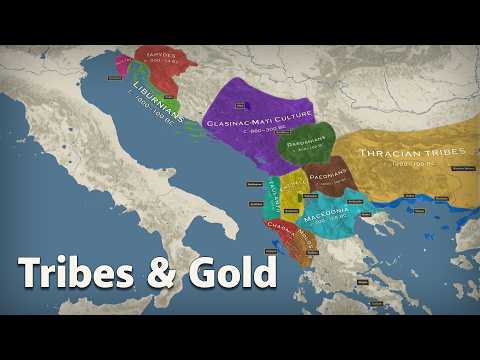
The Balkans Before Alexander (800–500 BC)
Mapped History · 53K views

The First City-States (3100–2334 BC)
Mapped History · 48K views

How Europe Became Settled (7000–3100 BC)
Mapped History · 14K views

Stonehenge: Its Altar Stone Came From Scotland, Not Wales
The Slow Mystery · 69 views
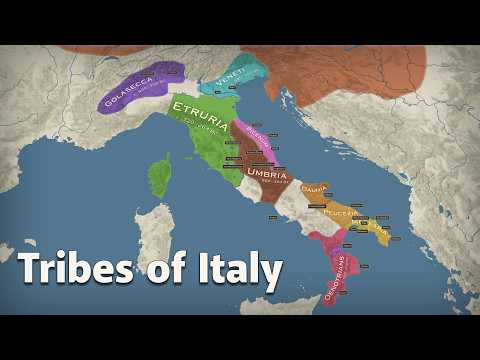
Ancient Italy Before Rome Took Over (800–500 BC)
Mapped History · 100K views

How Metal Connected Bronze Age Europe (2100–1600 BC)
Mapped History · 5K views

This Fossil Is Forcing A Rewrite Of Human History
New Scientist and Ella Al-Shamahi · 1M views

The Fall of the Old Kingdom (2345–2160 BC)
Mapped History · 7.4K views

What Did People in Ancient Rome Actually Do All Day?
Rome Unscrolled and Before Civilization · 1.3M views

Europe's First Networks (3100-2100 BC) - Stone Landscapes to Copper Worlds
Mapped History · 6.6K views
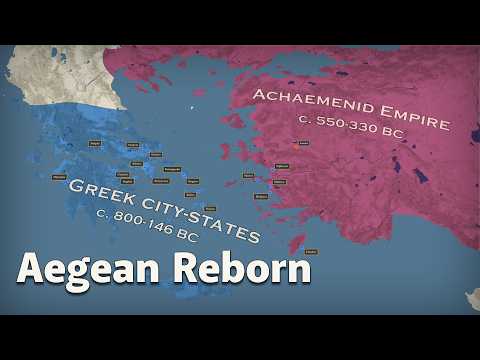
The Greek World Rises Again (800–500 BC)
Mapped History · 8.3K views

Trump Just Offered Canada a Deal — Carney’s Response Changes Everything
space zone · 77K views

300 Million Years Ago: When INSECTS Were Bigger Than Us
PlanetGeo · 338K views

The Truth About the Black Irish: Ireland’s Hidden DNA
Evo Inception · 1.6M views

The Age of Uruk (3800–3100 BC)
Mapped History · 40K views

The Sumerian Restoration (2154–2004 BC)
Mapped History · 10K views
What They Never Tell You About the Orcadians
A History of Peoples · 361K views

Why Wales Is Sitting On The Most Valuable Land In Human History
geography · 241K views

Alexander III Had A Disturbing Plan To ‘Fix’ His Son”
History Exposé · 30K views

A Roman battlefield lies right next to this highway
Sand der Zeit · 159K views

The Age of the Pyramids (2890–2490 BC)
Mapped History · 11K views

The Lombards: How the Germanic Tribes Became Italians
VÖLKER DER WELT · 33K views

The Oxus Civilization: The Lost Civilization you've never heard of
History Chronarch · 603 views

30 Insane Geography Facts About Netherlands
Coggnize · 176K views

Orkney Wasn't Copying Stonehenge. Stonehenge Was Copying Orkney
UK_Discoveries and 3 more · 429 views