The End of Haber Bosch
324K views · Jun 21, 2023 · Science & Technology

Comments · 1.3K
@ACSReactions · 3 years ago · pinned
In the video we said we’d come back to this later, but then we cut it, so here it is as a comment: the next step in killing Haber-Bosch is figuring out how to get protons and electrons from water without causing all hell to break loose in the reaction vessel – and the same team that published the work described in this video thinks they can make it happen at the anode of this same device: <a href="https://www.nature.com/articles/s41586-022-05108-y">https://www.nature.com/articles/s41586-022-05108-y</a>
209
@majorfallacy5926 · 3 years ago
I remember in my first chemistry class the prof told us that if any of us find a process that can replace haber bosch, we should contact him for a research partnership cause that's an instant nobel price
620
@maxmusterman3371 · 3 years ago
Now we only need tons of Trihexyltetradecylphosphonium and Bis(trifluoromethylsulfonyl)imide, which are propably both a breeze to make
679
@xXYannuschXx · 3 years ago
For a process that feeds 50% of the world, 1% of the global energy production and 2% of the CO2 emissions dont sound really bad.<br>And we already have means of fixing renewable energies fluctions for decades: pumped storage power plants.
23
@henryrroland · 3 years ago
<a href="https://www.youtube.com/watch?v=dFcaEUj43OY&t=214">3:34</a> Actually... This temperature is required because of kinetics. The reaction goes in favor of NH₃ when the temperature is low, but the time to produce increases... So it has a temperature optimal spot, where the thermodynamics is diminished, but the kinetics compensate for it
203
@theodoreshasta7846 · 3 years ago
One has to be skeptical of a new process which purports to be such an enormous improvement over Haber-Bosch. I admit to being beyond my depth and hope every bit of it is true. We need all the help we can get.
59
@alyoshakaramazov8469 · 3 years ago
When I started as a chemist, reading German was mandatory. I was an analytical chemist in an agricultural lab, so nitrogen chemistry was a big deal in my earliest days as a lab rat. A lot of the procedures we had to follow were only written in German. Well, that was 40 years ago. Maybe things are different now. Fortunately, technical German is not difficult for English speaking chemists.
112
@Chrisi313 · 1 year ago
Isaac Asimov once wrote:<br>"We may be able to substitute nuclear power for coal power, and plastics for wood, and yeast for meat, and friendliness for isolation—but for phosphorus there is neither substitute nor replacement."
12
@BackYardScience2000 · 3 years ago
The story of Fritz Haber is one of the most tragic, yet gut wrenching in history. Veritasium has a great video on him and this process that I highly recommend watching.
264
@engineerncook6138 · 3 years ago (edited)
<a href="https://www.youtube.com/watch?v=dFcaEUj43OY&t=762">12:42</a> "It's tiny" "Farmers could make it by themselves on demand." You have only shown the reaction cell and a backpressure regulator, not the containers to store the reactants, the pumps and compressors to get the reactants to 15atm, the equipment to separate the NH3 and recycle the electrolyte and the catalyst. Sounds like it is a membrane process which does not lend itself to economies of scale. How much NH3 does the reaction cell shown make per day? Show me a heat and material balance for a complete process from raw materials to finished products. As a practicing chemical engineer, I spent much of 40 years trying to scale-up reactions in test-tubes from a chemist's lab bench to commercial scale processes The chemists always insisted scale-up would be "simple". Scale-up is never simple. 1 in 100 of the processes I worked on made it into the real world. I very much appreciate the need for replacing Haber-Bosch, but proclamations about scale-up should be left to the AIChE not the ACS.
176
@johncgibson4720 · 2 years ago
Wow, great episode. Every bio major immediately goes into the bacteria route when proton shuttle comes up.
4
@MrMoriarty100 · 2 years ago
In other words one burns lithium in nitrogen to form lithium nitride. Then add water to form ammonia and lithium hydroxide, then dry, melt and electrolyse the lithium hydroxide to regenerate the lithium. This last stage is where the energy debt for fixing nitrogen, the metaphorical piper has to be paid.
5
Up next

The Man Who Killed Millions and Saved Billions (Clean Version)
Veritasium · 10M views

This Video is About Electroadhesion.
Reactions · 264K views

Does Toyota Know Something That We Don’t?
Reactions · 375K views

The Incredible Discovery of the LEAST Reactive Elements (The Noble Gases)
Chemistorian · 599K views

Why the future of shipping is sails (again)
Simon Clark · 589K views

The Haber Process
Curly Arrow Chemistry · 73K views

AlphaFold - The Most Useful Thing AI Has Ever Done
Veritasium · 10M views

Every Other Video About Color is Wrong
Reactions · 97K views

Scientists Finally Worked Out Why Fish Are Growing Legs
BlackWater · 838K views

Can this magic fuel clean up the shipping industry?
DW Planet A · 404K views
Inside The Startup Reinventing The $6 Trillion Chemical Manufacturing Industry
Y Combinator · 284K views

China Found Something Better Than Oil
Maxinomics · 5.9M views

The Most Important Technological Breakthrough of our Lifetime
Hoocho · 37K views

INSIDE a Nuclear Reactor Core - Smarter Every Day 317
SmarterEveryDay · 1.5M views

The Element Chemists Couldn't Control for 70 years
Chemistorian · 450K views

Making ammonia from its elements (Haber-Bosch)
Marb's lab · 28K views
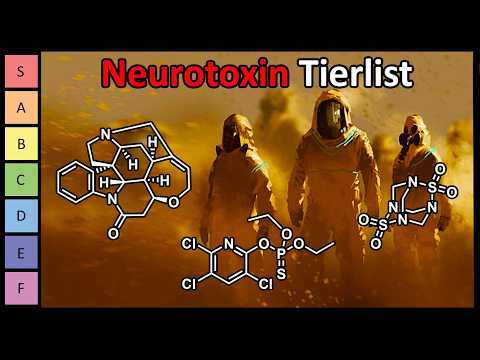
Which Neurotoxin is the Worst? (Neurotoxin Lore)
That Chemist · 1.5M views

What is an Electron?
Reactions · 300K views

Electricity Does Not "Split" H₂O. And That's VERY Useful.
NightHawkInLight · 956K views

The Day Xenon Broke the Rules (The Discovery of the First Noble Gas COMPOUND)
Chemistorian · 810K views

It's Happening - Europe is Building an Impossible Fusion Reactor
Dr Ben Miles · 3.1M views
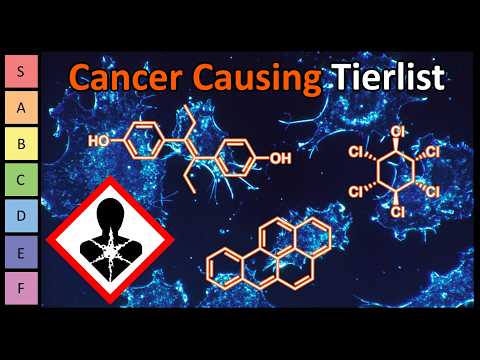
Which Chemical is the Worst Carcinogen?
That Chemist · 1.8M views

THE STRONGEST ACID IN THE WORLD Fluoroantimonic acid
ChemicalForce · 8M views

The Closest Thing We Have to Alien Technology
Veritasium · 59M views

The Professor Who Taught People How To Think (1962)
ABC Science and ABC Australia · 2.9M views

Making Rocket Fuel by Mixing Bleach & Ammonia
Amateur Chemistry · 377K views