In 1857, workmen on the Isle of Lewis cut away five feet of peat from around a ring of grey stones, and realised they had never really seen the monument at all. When archaeologists worked out the age of the Calanais (Callanish) Standing Stones, the answer put Stonehenge in an awkward position. What else was the peat hiding?
In this video:
• Men turned to stone: the first accounts, from the 1680s and from Martin Martin in 1703
• Sir James Matheson's peat clearance, and the tomb found at the foot of the central stone
• A ploughed field under the monument, and why there are no clean radiocarbon dates
• The Old Woman of the Moors, and the moon every 18.6 years: what is shown and what is not
• A buried ring of about a dozen stones found by magnetometry in 2019, with a lightning strike at its centre
• How Calanais really compares with Stonehenge: the sarsens, the bluestones, and the Altar Stone that came from Scotland
Chapters:
0:00 Five Feet of Peat
2:00 The Version on the Boards
4:06 Men Turned to Stone
6:16 The Landowner's Spades
8:52 A Field Before the Stones
11:41 The Old Woman of the Moors
15:17 The Tomb That Came Later
17:56 The Bog Swallows Everything
20:14 The Circle Under the Heather
23:47 Struck by Lightning
26:38 Older Than the Great Circle
30:18 Where to Stand
Sources:
• Historic Environment Scotland, Calanais Standing Stones: History and stories; Statement of Significance (2018, updated 2025); Scheduled Monument SM90054
• Western Isles Historic Environment Record, MWE4156
• Ashmore, P. (2016), Calanais Survey and Excavation 1979-88, Historic Environment Scotland
• Matheson, J. (1862), "Notice of a Chamber recently excavated in the Stone Circle of Callernish", Proceedings of the Society of Antiquaries of Scotland 3
• Martin, M. (1703), A Description of the Western Islands of Scotland
• Urras nan Tursachan (Calanais Visitor Centre); Sheridan, A., "Mysteries within the Calanais chamber tomb"
• Bates, R. et al. (2019), Geophysical Investigation of the Neolithic Calanais Landscape, Remote Sensing 11(24): 2975; University of St Andrews news release (23 Dec 2019); Current Archaeology (7 Feb 2020)
• English Heritage, Stonehenge: history; Darvill, T. et al. (2012), Antiquity 86; Parker Pearson, M. et al. (2021), Antiquity; Willis, C. et al. (2016), Antiquity
• Clarke, A. et al. (2024), A Scottish provenance for the Altar Stone of Stonehenge, Nature 632; Bevins, R. et al. (2024), Journal of Archaeological Science: Reports
• Higginbottom, G. and Clay, R. (2016), Journal of Archaeological Science: Reports
• University of Leicester (Apr 2024), Stonehenge and the major lunar standstill
Images:
Geograph contributors (CC BY-SA 2.0): Claire Pegrum, Barbara Carr, Alan Stewart, Alan Partridge, Robert Bone, David Dixon, Colin Smith, M J Richardson, Rob Farrow, Alan Reid, John Allan, John Ferguson, Stephen Branley, David Maclennan, David Martin, Mat Tuck, Doug Lee, Andy Farrington, Bob Embleton, Richard Webb, James Allan, Oliver Dixon, Anne Burgess, Tom Pullman, Mike Dunn, John Lucas, F Leask, David Purchase, Chris McAuley, Peter Moore, Sandy Gerrard, ceridwen, Tom Richardson, Peter Trimming, Julian Paren
Public-domain and CC0 images: Wikimedia Commons.
Wikimedia Commons contributors (CC BY-SA 4.0): LornaMCampbell, Andrew Gray, Peter Scrimshaw, GerritR, Eric Kvaalen, PaulT (Gunther Tschuch), Rabax63, Sumit Surai, Diego Delso, Virtual-Pano, SidBaility, Ymblanter
Wikimedia Commons contributors (CC BY-SA 3.0): Otter, Stevekeiretsu, Nachosan, Nessy-Pic, Original uploader was Tumulus at en.wikipedia, Tapatio, Axel Hindemith, Ezhuttukari, Drawn by Adamsan, Dr. John F. Burka
Wikimedia Commons contributors (CC BY-SA 2.5): unknown
Wikimedia Commons contributors (CC BY 4.0): Rollingskyphoto, TobyEditor, The Stones of Stonehenge
Wikimedia Commons contributors (CC BY 2.5): MacIomhair, Marta Gutowska
Wikimedia Commons contributors (CC BY 2.0): Kristi Herbert
Footage: Pixabay (Pixabay Content License).
Music: original score made for this channel.
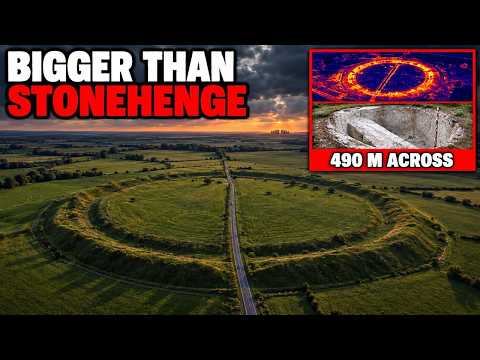
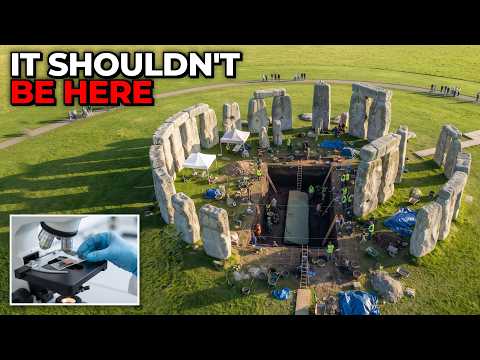
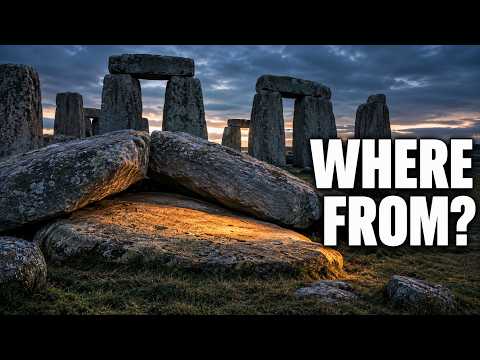
Reconstructions, scan maps and the thumbnail are illustrations, not photographs or survey plots of Calanais.
Maps and cross-sections are schematic, not to scale.
Visiting: Calanais Standing Stones are cared for by Historic Environment Scotland; the visitor centre is run by Urras nan Tursachan, a local charity. Check opening times and entry charges before you travel, keep to the paths and never climb the stones.
Have you stood inside the ring at Calanais? Tell us what you noticed.
Spotted an error? Tell us in the comments.
If these are the stories the visitor boards leave out, subscribing helps us bring you more of them.
#callanish #calanais #standingstones #scotland #archaeology