How we change voltage on a transformer
1M views · Jun 23, 2022 · Education

Comments · 914
@Bobsdecline · 4 years ago · pinned
Hey Everyone! <br>What we're doing here is actually changing the ratio of the windings between the primary and secondary side of the transformer. <br>Readings of 124 volts are extremely common and had the option not been available to adjust the tap setting, we likely would have left things as is.<br>Cheers all! Weekend is almost here 😁🍻🏖️
292
@kayakingphotos · 4 years ago
I see a number of comments indicating that they would want the voltage to be on the high side, and that there is no real reason to worry about a couple of volts. For the vast majority of cases that is correct. But there is one case where having the transformer on the high side (250+) would be an issue. That would be for a residential grid tie solar installation. Instead of voltage DROP under load, you actually get voltage RISE since you are feeding electricity to the grid. Some grid-tie inverters will shut down when they reach 264 volts. Depending on the installation, a 5% voltage rise from the inverter to the transformer might not be unheard of.
572
@matthewbeasley7765 · 4 years ago
Former transformer designer here; just to nitpick a tiny bit - there are 3 types of tap changers:<br>OLTC - On load tap changer (Also called LTC): Can change taps on load<br>NLTC - No load tap changer: Can only change taps while there is no load but still energized<br>DETC - Deenergized tap changer: Must be dead before changing load
269
@RigoMuniz · 4 years ago (edited)
When hurricane Wilma struck Florida there were at least 10 lines poles down at a particular road by rim canal. <br>Linemen as far as Canada came to the rescue. I was at a Marathon gas station in South Bay buying some snacks and dreams. There was also a Canadian man in full gear and looked tired. I thanked him for his labor and showed appreciation. You should have seen how his spirit was uplifted at that moment. He was very grateful for what I said. We should never take anything for granted specially when first responders and volunteers come to help those comunities in need.
70
@wpiv926 · 3 years ago (edited)
I remember years ago, during the summer, I noticed the house I was in at the time had voltage problems with lots of dimming and “dip downs”. I went outside and found the transformer I was on (an old rusty 37 1/2 KVA) and chased down the wiring and found 7 houses fed from it. I called the electric company and told them I felt it must be overloaded. They came out, and agreed. They replaced it with a new 50 KVA and the problem went away.
36
@petesmith2234 · 4 years ago
I once installed some radio equipment on the roof of a 15 storey residential block in the UK. The equipment was all monitored remotely and within a couple of days, I started receiving alerts from the UPS saying it was compensating for high voltage, the logs showed it rising to about 260V at times. I continued to monitor over the following couple of weeks until one day I found a reading of 282V, at which point I rang the electricity company! They were rather concerned as the transformer supplied not only the 150 flats, but several streets too and said they’d meet me there in an hour. I arrived within about half an hour to find them already there waiting for me. Unfortunately, at the time, the voltage was just within limits, and after confirming that the voltage at the transformer was similar to that at our equipment and that the reading from the UPS was reasonably accurate, they said that normally in such cases they’d install a data logger for a couple of weeks, but in this case they’d probably be able to accept my UPS logs.<br>The following day, they rang me to say they’d meet me on-site and change taps. In the event, there was only one more downward tap available and it still sits at about 250V, but I’ve never received another high voltage alarm in the seven years since. Overall I was quite impressed with the speedy response and not what I was expecting at all.
48
@ntsecrets · 4 years ago (edited)
I didn’t know they had those. A few years ago after a brief outage my line to G voltage dropped to 100v! I called and called and after 2 days they sent out a guy who measured it at the meter, got in his truck in a hurry and drove off somewhere, came back 10 min later very apologetic saying it affected the whole area and a regulator was out of whack.
36
@Frank-ih9ew · 4 years ago
As a residential electrician, the issue I’ve ran across in the past (many times) is seeing perfect voltage across both legs in a house UNTIL a load is put on that neutral. Plus or minus 3-5 volts is never an issue. The load tester some of y’all carry seems to show the high/low voltages pretty quickly though. <br>I don’t mess with powerlines… that shit will get ya kilt!!! Lots of respect for the lineman on here 😎 I don’t get how y’all play with powerlines in the rain, snow, night or day… Y’all are def committed to getting the job done ✅ and it is very much appreciated. <br>Stay safe ⚡️
19
@merkeljohn · 3 years ago
I feel like recording these videos provides and extra opportunity to be very deliberate with both steps and safety. It’s a chance to talk through each step to the audience (and yourself) and be extra thorough. These videos are awesome! Thanks!
53
@sanityassassin8161 · 4 years ago
All I could think of when I watched you change the tap was how many times I would have had to descend to pick up the tap cap! <br>I'd have trouble even without those bulky gloves -- Butterfingers!<br><br>Kudos on your professionalism -- and dexterity.
17
@grahamek86 · 4 years ago
Old mate is full of wisdom and makes sure everything he does is explained clearly. Love these videos. Also kudos for the safety wisdom in moving yourself further away when re-energizing. Many people in a rush would just slam the switch shut and hope they don't get a new suntan or a face full of oil.
36
@TheFishingPilot · 2 years ago
Much respect for you guys/gals putting your life on the 'line' for us each and every day. Nerves of steel working with that invisible killer!
47
Up next

Changing blown transformer!
Bobsdecline - Lineman blogger · 840K views

Wiring a 400 Amp Service to Transformer - While Energized!
Bobsdecline - Lineman blogger · 207K views

$5000 Kite Job! - A Dangerous and Costly Operation
Bobsdecline - Lineman blogger · 98K views
Melted wires on a Transformer
Bobsdecline - Lineman blogger · 107K views

SCI Live Line Electric Safety Demo
sciremc · 759K views

It's Over: Bonds COLLAPSE to WORST Levels Since 2002 - Netherlands BANS Microsoft
House of El · 225K views

What's a Live Front Transformer ?
Bobsdecline - Lineman blogger · 239K views

Insulator Changeout On H-Structure NLC
David Wilkins · 6.3M views
Wye - Wye You Always Tie
Hiline Academy · 29K views
Operating 345 000 Volt switches!
Bobsdecline - Lineman blogger · 731K views
How we tap on 69kv/138kv live lines - energizing mobile sub
Bobsdecline - Lineman blogger · 101K views

🚨 PLÖTZLICH ESKALIERT DIE RUNDE! Lisa Eckhart sagt EINEN SATZ – PUBLIKUM RASTET KOMPLETT AUS!
Scharfer Blick · 40K views
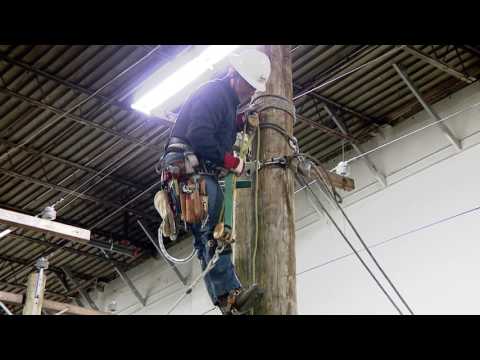
Taking the Transformer Up the Pole
Blue Ridge Community and Technical College · 139K views

What is FERRORESONANCE?
Hiline Academy · 29K views

Firing the Lorentz Plasma Cannon
LightningOnDemand · 7.5M views

Is it the volts or amps that kill?
styropyro · 7.2M views

A breaker disguised as a meter
Bobsdecline - Lineman blogger · 1.4M views

My Dream Power Hammer Restoration! Part 10
Alec Steele · 970K views

Why Is a Magnetron So Dangerous?
Grandpa Walter · 313K views

PG&E Power Pole Replacement
WardCo · 68K views