How NASA Learned to Land on the Moon
569K views · Nov 21, 2024 · Education

Comments · 2.5K
@TodayIFoundOut · 1 year ago · pinned
Head to <a href="http://squarespace.com/">Squarespace.com</a> for a free trial, and when you’re ready to launch, go to <a href="http://squarespace.com/BRAINFOOD">http://squarespace.com/BRAINFOOD</a> to save 10% off on your first purchase of a website/domain using the code BRAINFOOD
39
@thelittlehooer · 1 year ago
I love Tom Hanks' line in Apollo 13: "It's not a miracle, we just decided to go"<br><br>Also the line in The Martian book: "What would an Apollo astronaut do? He'd drink a couple of whisky sours, drive his Corvette to the launchpad, and fly to the moon in a capsule the size of my toilet. Man those guys were cool!!!"
276
@mcapps1 · 1 year ago
What blows my mind is, from Man's first flight to Man's first flight to the Moon IS ONLY 60 YEARS.
93
@ricklong3218 · 10 months ago
How many channels does this guy have with over a million people??!!<br>Yet, I watch them as they come out!<br>GENIUS!! 🤟🤟
7
@elwizschold · 1 year ago (edited)
The thing that gives me chills about Apollo 11 is the amount of time Collins spent practicing piloting back to Earth alone, as they weren't 100% sure Armstrong and Aldrin would make it back - so Collins had to be able to go back home alone.
171
@deaks25 · 1 year ago
<a href="https://www.youtube.com/watch?v=G2-S5ExqaSA&t=2721">45:21</a> I didn't know Grumman did this. That is such a flex.
9
@richard-davies · 1 year ago (edited)
Here come all the people who think it’s fake as well as flat earthers. People who think it’s fake are an insult to humanity, as it’s so far one of our biggest achievements.
467
@jasonmaclean719 · 1 year ago (edited)
I don't care how advanced technology has come or what we can do currently. Pulling this off back then will never not be fascinating and incredible.
154
@BruceFeingold · 1 year ago
<a href="https://www.youtube.com/watch?v=G2-S5ExqaSA&t=1675">27:55</a> The landing struts were filled with a crushable aluminum honeycomb cartridge. Not plastic. The structure and testing is described in NASA Technical Note D-5029.
13
@Cre8tvMG · 1 year ago
Houbolt saved the space program and deeply affected history, simply because he had integrity and competence.
3
@jakobmuxoll · 1 year ago
People that go “Well why can’t they do it today” or “They forgot how to do it/lost the technology”. It’s not because they can’t or forgot or lost the technology. It’s down to big differences from then till now, in things like funding, public and government support and interest in going to the moon. Back then, it was something that hadn’t been done before, a place humans had never been. Technology was developed for the very specific purpose of getting guys to the moon, conduct experiments, and getting them back alive. Key is, there were reasons to go, and that’s why there were both funding and interest in doing so. We as humans haven’t had reasons to go back until now, where we’re talking about permanent bases, mining, etc. Valid reasons for spending the money on it. Think about what has happened in the world since the 70’s, there has been financial crisis and collapses, and a multitude of other things we had to take care of. Without valid reasons to spend billions on a moon trip, “just to keep it going” and have regular trips out there for no particular purpose, it would be wasting money and resources on pointless stuff.<br>Technology lost? No, but without any funding and purpose, nobody kept the development going on the technology, so nothing further was done to keep it alive since the last trip to the moon. As someone else pointed out, going into space and adding a landing on another planet are two very different things. Sure, we’ve landed with rovers and robots, but they need almost nothing compared to something that contains humans. A Mars rover needs a soft landing so it doesn’t break, solar panels and battery and communications, that’s it. Something with humans inside needs air for people to breathe, water, food, a number of life support systems. So that’s a whole other ballpark. So to send humans again today, we can’t just send them off in equipment that was last used and updated in the 70’s, nobody knows if it’ll break during the launch or landing, and the communication systems used back then aren’t reliably integrated with our current systems. The equipment was also designed to work with the Saturn V rocket, which also doesn’t exist anymore. Those rockets also themselves used technology that, today, are almost antique, and would also need a complete redesign from scratch. It would be like finding some ‘71 Charger in a shed that had been sitting since then, dusting it off, fill the tank, and then expect it to get through a Le Mans without anything happening. So, no, the technology is not gone or forgotten, but the many years passed means that we pretty much have to start from scratch again, using modern technology.<br><br>Bear in mind, that the equipment used for the Apollo missions, was really one-off hand built stuff, that was often redesigned and patched again and again to make it work for just this single mission. The next time, they would have more knowledge obtained from the previous mission, and have fixed the previous patches. But since the point of sending more humans to the moon just wasn’t there after the 6th. mission, nobody was assigned to keep the development going, and that’s why we can’t just send someone up there today. They are working on it though, that’s the whole point of the Artemis program. They just have to design and build it from scratch all over again.
5
@mr88cet · 1 year ago (edited)
<a href="https://www.youtube.com/watch?v=G2-S5ExqaSA&t=2295">38:15</a> — I’m pretty sure Stafford was Commander for Apollo 10. Later, Cernan was Commander for the final Lunar mission, Apollo 17. However, I gather Cernan had a proverbial “fight on his hands” to get that Apollo 17 position: IIRC, a few months earlier he’d crashed a helicopter, so some were using that as a justification to take him out of consideration.<br><br><a href="https://www.youtube.com/watch?v=G2-S5ExqaSA&t=2358">39:18</a> — Yes, IIRC the “real” reason why the Apollo 10 LM was short-fueled was not that they didn’t trust the astronauts to follow orders. It was because that particular Lunar Module did not incorporate quite a few weight-savings measures from later designs. They had to short-fuel it to compensate for the extra weight.
6
Up next

The Incredible Story of Sending Man to the Moon (A Deep Dive)
Megaprojects · 1.2M views

How Did the Crusades Actually Work?
Today I Found Out · 607K views

How Close Were the Soviets to Putting a Man on the Moon Before the U.S.?
Today I Found Out · 169K views

Did Anyone Actually Fly Into Space Before Yuri Gagarin?
Today I Found Out · 731K views

How We Built The ISS
Real Engineering · 1.5M views

Warships Destroyed by Sheer Incompetence
Warship Designs with Mike Brady · 234K views

Hollywood vs Reality: What Actually Happened During Apollo 13?
Today I Found Out · 277K views

Absolutely Everything We Know About the Moon
Astrum Extra · 1.5M views

Apollo 8: Remastered [4K]
Homemade Documentaries · 298K views

The Mystery at the Most Dangerous Place on the Moon
Astrum · 4.3M views

Neil deGrasse Tyson: What NASA Won't Say About Mars
Dr Brian Keating · 571K views

How Do Space Toilets Work? (And More)
Today I Found Out · 27K views

The Truth About The Moon Landings
Everyday Astronaut · 2.9M views

50 Most Mysterious Places on Earth
Sideprojects · 1.2M views

What They Didn't Teach You in School About the Gas Giant Planets
Astrum Extra · 2.1M views

One of the Most Disastrous Naval Experiments of All Time
Today I Found Out · 361K views

Why We Can't Truly Explore Deep Antarctica (It's Not The Ice)
Snoozy Science · 15K views

Discoveries That Confirmed Ancient Folklore
Sideprojects · 967K views

Project Gemini Pt. I [4K]
Homemade Documentaries · 1.7M views

How Close Did the Soviets Get to Putting a Man on the Moon?
Fact Quickie · 125K views
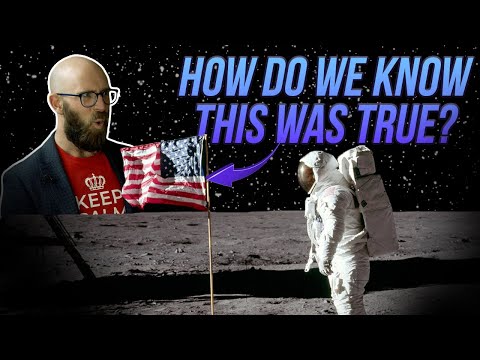
How Do We Actually Know We Landed on the Moon?
Today I Found Out · 3M views

100 History Facts that Will Shock You
Sideprojects · 1.1M views

The Great Mystery of Mel’s Hole: 80,000 Feet Deep?
Decoding the Unknown · 653K views

The Forgotten First Woman in Space
Today I Found Out · 72K views

The Deadliest Food in American History
Into the Shadows · 94K views

Skylab: The Space Station NASA Almost Lost
Ambition & Aftermath · 557 views