An Exotic Approach to Nuclear Fusion (Helion Energy BTS)
919K views · Aug 31, 2023 · Science & Technology

Comments · 2.5K
@HelionEnergy · 3 years ago · pinned
It was awesome to have you here, Jay. ⚡ Thanks for geeking out with us over high voltage capacitors, electromagnets, and fusion!
1.3K
@Architect172 · 3 years ago
Fussion is cutting edge tech<br><br>*laughs in November, 1, 1952 *
66
@chrise8720 · 3 years ago
I work not too far away and I've made parts for them. Very cool to see stuff like this happening so close to home!
350
@enlightendbel · 3 years ago
Regardless of the viability and future of the tech, one thing Helion definitely has a leg up on compared to all other projects, is the fact they are doing the marketing game brilliantly.
335
@GirthOfANation · 3 years ago
Fusion energy was one of the biggest reasons why I was so excited for LK-99 when it was hitting headlines earlier. The quality of our high-temp superconductors is the real limiting factor when it comes to fusion technology (hence why ITER's tokamak design is friggin enormous). It's a shame that LK-99 is slowly turning out to be something of a dud. The approach to creating a superconductor was novel, though. I fully expect other researchers to throw their time and energy at trying to create similar theoretical quantum conditions with other materials. We've already seen the enormous benefit of using superconductors like YBCO, which allow fusion projects like Helion and SPARC to miniaturize the footprint and cost of creating a reactor.
5
@MusicInUniverse · 3 years ago (edited)
But D-H3 will also produce neutrons (albeit less dangerous). I was quite sad to see they completely omitted this detail. They have neutrons detectors in there too.
198
@XavierBetoN · 1 year ago (edited)
MSc Advanced Physics degree, When I first saw Helion 2 years ago, I initially thought "this isn't as complicated as Tokomak". As I checked some papers, I realized that It's way more brilliant than Tokomak, and actually both solves overheating, and energy sufficiency problems with this "backpressure plasma" recovery through coils. And instead of creating He-3 through Tritium decay, using directly He-3, while helping the heat problem, means it'd still require a research Tokomak. Luckily, NASA, SpaceX and Blue Origin has designs to extract He-3 Lunar in-situ and deliver to Earth cheaper than a Tokomak. <br>Which means Fusion is finally just 10 years away, not 20!! Yay!
5
@TheIllya · 3 years ago (edited)
I was very surprised when some years ago had discovered that the atomic fission is simply used to generate heat to run the turbines with steam ... it felt like wood was replaced with coal and coal with uranium adn than we stopped for ages... Seeing this approach is very refreshing and inspiring. Looking very much forward to see all this fusion tech to change the world as the steam power did at its time.
361
@profwaldone · 3 years ago
The most interesting aspect of this type I think it's viability as an engine for deep space missions. Unlike all the other options, this one could be open af one end without too much issue and it doesn't have the stupendus weight requirements of laser inertial.
37
@Coffreek · 3 years ago
Seems like the only thing that novel reactors get us is novel instability modes. Credit to Helion for thinking outside the Torus, though.<br><br>I'm very cynical about (practical) fusion power, so I'm going to guess that the end result is going to be a modified version of the "tilt mode" instability. The plasma breaks confinement during the relaxation phase, because the plasma doesn't relax evenly, it's impossible to completely anticipate, and shift the confinement field quickly enough. Think of it as the Spheromak version of the "kink" instability.
3
@frank-mg3bx · 3 years ago
This approach reminds me a lot of the classic internal combustion cycle:<br>Fuel injection > compression > combustion > expansion<br>Except the combustion is a nuclear reaction instead of a chemical one and the compression and expansion are done via E-M fields instead of pistons<br>Brilliant
55
@tiefensucht · 3 years ago
I get some Enterprise machine room vibes here. Lets hope they let it happen. Is there a time table for how long they think it will take to get to the full size reactor?
35
Up next

It's Happening - Europe is Building an Impossible Fusion Reactor
Dr Ben Miles · 3.8M views

Nobody Builds Supersonic Propellers. I Found Out Why.
Michael Rechtin · 1.3M views

The Tokamak Problem: Can We Ever Make Fusion Practical?
Isaac Arthur · 86K views

Electricity Does Not "Split" H₂O. And That's VERY Useful.
NightHawkInLight · 1M views

Molten SALT — The MOST DANGEROUS Liquid!
Thoisoi2 - Chemical Experiments! · 925K views

Helion Energy: Are we 4 years from powering a data center with nuclear fusion?
Decarbonize! · 14K views

Can Ravens Actually Understand Us?
Stephanie Sammann · 115K views

This High Voltage Fog Is Controlled by Pointing (BiFrost Nebulagraphy)
Plasma Channel · 550K views

This Nuclear Reactor Runs on Thorium and Could Be Cheaper Than Coal?
Dr Ben Miles · 1.8M views

How nuclear fusion works (3) - magnetic confinement, tokamaks, stellarators
Improbable Matter · 142K views

What Happens When You Mix (Almost) All the Alkali Metals?
Advanced Tinkering · 905K views

Trump Pressures Nvidia to Reinstate CEO Jensen Huang & He Tries to Explain Calling Putin His Friend
Jimmy Kimmel Live · 286K views

Creating an Exotic Material With A Permanent Static Charge (Electret)
Plasma Channel · 1M views

The Secret to Mind Control - Nobel Prize 2026 EXPLAINED
Dr Ben Miles · 2.1M views

Building A Nuclear Star In A Jar (Fusor)
Plasma Channel · 1.4M views
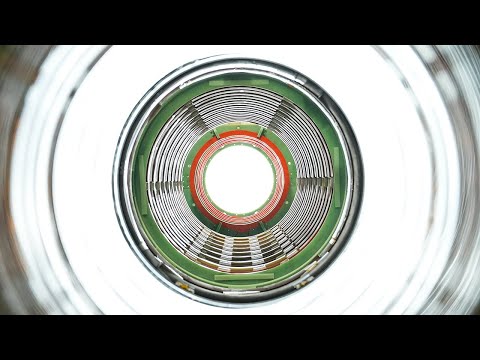
The extreme mechanical engineering behind fusion
Helion · 39K views

DIY Solar Concentrators, Made Better.
NightHawkInLight · 1.5M views

The Strange Problem With AI-Generated Mathematical Proofs
Ellie Sleightholm · 404K views

Neil & a Plasma Physicist Discuss the Future of Fusion Energy
StarTalk · 623K views

How nuclear fusion works (1) - fusors, thermonuclear reactions, lattice fusion
Improbable Matter · 129K views