Psychology of focus: why you can't concentrate, why your mind drifts to your phone, and what attention research says about distraction. Plus four steps to try tonight.
#Novotoons #Psychology #Focus #Distraction #Attention
Psychology of Focus (And Why You Can't Concentrate)
━━━━━━━━━━━━━━━━━━━━━━━━━━━━━━━━━━━━━━━━
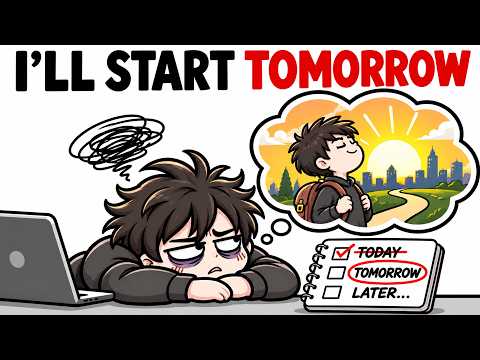
It's eleven at night. The document is blank, the cursor is blinking, and your hand has already found your phone. You don't remember deciding to. Is your focus failing because of your character, or because of something happening to your attention that has nothing to do with character at all?
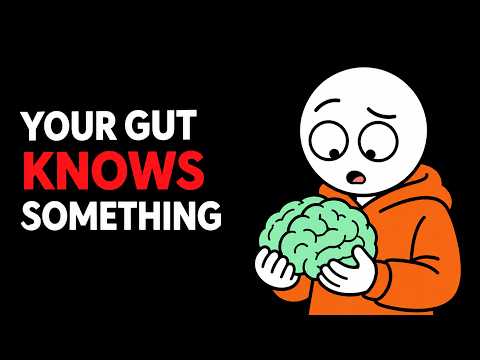
We use one image throughout: attention as a spotlight on a dark stage. Along the way we look at research from Gloria Mark on interruptions, Sophie Leroy on "attention residue", Cary Stothart and Adrian Ward on phones, Matthew Killingsworth and Daniel Gilbert on mind wandering, and Timothy Wilson's surprising "alone in a room" study. Then four practical steps, drawing on Peter Gollwitzer, Paschal Sheeran, E. J. Masicampo, Roy Baumeister and Michael Mrazek. We also cover where distraction habits may come from, and what the evidence does not say. Many studies are short, many used students in labs, and some findings are disputed, so think of them as clues, not verdicts.
One question is saved for the very end. It tells you what to do in the exact moment your focus breaks.
CHAPTERS
0:00 The 11 PM cursor problem
1:10 Willpower and the goldfish myth
1:39 Gloria Mark: the hidden cost of interruptions
2:40 What this video covers
3:03 Attention is a spotlight
3:18 Sophie Leroy and attention residue
4:54 The silent phone (Stothart)
5:17 Phone in another room (Ward)
6:09 The doorbell idea
6:34 How often minds wander
7:07 Alone in a room: the shock study
8:11 A discomfort problem, not a distraction problem
9:01 Step 1: Decide your first move
9:56 Step 2: Put the doorbell in another room
10:32 Step 3: Dump the open loops
11:12 Step 4: Wait out the pull for 60 seconds
12:02 Where your habit comes from
13:54 What the evidence does not say
14:47 When to talk to a professional
15:03 Putting it all together
15:41 The question: what am I stepping away from?
Which of the four steps will you try first tonight? Or tell us what you caught yourself stepping away from the last time you lost focus. We read every comment. If this helped, like the video, share it with the one person who "just checks one thing," and subscribe to Novotoons.
#Novotoons #PsychologyOfFocus #WhyICantFocus #AttentionResidue #MindWandering #Concentration #Productivity #HumanBehavior #Neuroscience
Research referenced:
(The script names studies by researcher and year only, so titles and journals are not listed.)
• Mark, G. and colleagues (2008). Interrupted vs uninterrupted writing task, University of California, Irvine.
• Leroy, S. (2009). Experiments on moving between unfinished and finished tasks.
• Stothart, C. and colleagues (2015). Phone notifications during a computer attention task.
• Ward, A. and colleagues (two years after Stothart et al.). Phone location, working memory and reasoning.
• Later replication attempts of Ward et al., including a pre-registered replication in 2022 (authors not named in the script).
• Killingsworth, M. and Gilbert, D. (2010). Phone-app study of mind wandering and happiness.
• Wilson, T. and colleagues (2014). People alone in a bare room, including the shock button.
• Gollwitzer, P. (early 1990s onward). Implementation intentions.
• Gollwitzer, P. and Sheeran, P. (2006). Review of implementation intentions.
• A larger review of implementation intentions (2024; authors not named in the script).
• Masicampo, E. J. and Baumeister, R. (2011). Plans for unfinished goals.
• Mrazek, M. and colleagues (2013). Two-week mindfulness course in students.
• Ophir, E., Nass, C. and Wagner, A. (2009). Heavy media multitaskers and irrelevant information.
• Anderson, B. and colleagues (2011). Attention pulled toward colors linked to reward.
• Baird, B. and colleagues (2012). Mind wandering and creative problem solving.
Disclaimer: This video is for educational and informational purposes only. It is not a substitute for professional psychological, medical, or therapeutic advice. If you're struggling with your mental health, please consider reaching out to a qualified mental health professional.