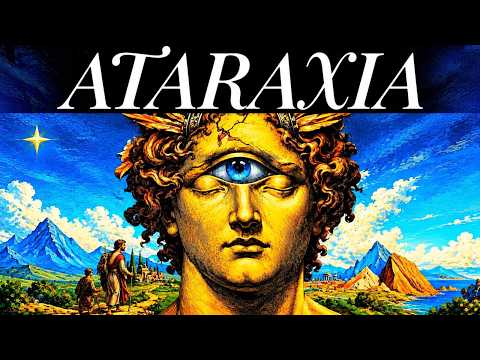
Eudaimonia: The Highest Stage of Existence — Aristotle
You got the promotion.
You got the body, the apartment, the relationship, and everything you once believed would finally make you feel complete.
Yet, three weeks later, you found yourself scrolling through your phone at midnight, waiting for the next purchase, the next message, or the next little moment of excitement that might finally make your life feel meaningful.
That isn't bad luck.
It's the entire system you've been taught to live within. And it keeps failing because temporary pleasure was never designed to carry the weight of an entire human life.
But what if feeling good was never the true measure of living well?
In this video, we explore one of the most profound and misunderstood ideas in the history of philosophy: Eudaimonia, Aristotle's concept of human flourishing, often translated as happiness.
But happiness is not quite what Aristotle meant.
No comforting illusions.
No shortcuts to fulfillment.
No shallow techniques for avoiding sadness.
Just an uncomfortable truth: feeling good is not the same as living well.
What You'll Discover
Why pleasure loses its power once it becomes familiar, and why the emptiness that follows is part of human psychology.
How building your life around comfort turns every form of discomfort into something you instinctively try to escape.
Why external validation becomes dangerous when it stops being a desire and becomes a psychological necessity.
Why money, status, and recognition can contribute to a good life but can never define one.
Why character matters more than circumstances when life confronts you with a loss you never expected.
Why having more choices does not necessarily lead to a more meaningful existence.
How repeated actions shape your character and ultimately determine the person you become.
Aristotle connected Eudaimonia with rational activity, virtue, and the continuous development of human character over an entire lifetime.
In his Nicomachean Ethics, he presents a profound distinction between temporary pleasure and genuine human flourishing.
A meaningful life is not created through intentions alone. It is built through repeated actions, practical wisdom, discipline, and the cultivation of virtue.
In This Philosophical Essay, You'll Understand:
Why Aristotle refused to define human flourishing through temporary emotions.
The difference between giving something up out of fear and choosing restraint through wisdom.
Why virtue is not something you are simply born with, but something developed through consistent practice.
What Aristotle's Doctrine of the Golden Mean actually means, and why it is not simply about choosing the middle between two extremes.
Why a well-lived life is not necessarily a protected life, and how character determines your response to suffering.
Why belonging is a genuine human need, but dependence on approval is an entirely different psychological condition.
Why external achievements rarely provide the lasting fulfillment people expect.
The difficult questions Eudaimonia forces you to ask about the way you are living today.
This is not another productivity formula.
It is not a motivational speech about staying positive.
It is a deeper examination of something far more difficult: how to maintain meaning and direction even when happiness is nowhere to be found.
Eudaimonia never promised you permanent happiness. It demanded something greater: a life built around purpose, reason, virtue, and the values you claim to believe in.
You do not need the perfect career, the perfect relationship, or perfect circumstances to begin living meaningfully.
Your life is not scheduled to begin someday in the future.
It is happening right now, in the decisions you make, the habits you repeat, and the way you choose to spend the hours already in front of you.
Your life is being shaped by what you repeatedly do, not by what you repeatedly promise yourself.
COMMENT: "I keep my word even when nobody is watching."
Not as a performance, but as a personal commitment to the person you are becoming.
---
TOPICS COVERED
Aristotle, Eudaimonia, Nicomachean Ethics, Aristotelian Philosophy, Virtue Ethics, Human Flourishing, Practical Wisdom, Aristotelian Golden Mean, Human Character, Meaning of Happiness, Pleasure vs Happiness, Self-Discipline, Human Nature, Personal Growth, Psychology of Happiness, Philosophy of Life, Critical Thinking, Meaningful Existence.
Aristotle, Eudaimonia, What Is Eudaimonia, Aristotle Philosophy, Nicomachean Ethics, Aristotle Happiness, Meaning of Life, What Is True Happiness, Human Flourishing, Virtue Ethics, Aristotelian Ethics, Golden Mean Aristotle, Practical Wisdom, Phronesis, Human Character, Pleasure vs Happiness, Hedonism, Deep Psychology, Human Nature, Self Awareness, Personal Development, Philosophy of Life, Self Discipline, Critical Thinking, Philosophical Essays,