Why Movies From The 70s & 80s Look Like This: Kodak 100T 5247
534K views · Jun 9, 2024 · Film & Animation

Comments · 1.4K
@dirkfierce2525 · 2 years ago
I’m sure it’s because as an 80’s kid I grew up with these movies, but this film palette and look just seems so beautiful to me.
1K
@brucekuehn4031 · 2 years ago (edited)
I worked in the Camera Dept at Warner Bros (actually The Burbank Studios as it was called then) in the 80s. Eastman came out with the new and faster 5293 in 1982 and the improved 5294 in 1983. We would use white tape to wrap 5247 magazines (exterior day) and red tape on the 5294 mags (interiors or night work). Getting the two film stocks mixed up would have been a disaster.<br><br>I remember very well when John Alonzo shot Blue Thunder which was released in May of 1983. Seeing the night helicopter shots over LA, it was astounding how the city lights popped in the pitch dark. It was a welcome addition to the old 5247 stock and almost everyone went to using both. I was also fascinated watching Mr Alonzo’s experimenting with fiber optics to help light interior sets. Never would try that with 5247.
501
@CameraLaw · 2 years ago (edited)
As a Hollywood camera guy back then, quite honestly we thought the stock was pretty limiting. To shoot at night, we needed a battery of carbon arcs up on “parallels”, built by the grips and run by a couple electricians, which had to have their carbons “trimmed” constantly. Everyone rejoiced with each successor film stock that required less light and the invention of better HMI lighting instruments.
930
@cleon24769 · 2 years ago
That film stock often gave the screen a "painting come to life" kind of feel. It gives those movies a kind of epic, romanticized unique vibe to it.
333
@MarfusMcGarfus · 2 years ago
I love how 5247 crushes the blacks in shadow, it helps to make the film feel more focused on what’s actually being filmed.
169
@KenoSNeal · 2 years ago
Excellent breakdown. I always preferred the gritty 70's/80's film look over today's slick digital look. But I never understood how they differentiated technically. Thank you for this. I wish the industry would preserve the look of classic films because they just have a better feel to them, in my opinion.
935
@lukelarsson · 2 years ago
This film stock and the movies they were used on are absolutely gorgeous.
85
@johnmoorefilm · 2 years ago
Superb, thank you. I was a film loader on feature films and loaded this stock thousands of times…Arri mags were always easier than Panavision mags! I remember those labels so well - doing mag scratch tests, gate tests, focus leaders, all that great stuff that’s ancient history to digital camera crews. Handling the actual camera negative in a darkroom on a camera truck always was a thrill …and yes, I did edge-fog a roll once, and yes, it was a huge action scene with hundreds of extras and stunts …with horses, of course. I was extremely tired , pulled the tape off the Panavision mag, popped the latches and lifted the cover …and I remember thinking : “Hmmm…what’s that?” because, of course, a loader never actually SEES a full 1000’ roll of exposed film …unless something has gone terribly wrong. It took under a second before the panic hit me and I pulled the cord for the light. I was in a cold sweat, I bagged and canned the roll, then had to face the music. The longest walk of my life was the walk of 200 yards from the camera truck to the first assistant (focus-puller) and I told him the worst thing a loader can tell you : I fogged a roll. He put his hand on my shoulder and thanked me for telling him. Everyone was cool, but man, that was a day. As it turned out , the roll was fine and was only barely edge fogged because the roll is wound so tight and the dark room light is dim, I dodged a bullet…god bless those tight-winding Panavision mags!
112
@immaculatesocks · 2 years ago
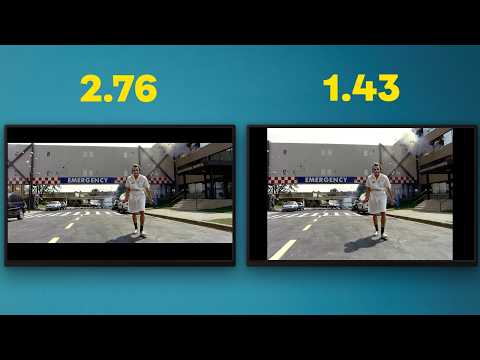
Your assessment of the dynamic range of 5247 is incorrect. 7-9 stops being onscreen was the result of the print stock, not the negative. They were shot by the DPs back then with the assumption that they would only be seen on print stocks, so often when they remaster them, they try to mimic its look on a print stock. But a scan of the negative would yield 12-13 stops of dynamic range. DPs shooting film nowadays know that they’re capturing 13+ stops and are doing so with the intent to use more than 9 stops in the final image, because the grade will be done from a neg scan, and aren’t limited by a print stock.
87
@BobDeCaprio · 2 years ago
I am never going to be able to unsee the red colors in those movies
121
@TheJstewart2010 · 2 years ago
I never even thought about this before, but now I understand why 70s films look the way they do. When Steven Spielberg made Duel, he said he didn't really care what kind of car the main character drove, but it had to be visible against the desert background. Now I get why he chose a bright red car. Makes perfect sense.
47
@davidmullen7829 · 2 years ago
The first version of 5247 along with a new ECN2 processing in 1974 was disliked by Hollywood cinematographers who felt it was too contrasty compared to 5254 and didn’t push-process as well (a common technique at the time). So Kodak sold both 5247 and 5254 in Hollywood, though this meant some labs had to be converted for the new process and others kept the old process set-up. In Europe and the U.K., there was no choice but to switch to 5247 though you could still find labs to process 5254 (Kubrick was shooting “Barry Lyndon” long enough on 5254 that the lab still had to keep an ECN 1 processor going.) In mid-1976, Kodak released an improved 5247 and obsoleted 5254. “Star Wars” started filming in the spring of 1976 and mostly used the early 5247 but “Close Encounters” probably mostly used the newer 5247, plus their 65mm VFX photography had to use 5254 because Kodak wasn’t selling 5247 yet in 65mm. Kodak kept tweaking 5247 over the years before it was obsoleted around 1994. John Toll shot the day exterior work of “Legends of the Fall” on 5247 but had to switch to EXR 5248 for “Braveheart” the next year.
37
Up next

What Happened to Rear Projection? The Fake Driving Scenes That Hollywood Just Brought Back to Life
The Forgotten Frame · 573 views

Why Movies Just Don't Feel "Real" Anymore
Like Stories of Old · 6.5M views

Why Most Movies Are Shot On Arri Cameras
In Depth Cine · 739K views

SE7EN & How 35mm Scans Lie to You
WatchingtheAerial · 515K views

Nobody Expected Cillian Murphy To Be THIS Awkward
Mercazoids · 171K views

How Ravens Might Understand Human Language
Stephanie Sammann · 135K views

I Spent $1000 to Make Digital Look Like Film
Jimmy on Film · 76K views

Why Steven Spielberg Avoids a Wide Open Aperture
wolfcrow · 855K views

The WILD Acting Methods Behind Trainspotting | Acting Breakdown
The Back Focus · 1M views

Why Did Evolution Keep Autism?
Basically Primitive · 950K views

How the Most Hated James Bond Proved Everyone Wrong
Buried Cinema · 519K views

Shutter Angle In Cinematography Explained
In Depth Cine · 416K views

Getting Kodak To Bring A Film Back From The Dead: Kodak Ektachrome
In Depth Cine · 80K views
Hollywood pulled off the perfect rug pull (again!)
Slidebean · 499K views

How Stanley Kubrick Looked At Lighting
Rory Anderson · 85K views

Why BATMAN BEGINS Still Feels Different
Kolo Kino · 4.5M views

Why does the energy of a magnet NEVER run out?
Infinite Physics · 154K views

Why don't movies look like *movies* anymore?
Patrick Tomasso · 5.3M views

Why New Movies Are So U-G-L-Y
tographer · 40K views

Christopher Nolan & Steven Spielberg in conversation | The Odyssey FYC
Nolan Archives · 174K views