Shinto in Everyday Japanese Life
268K views · Apr 25, 2021 · People & Blogs

Comments · 599
@LifeWhereImFrom · 5 years ago (edited) · pinned
Thanks again to David Chart for teaching me about Shinto in everyday Japanese life. If you have an interest in Shinto, I highly recommend checking out his Patreon (<a href="https://www.patreon.com/mimusubi/%E2%80%8B)">https://www.patreon.com/mimusubi/)</a> and website (<a href="https://www.mimusubi.com/)">https://www.mimusubi.com/)</a>. And oh yeah, you can see the first video we made together that has an intro to Shinto <a href="https://www.youtube.com/watch?v=htxVoNBd5do">https://youtu.be/htxVoNBd5do</a>
180
@hiroshi.n9352 · 5 years ago (edited)
I am Japanese, and I am 76 years old.<br>I would like to explain how many Japanese people think about religion.<br><br>What is religion?<br>If religion is defined as belief in an absolute God or a Creator, then most Japanese people would be considered to have no religion.<br><br>This is because Buddhism and Shinto, which are deeply rooted in the Japanese psyche, do not have an absolute God.<br>What exists in these traditions are guides who teach the proper way for human beings to live.<br><br>Both Buddhism and Shinto share a sense of respect and gratitude not only toward human beings, but also toward all living things on land and in water, plants, and everything that exists in nature. They also place importance on discipline in everyday human life, and their aim is to maintain peace of mind and to live calmly each day.<br><br>As a result of this way of thinking, for example, the phrase “Itadakimasu” said before a meal is not an expression of gratitude to a God who provides sustenance.<br>Rather, it is an expression of gratitude for the lives of animals and plants that became our food, and the phrase “Gochisousama deshita” said after a meal expresses gratitude to the people who raised, harvested, and prepared that food.<br>In addition, practices such as cleaning and keeping oneself well-groomed are also considered part of daily discipline.<br><br>In order to maintain this kind of daily discipline, various customs have developed and have been passed down from generation to generation. Japanese people practice these customs naturally, without being strongly conscious of them as religious influences.<br><br>And in order to live calmly, Japanese people tend to value coexistence with others over self-assertion. Japanese society is built upon an unconscious trust that others share the same values. (Of course, there are exceptions.)<br>At times of major disasters, this shared sense of values—usually not very visible—becomes clearly apparent.<br><br>I believe that this way of living functions as a form of religion for many Japanese people. <br>@hiroshi.n9352
726
@FunkyBukkyo · 5 years ago
This is very educational on how Shinto is ingrained, not just in Japanese culture, but also in daily life without even the Japanese people knowing it
353
@ramzanninety-five3639 · 5 years ago
It is a strange experience watching David speak. He seems like a Japanese old-school professor stuck in an Englishman's body. I guess he should take it as a compliment, since he is willingly assimilated into the Japanese society. He is also very knowledgeable on the subject which inspires me personally to learn more about Japan.
228
@fredrik7411 · 5 years ago
i like david, hes seems so chill and knowledgeable
494
@pfteve · 5 years ago
I love the fact he addressed his tie haha.
144
@sharalynn5242 · 5 years ago
Shinto was the first thing that got me interested in Japanese culture.
45
@johnc_ · 5 years ago (edited)
Goodbye is a shortened version of 'God be by ye' (god be with you) but no one would associate saying it with religion. There might be a name for things that originally came from religion but have lost that meaning and are now just part of culture in general.
573
@kseniam8747 · 5 years ago
David is my favorite guest celebrity! Thanks for inviting him
170
@haku5650 · 5 years ago
I'm a Japanese and living in Tokyo. Sometimes I'm not sure what is my roots, our traditions and cultures. But this video means a lot to me to recognize I am Japanese. thanks!
47
@sirBrouwer · 5 years ago
What I derived from this video in short is. That he basic Japanese life style and that of Shinto are so entwined that it would be pretty hard to say where those two do split. <br>Like 85% of Japanese lifestyle is based on Shinto lifestyle. and 95% of Shinto lifestyle is baste on Japanese lifestyle. They have probably shaped each other more then just one the other.
125
@21.sairamreddy52 · 5 years ago
Please also make video on buddhism in japan, and how it has influenced japanese lifestyle over the years.
25
Up next

Japan: Where Gods Aren't Gods and Worshipers Aren't Religious (Shinto Explained)
Life Where I'm From · 1.1M views

The 2 Most Important SHINTO Practices You Need To Know
Azumi Uchitani · 6.5K views

Living in KYOTO | How Life Works Where Obedience Creates Freedom | 4K Travel Documentary
Japan Travel Lifestyle · 2K views

11 Japanese Hygiene Rules Americans Break That Make You Smell Bad!
The Japanese Method · 641K views

Shintoism Explained
Cogito · 1.5M views

What Makes Japanese Buddhism So Unique? | SLICE
SLICE · 266K views

How I Practice Shinto: 5 Daily Habits Anyone Can Try At Home
Azumi Uchitani · 10K views

Life as a Shinto Shrine Priest & Learning Shrine Mannerism | Japan Travel Guide | GLOBAL CITIZENSHIP
The Global Citizenship · 37K views

Every School of Buddhism Explained: What Each One Actually Believes
The East Made Simple · 362K views

Daitoku-ji Temple: The Heart of Zen Buddhism in Kyoto | FULL DOCUMENTARY
SLICE Full Doc · 164K views

Japanese Religion explained: Buddhism and Shintoism 〜日本の宗教〜 | easy Japanese home cooking
Taiji ́s Kitchen · 115K views

The Real Meaning of KAMI: Understanding Japanese SHINTO
Azumi Uchitani · 20K views

Shinto: How is Japan's most important religion practiced? | Religion Hour | SRF Culture
SRF Kultur Sternstunden · 49K views

11 Japanese Rules Americans Break After 40 — That Cause "Old Person Smell”
The Japanese Method · 437K views

What This Hidden Shinto Shrine Taught Me About Modern Life
Shizen Style · 9.7K views

15 Foods To STOCKPILE That NEVER EXPIRE!
Pantry Secrets · 3.6M views
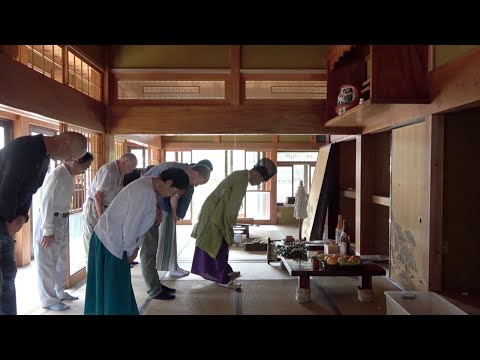
Cleansing Our House of Spirits | Shinto Ceremony
Tokyo Llama · 512K views

Daily Life in Japan 🇯🇵 A Quiet, Relaxing Day Welcoming the Start of Autumn 🍁
Gumi – daily life in Japan · 114K views

5 minutes on SHINTO - The Japanese Art of Living
Azumi Uchitani · 52K views

Tokyo's Geisha: Inside the closed world of Japan’s Enigmatic Icons | Foreign Correspondent
ABC News In-depth · 1.2M views

Living in JAPAN | How People Live in the HEALTHIEST Country on Earth | 4K
Japan Travel Lifestyle · 721 views

Staying at a Traditional Japanese Inn | Ryokan & Onsen Etiquette
Japan Guide · 2.3M views

When Shinto Became a “Religion"
ReligionForBreakfast · 174K views

7 Daily SHINTO Rituals Everyone Can Practice At Home
Azumi Uchitani · 70K views

What is Shinto?
ReligionForBreakfast · 524K views

The Life of an Old School Japanese Cafe Owner
Life Where I'm From · 460K views