How Cinematographers Set Their Exposure
444K views · Apr 2, 2023 · Film & Animation

Comments · 298
@benjamin.kelley · 3 years ago
It grinds my gears when people who don't shoot in LOG say "just adjust ISO". Nooooo! This give you more noise because no more light is actually hitting the sensor, and LOG at Base ISO typically gives you the most power from your camera. It's better to underexpose at base and bring back, than crank ISO and bake in noise.
14
@flipnap2112 · 3 years ago
I bought a 16mm film camera and started shooting footage. amazing how on film you can easily over expose and still have plenty of latitude, where as digital is the exact opposite.
115
@kiribundi · 3 years ago
The one thing that might have been useful is how a DIT can create a LUT that makes everything darker while preserving the highlight levels. That allows the cinematographer to properly shape the shadows and to avoid underexposure.
39
@photorooster8865 · 3 years ago
The more experience you have the faster finding your exposure becomes. This is why its good to start shooting day one when you get your camera out of the box. Take note of your settings and shoot away. It's just a digital recording so lather rinse repeat, shoot evaluate then erase and keep honing your skill.👍
51
@Lensman64 · 3 years ago (edited)
Invest in a light meter and less important color meter if you can afford it. If you are shooting stills (applicable to film) without question learn the Zone System (Ansel Adams/Fred Archer) which, with practice and experience, you can apply to your in camera meter for virtually flawless exposures. Learn to visualize in B&W tones. You will never regret it. I learned the Zone System when I was first starting out and I've had my Luna Star F for over 30 years. Do not trust your on camera screen no matter how good you think it is. Also learn how to read the scopes. Above all learn about your tools and how they work and the rudiments of photographic theory if you want to grow as a photographer. Very nice video.
63
@devomk · 3 years ago
I'v never heard more simplistic explanation of the things that i wanted to start with.<br><br>Sir, you just deserved +1 subscription
72
@MaxKissler · 3 years ago
The only correct answer would be: Always light and expose properly, meaning don't blow out your highlights and don't crush your blacks, so you or your colorist can go for the look you want in post.
5
@executerdelta · 3 years ago
I think it’s also important to say to try to use the native ISO value as much as possible to get the least amount of noise and the highest dynamic range the camera is able to capture!
456
@wambologyy · 2 months ago
still one of the best channels<br>I normally don't rewatch videos but this one are timeless<br>thank u for your great work!
1
@rajatbanerjee3413 · 3 years ago
Extremely crisp with elaborations done in the most convenient way ..
8
@cllgscreative · 3 years ago
Damn, I know all of this stuff but didn't know how to use it. Especially the bit about stopping down to an exposure you like then calculating NDs to get there. It almost like I've been using a flathead to pry things open without realizing it's a screwdriver as well.<br><br>Thanks homie!
11
@imDonDiestro · 2 years ago (edited)
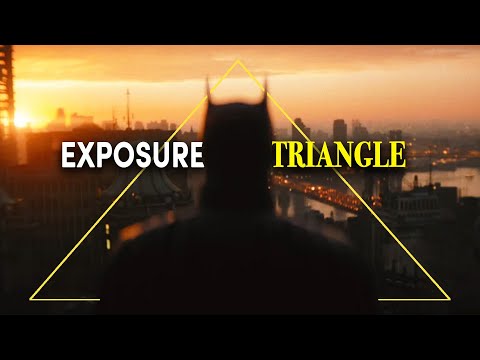
I think it’s important to note that a lot of the time, “moodier” shots are actually exposed brighter than what we see in the final product to give the colorist more room to color. In post they’ll bring the overall brightness down a few stops to achieve the moody/darker look that we all end up seeing. Batman is an exception though. They shot that dark af lol.
57
Up next

TECHNICAL KNOWLEDGE - For Cinematographers
Team Deakins · 14K views

Exposure 101
Alberta Film School · 191K views

Master Lighting in 20 Minutes
Tomorrows Filmmakers · 277K views

Why Camera Tests Are Important
In Depth Cine · 31K views

How a Pro Gaffer Lit This Film Noir Scene
Seceda Studios · 1.4K views
3 Basic Camera Settings Every Cinematographer Should Know
In Depth Cine · 31K views

How FOCAL LENGTHS Make You a Better Filmmaker
6 Shop Films · 245K views

Camera Monitor Tools: Waveform, Focus Peaking, False Color and More
B&H Photo Video Pro Audio · 125K views

Standardizing Exposure with the El Zone System
Filmmakers Academy · 30K views

Videography Basics for Beginners | Full Course!
Pascal Basel · 520K views

How Cinema Cameras Are Built On Movies
In Depth Cine · 43K views

The Easy Way to Not Suck at Lighting
Luc Forsyth · 393K views

Sony A7C II Setup Tutorial: The Best Cinematic Video Settings
Sean De Wispelaere · 81K views

How Pro Filmmakers Gear Check Before Shooting
In Depth Cine · 45K views

Can Composition Be Taught? Or Is It Instinct?
Seigher Brown · 405K views

How to light day exteriors
Dapper Gaffer · 108K views

Are cinema lenses a scam?
Matti Haapoja · 178K views

Why Your Camera Will Never Look Like ARRI — And How to Get Close
Wade Films (TOMONOMA) · 431K views

Your ISO Settings Are Ruining Your Filmmaking
Jimmy on Film · 1M views

The Art of BREAKING Composition Rules
Sightseeing Stan · 178K views