Encounter with a Bamboo Craftsman
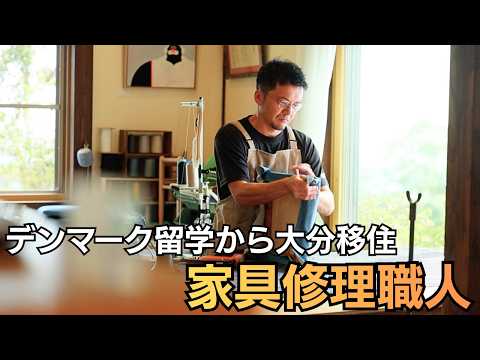
Taking care of the goats is Keiji Mihara. He's a bamboo craftsman. Running the farmstay is his wife, Moe. With children home for summer vacation, things are quite busy, but since there are no guest reservations today, Mihara can focus on his bamboo crafting.
On this day, Mihara headed out to cut soft bamboo used for the edges of bamboo baskets. He can tell the bamboo's quality by the sound when tapping it. "The sound is high-pitched. This one is soft bamboo. The sound is low," Mihara explains.
He removes the branches from the cut bamboo and quickly takes only the necessary parts to his workshop. He splits a single bamboo stalk and shaves it even thinner. It's work that requires both strength and skill, but his hands move with practiced expertise.
"I'm adjusting the pressure while trying to get to the center. This is really difficult," Mihara explains.
Coexistence with the Community
Instead of just cutting bamboo from the local mountains, Mihara maintains the bamboo grove environment. When sunlight enters and wind can flow through, good bamboo will grow. "I'm living using the resources of my local area, of Oita. It's important to preserve these resources while using them," he says.
Actually, Mihara is a migrant from outside the prefecture. He worked for an electric power company in the Chugoku region for about 20 years. However, while working, he read a magazine about bamboo craft artisans and felt that "it would be unbearable to let these traditional techniques disappear here."
Steps Toward a New Path
After leaving his company job, Mihara enrolled at the Oita Prefectural Bamboo Craft Training Center. For two years, he learned the fundamentals of bamboo craftsmanship.
"I had never touched bamboo before, so going straight to that school and starting by splitting bamboo was quite difficult at first," he reflects.
However, he found the process of cutting and processing bamboo fascinating. "If I compare it to the sea, it's like catching fish in the ocean, filleting them, and serving sashimi—that kind of image. It felt really good."
Made to Be Used
What Mihara creates are bamboo baskets and sieves for daily use. Easy to use, his products embody both beauty and warmth. Prices range from 3,000 to 30,000 yen.
"What I make are tools, so people need to buy them and use them. If I set high prices, nobody will buy them, and if nobody uses them, then my goal of getting people to switch from plastic to bamboo gets cut short right there," Mihara explains.
He wants people to touch and use bamboo and feel that "bamboo is really good."
Life in a Traditional House
Most guests at the rural farmstay "Shochikudo" are travelers from Europe. With experiences like bamboo basket making and traditional local food culture available, it enjoys steady popularity.
His wife Moe is harvesting vegetables from the back garden today. The vegetables go into bamboo baskets. Good ventilation and drainage make them gentle on the vegetables too.
They met at the bamboo craft vocational training center. "He was two years ahead of me in school, and to someone like me who couldn't do anything, he looked really cool," Moe recalls.
There's no gas in the house—this traditional house retains the old earthen floor, hearth, and wood-fired bath. Everything takes time, but they enjoy a slow life centered around fire.
"It's convenient. For slow cooking, simmering beans, cooking azuki beans, stewing deer or wild boar meat—things that take time. People say it's hard work, but it feels like we're just playing every day," she says with a smile.
About Moe, Mihara says, "She lives more robustly than I do—that's what attracted me to her."
Life's Turning Point
Bamboo craftsmanship in the satoyama. Living in harmony with the natural environment while leading rich and fulfilling days—what was Mihara's turning point?
"It was definitely seeing that magazine that got me into this path. Seeing that magazine made me think, 'Something has to be done about this.'"
Mihara describes his relationship with bamboo in unique terms. "For humans to completely dominate bamboo—there's something unreasonable about that. So bamboo and I are in this delicate battle, and in the end, I surrender a bit. I hold respect for bamboo, and ultimately, it's a higher existence than me."
Moe also speaks about the meaning of this lifestyle. "This way of life is enjoyable enough, and you can really feel that you're alive. We can feel for ourselves that we're living by receiving life from nature, so if we can share this joy, I think the environment will become much better."
A spirit of reverence for nature will surely enrich our lives. Mihara's decision began with a sense of mission to preserve traditional techniques, but now he has built a rich life in harmony with nature together with his family.