Audio amp classes as fast as possible!
1.1M views · Nov 24, 2024 · Entertainment

Comments · 908
@GoldenSound · 1 year ago · pinned
Apologies for not including this in the video itself, but the main advantage for class D amps is that they can be made EXTREMELY efficiently, whilst also having extremely low distortion.<br><br>Class D amps are always either fully 'on' or fully 'off'. Meaning they're either outputting efficiently or using basically no power. This means that class D amps can sometimes be 90-95% efficient, vs the 40-80% efficiency of class AB and the maximum 50% of class A.<br><br>This makes them really suitable for situations where massive power is needed but an enormous class AB amp would not be feasible. Such as for subwoofers or car audio. You hardly need any heat dissipation and so a very powerful class D amp can be made to be extremely compact.<br><br>The main disadvantages are that they inherently generate a huge amount of high frequency noise which must be filtered out, and many class D amps are also load dependent, meaning the filter response will change depending on the impedance of the connected load.<br>For speakers this is not really an issue as you know everything will be roughly 8 Ohms. But for headphones where it could be anywhing from ~12 Ohm to 600 Ohm, that's a more difficult challenge.<br><br>For that reason, and since we don't really 'need' the efficiency for headphone amps anyway which don't use much power, class D is rarely seen in headphone amps.
1.3K
@metal571 · 1 year ago
If only my EE professors in college explained things even remotely this clearly. Fabulous presentation
1K
@nosThof · 1 year ago
Finally understood. There is a bird in my amp and when I listen too loud it dies. Gotcha
140
@bfolkens · 1 year ago
Wow - this was the best explanation I’ve ever seen for amp types 🤯
395
@AndreiIsa-kk9jz · 1 year ago
No one, and I mean no one has explained this better for a person to understand how sound is manipulated by different class amplification. I think it is very easy to understand once you get to the 3rd time watching the video. :)
408
@MrSatyre1 · 10 months ago
As a former audio manufacturer who was one of the very first to bring Class D to multichannel home theater solutions, thank you for clearly saying PWM instead of the dreaded (and completely different) "digital" word.
65
@siberx4 · 1 year ago
This is a great explanation of the main amplifier types, but it glosses over <i>why</i> you'd go to the trouble of using a Class D amplifier since it sounds more complicated to implement.<br><br>The answer, of course, is that they can be vastly more efficient than even a well-tuned Class AB. This is because transistors waste extremely little power when they're either in their fully off or fully on states, while a transistor in its linear region acts somewhat like a variable resistor and dumps the waste energy as heat. Since a Class D amplifier only ever has the transistor fully off (where it wastes no power) or fully on (where it also wastes nearly no power since it's extremely low-resistance) there's very low loss overall.<br><br>Class A amplifiers are usually 25% efficient or less (somewhat higher is possible with tricks), while AB designs are 40-80% efficient. Class D, on the other hand, is usually 80-90% efficient, with even higher values possible.<br><br>As such, Class D amplifiers can be absolutely tiny and, if well designed, still produce shockingly good sound. It took a while for the designs and implementations to get good enough to avoid distortions or other issues inherent with trying to keep the complicated harmonic-filled output under control, but nowadays you can get dozens of watts (or more) out of something the size of a deck of playing cards with very few compromises.<br><br>Purists will insist on linear designs, but a well-designed Class D amplifier can produce excellent audio and allows much more compact designs because the reduced waste power. This is especially important where space is at a premium (such as in small apartments) or in portable applications powered by batteries.
276
@jibeji · 1 year ago
As a former electronics engineer, this is the best explanation ever! I wish I had a such explanation during my studies 😀
84
@smolbo1 · 1 year ago
need more of these videos. so tired of everyone that just says "but that is a topuc for another video" but never get another one. educational content to educate the consumers have a much better effect than giving opinions in reviews
45
@geardawg1358 · 1 year ago
Nicely done, in my 50+ years of electronics I've not heard a more accurate easily comprehended explanation! I'd say if more had your knack for instruction the world in which we live would have a much higher rate of proficiency. You've actually made the learning process much less boring! I started my learning process when I was 13 YO, you remind me of the fellow I learned from, he was a 75 YO USNavy EW tech!
66
@JpdeVilliers-l3t · 1 year ago
Still no idea whats going on, but i love the visual animations.
20
@prodbyhajime · 1 year ago
Actual gem of a series this was
72
Up next

What is a DAC and why do you need one?
The Headphone Show · 243K views

Class A, AB, or D Amplifiers — The Truth Audiophiles Won’t Tell You
HIFI Heaven or Hell · 207K views

Vinyl vs CD vs Spotify
Speeed · 3.2M views

Why Put Diodes Together In Both Directions? Explained With Examples!
Mr Carlson's Lab · 947K views

The DAC Scam - Almost everyone believes the hype
AP Mastering · 484K views

EEVblog 1771 - A Tricky OpAmp Exam Question
EEVblog · 292K views
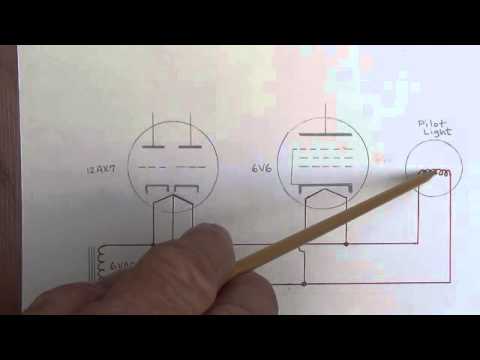
How Tube Amplifiers Work, Part 1: The Power Supply
Uncle Doug · 995K views

Class D Amplifiers EXPOSED | Here's Why They're Accurate, Not Cold
Analogholic · 114K views

7 Chinese Hi-Fi Amplifiers That Are DESTROYING Expensive Brands
Everything Audio · 228K views
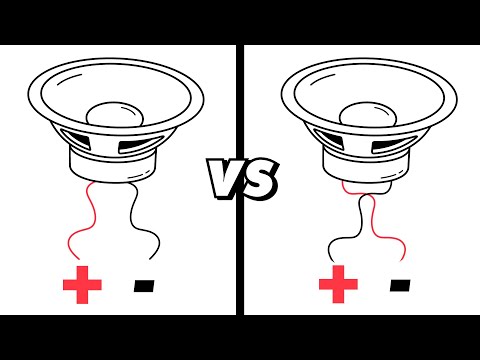
What Happens When You Wire Speakers Backwards?
Audio University · 3.1M views

What does an amplifier actually do?
The Headphone Show · 84K views

Balanced audio explained fast!
The Headphone Show · 68K views

THIS changes DIY Audio...
Zac Builds · 1.1M views

The Professor Who Taught People How To Think (1962)
ABC Science and ABC Australia · 2.9M views

Small Signal Amplifiers
Vocademy - Electronics Technology · 777K views

How Did We Miss This for 587 Years
art-y · 1.2M views

The Scariest Chart in Electrical Engineering
Veritasium · 5.9M views
What are the differences between Class A, AB, and Class D amplifiers?
Paul McGowan, PS Audio · 1.6M views

Don't Waste Money on These Audiophile TRAPS!
cheapaudioman · 722K views

How Inverters Turn Battery Power into AC
Prof MAD · 338K views

The Truth about Tube Amps No One is Talking About
cheapaudioman · 231K views

The Tiny Chip That Made Amplifiers Just Work — The Story of the 741
Part That Changed American History · 80K views

What Happens to You 6ft from an Exploding Atomic Bomb?
Curious Droid · 2.6M views

The Ultimate Component: OpAmp (ElectroBOOM101 – 013)
ElectroBOOM · 812K views

Anthropic Took On the Riemann Hypothesis. Here’s What Actually Happened
Ellie Sleightholm · 457K views

Nobody Explained Maxwell's Equations Like THIS!
Animated Physics · 530K views