The Best & Worst Cycling Sessions To Get Faster
34K views · Sep 21, 2026 · Sports

Comments · 96
@dkeener13 · 9 days ago
your criteria at the beginning listed fitness per hour, because "if you're like me you're not training 25 hours per week, you're doing 6-8". but your S-tier protocol actually needs a LOT of hours. it's really only S-tier for people who ARE training 25 hours, and the zone-2 is coupled with a handful of hours that are absolutely brutal.
17
@ralzalychhoeng · 7 days ago
So my take away is to use the ASS method. Vo2 interval (A), long z2 (S), and low cadence torque (S). Got it!
3
@Sunnydaypicnic · 7 days ago
Sometimes the S tier, is simply whatever you aren’t doing. As in, the areas you neglect are the low hanging fruits to include to get better. That has always been the case for me. However, it’s hard to do the sessions you don’t want to do! (I hate sprints!)
2
@phronesis1642 · 8 days ago
Fair point on 80/20, but that ratio comes from elite rowers/skiers training 10h+/week. At lower volumes (5-7h/week), the picture changes: a Korean RCT with recreational runners found HIIT (90-95% HRmax) produced significantly bigger VO2max and threshold-speed gains than low-intensity continuous training at half the time. Gunnarsson & Bangsbo (2012) had recreational runners cut mileage 50% and replace it with short intervals — 5K times still improved by 48s in 7 weeks. Esfarjani & Laursen (2007) got a 12% threshold-speed improvement from just 2 HIIT sessions/week.<br>But important caveat: all these studies run 7-12 weeks. They show intensity is efficient short-term, not that it's the better long-term strategy. Mitochondrial density, capillarization and fat-oxidation enzymes respond mainly to cumulative time under aerobic load — that can't be substituted by a few minutes near max HR, however efficient the short-term VO2max gains look. Years of pure high-intensity work never builds the aerobic foundation that eventually raises the ceiling for everything else, including threshold/VO2max performance itself. There's also an injury/adherence angle: overuse injury correlates more with total load/monotony than intensity per se in endurance sports, and non-competitive exercisers tend to find constant near-max efforts harder to sustain psychologically than a mix with easier days (J Sport & Exercise Psychology, 2016).<br>So for someone with 5-7h/week: a short block (6-10 weeks) of intensity-focused training makes sense before a specific goal. As a year-round strategy, 2 (occasionally 3) quality sessions/week plus the rest as moderate aerobic riding — not strict 80/20, but not all-intensity either — builds the base while still getting the efficient stimulus the studies show.
4
@drmitofit2673 · 9 days ago (edited)
According to Greg LeMond's mitochondrial-based book "The Science of Fitness: Power, Performance, and Endurance", the main trigger for mitochondrial biogenesis is the AMPK Pathway which is switched on when the AMP:ATP ratio increases with cellular energy depletion. Intervals have to be intense enough to deplete energy and more than just a few seconds to activate the enzyme cascade. The analogy in the book is that the cell is like a city powered by mitochondrial power plants. When energy demand exceeds energy supply, brown outs occur, and the government (AMPK) allocates more resources to the construction of more power plants. I am following his advice and have settled on hill repeats on a single speed bike to maximize this effect. This happens to be S Tier in this video. I alternate days between hill repeat cycling, powerwalking 1.5 hilly miles carrying 70 lbs of added weight, and high rep pull ups and push ups. My PB is 70 pull ups in a row at age 63. These exercises train for more type 2A muscle fibers (emphasized in the book) which have a combination of power and fatigue resistance (having more mitochondrial density than type 2 fast twitch fibers).
5
@michaambroz6148 · 9 days ago
Seriously? Over/unders? 30/15s or 40/20s anybody?
17
@JordyJayHomer · 9 days ago (edited)
You said recently that a lot of people's hard days are too easy and their easy days are too hard. This is very true. I know a group of guys whose easy days are roughly mid to high zone 3, and their hard days are fast group rides. They think that bridging a few gaps in a fast group ride (where they might nudge high zone 5 for a few seconds), then spending about half of the rest of the ride in zones 3 and 4, is their hard day. I often see them the following night doing their "recovery" ride, so I ask them if they did some short intervals or sprints after the group ride, and they say, "nah, it was hard enough." They're the type of guys who are ok b-grade racers but race for 10 years without getting on the podium, but they never get dropped. Eh, maybe they're happy being b-grade pack-fillers
6
@bobjones-bt9bh · 8 days ago
yup. If you can have a conversation during the effort, if you're not on the bars afterwards not even doing a ridethru, you didn't work out hard. VO2 and supra VO2 has always been the gold standard. Regardless of the sport, minute intervals all-out, running rowing riding, whichever, you get a nearly immediate improvement in fitness
@alex9046 · 2 days ago
<a href="https://www.youtube.com/watch?v=cocruIsv69A&t=734">12:14</a> vrots-love :)
@JordyJayHomer · 9 days ago
How about maximum time trial-type efforts of 10+ minutes (or whatever length)?
@ianezzi9212 · 8 days ago
Low torque intervals for UNtrained amateurs sound like knee injuries waiting to happen! 😆 Any cues for locking in a good pedal stroke in the warm-up before trying these?
1
@lageonD · 7 days ago
I drive a 2010 Mercedes E350 3.0L V6 diesel, I get it serviced at a Mercedes specialist and plan on keeping it for many years to come. I cannot understand why so many people spend a fortune continuously buying new cars when they are pure scrap.
Up next

If I Only Had 6 Hours To Train Per Week, I'd Do This
The Roadman Podcast · 33K views
Train Slower, Ride Faster: Why It Actually Works
The Roadman Podcast · 114K views

The Ask DLG Show Episode #408
Dr. Livingood · 7.6K views

How Amateur Cyclists Can Lose Weight Like Remco
The Roadman Podcast · 20K views
The Complete Guide to Strength Training for Cyclists
CTS Cycling · 7.6K views

Zwift vs Rouvy: Which One Actually Works for a Dad Over 40?
Project Fit Daddy · 11K views
THE 48-HOUR RULE: HOW MANY HARD DAYS YOU REALLY NEED | Ask a Cycling Coach Podcast 599
TrainerRoad · 68K views

This Training Session Is So Good It Blew My Mind
Global Cycling Network · 401K views

1:05:12 half marathon, but not enough 🥈
Kristian Blummenfelt · 251K views

5 Fixable Reasons Your Heart Rate Is High While Cycling
The Roadman Podcast · 165K views

Amateurs Don’t Train Enough For Zone 2 To Work
The Roadman Podcast · 19K views

Why Your Zone 2 Training Isn't Working & How To Fix It
The Roadman Podcast · 24K views

Lighter Bike vs Lighter Rider — The Truth Nobody Wants to Admit
Sub Sixty · 27K views

SURPRISE SECRET TO BIG FTP GAINS? | 2025 Indoor Training Ultimate Guide | Ask a Cycling Coach 548
TrainerRoad · 31K views

Nigel's Most Mysterious Move Isn't Even A Word
Will Anderson · 1.1M views
WHY YOUR FTP IS STUCK: THE METRIC YOU'RE NOT TRACKING | Ask a Cycling Coach Podcast 600
TrainerRoad · 35K views

If Every Rider Weighs The Same, Who's The Fastest On A Climb?
Global Cycling Network · 306K views

At 83, Phil Liggett Reveals the 5 Greatest Cyclists He Ever Saw
Global Cycling Stories · 69K views
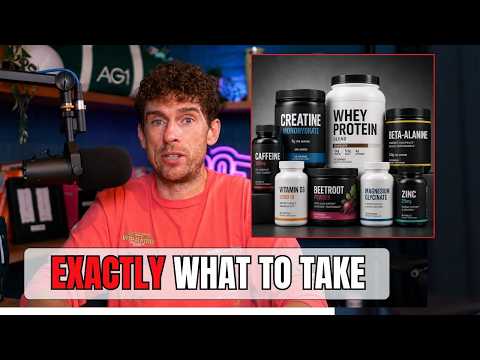
5 Supplements Every Cyclist Needs (With Exact Dose)
The Roadman Podcast · 33K views

Low Cadence ≠ Torque Training. Here's What Actually Works
CTS Cycling · 15K views

5 MORE Cycling Products We Would NEVER Buy Again
GCN Tech · 283K views

How One Ride Took Down Lance Armstrong
The Roadman Podcast · 159K views

Pogačar Beat Pantani's EPO Record - Is He Doping?
The Roadman Podcast · 36K views

Zone 2 Training Doesn’t Work For Amateur Cyclists
The Roadman Podcast · 81K views

How 3 Hours of Cycling Completely Transforms Your Body
SEMIPRO CYCLING · 74K views

Increase your saddle comfort - at no cost
oz cycle · 214K views