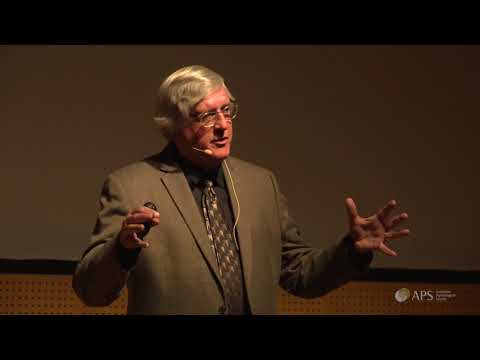
How to Cultivate a State of Safety | Dr Stephen Porges | Trauma Super Conference 2023
47K views · Feb 21, 2023 · Education

Comments · 74
@Trauma-Super-Conference · 3 years ago (edited) · pinned
1. Check all Free videos from Day 1:<br><a href="https://www.youtube.com/playlist?list=PL_Wh5hn31d9_WsDh3oitUd1mAnCu414Je">https://www.youtube.com/playlist?list=PL_Wh5hn31d9_WsDh3oitUd1mAnCu414Je</a><br><br>2. Check All Free Videos from the Conference:<br><a href="https://www.youtube.com/@Trauma-Super-Conference/playlists">https://www.youtube.com/@Trauma-Super-Conference/playlists</a>
5
@TransformationHarbor · 2 years ago
Beautiful:<br>“The problem is our language.<br>Control of our bodies instead of respecting our body’s communication.”
8
@Rose_Ou · 3 years ago (edited)
That's exactly what I've learned both throughout my childhood and in my early adulthood (CPTSD + PTSD). Being accessible and vulnerable = most likely getting hurt (sooner or later). I perceive ALL people as threat, and, as I'm slowly approaching my 50s, I try to avoid them at all cost. It hasn't always been like that. I used to cling to anyone and everyone willing to acknowledge my existance because my hunger and thirst for love and acceptance was much stronger than all the red flags in the world. I started to withdraw in my early 40s and noticed that solitude, although not an ideal state long term, is the only time when I feel a little bit safer and slightly calmer. There's no cure for so much abuse, it doesn't exist. My brain should and could have developed differently but it was deprived of love and acceptance. Humans are cancer to this otherwise beautiful earth. We always hurt both each other and animals.
60
@simplythebest2574 · 2 years ago (edited)
Exactly, re highly traumatized individuals may suddenly have a paradoxical fear/anger/activation response to deep breathing, meditation practices that for many bring on 'safety.' Why? because their Threat Response has become strongly coupled with any experiences of feeling safe- from years of lived experience in abusive or traumatic experiences. Paradoxical, yes, but very real for some people with trauma. Thank you, Dr Porges, for your kindness and generosity with the Polyvagal Theory, inviting us to apply it, utilize it conceptually and teach it in our own ways. I just love him. Onward, people! Let's return to social engagement, in all the small ways and large ways we can.
18
@charlotterunge9433 · 3 years ago
Every time I listen to Dr. Porges I learn something new. Thank you for this conversation ♥️🙏
17
@MichelJGrando · 3 years ago
This is incredible content. Thanks for sharing it
16
@Shri-laya · 3 years ago
Beautiful! The empathy and the "coming from one's own experience" is tangible with both, the Interviewer and the Interviewed. It makes everything so clear and easy to understand. Having been traumatized severely in my childhood I can so much relate to all that has been said. It all is very reassuring to me. It is the first time I listened to Dr. Stephen Porges - so far I heard from him through people who use his wonderful scientific "blocks" in their work. What a wonderful, empathetic person Stephen Porges is. What great contribution he makes to the world. And what precious gift is this Post. Thank you!
7
@Aurélie54321 · 3 years ago (edited)
An incredibly insightful interview, thank you so much. Feeling safe can be a trigger—who'd have thought! It's very relatable, though, and explains a lot about my own, puzzling reactions. Finally. <br>However, it's Dr. Porges' emphasis on self-compassion, and keeping an "ear" open for the body's messages of distress that I found particularly helpful. Thanks again.
10
@IIcorrinthians519 · 2 years ago (edited)
This is so good. I am learning what I didn't know about myself or where this hook in my jaw came from. I can remember the day it started when I was only 7. I have never felt safe since that thing or thought took over. My dad left. I stopped being carefree.
10
@cathyglascock1370 · 3 years ago
Love the relaxation of the interviewer.
4
@thecoffeecove81 · 3 years ago
His voice is so calming. I love the way he explains this. So knowledgeable. I am in the middle of reading Dr. Peter Levine's book, Waking the Tiger, and its really really good, too. I'd love to read one of Dr. Porge's also.
8
@jerobarraco · 2 years ago
This Dr. has a very clear thinking and deep understanding. I loved this talk, it was one of the best ive seen.<br>Thanks so much!
2
Up next

Understanding Your Trauma Journey | Britt Frank | Trauma Super Conference 2023
Trauma Super Conference - Free Gifts · 5.1K views

Dr. Stephen Porges on the science of safety, connection, and Polyvagal Theory
Securely Attached Podcast · 1.9K views
How to recover from depression
Psychlopaedia.org · 6M views

Building Inner Safety for Deep Healing | Dr Peter Levine | Trauma Super Conference 2023
Trauma Super Conference - Free Gifts · 62K views

Our Polyvagal World with Stephen and Seth Porges
The Science of Psychotherapy · 8.2K views

Dr. Stephen Porges: Why You Feel Safe, Threatened or Shut Down – Understanding Polyvagal Theory
The MindHealth360 Show · 33K views

How meditation can support trauma healing | Dr Rick Hanson | Trauma Super Conference 2023
Trauma Super Conference - Free Gifts · 1K views

Understanding Why You Are Who You Are with Dr. Stephen Porges and Luke Iorio
One Idea Away · 87K views

Dr. Stephen Porges: 'Love or Trauma, Insights from Polyvagal Theory' at Breath of Life Conference
Craniosacral Therapy Educational Trust · 2.2K views

Trauma and the Gift of Sleep | Dr Bruce Lipton | Trauma Super Conference 2023
Trauma Super Conference - Free Gifts · 7.5K views

Ep 51: How To Use Polyvagal Theory To Re-Tune Your Nervous System With Dr. Stephen Porges
Dr. Diana Hill · 32K views

Polyvagal Theory Explained: Stress, Shutdown, and the Path Back to Connection with Deb Dana | Ep. 31
Time with Tim Fletcher Podcast and Tim Fletcher · 15K views

Ep. 35: How to Use Polyvagal Theory To Shift Your Nervous System with Deb Dana
Dr. Diana Hill · 26K views

Polyvagal Theory, Trauma and Neuroscience of the Mind - Dr. Stephen Porges - HPP 101
Integrative Psychiatry Institute · 15K views

Deb Dana: How to Calm an Overactive Nervous System & Feel Safe Again
The MindHealth360 Show · 30K views

Social Connectedness as a Biological Imperative: Implications of Polyvagal Theory in Understanding
The Torres Autism Renaissance Certificate · 17K views

The ADHD Toolbox: The Polyvagal Theory and how it relates to ADHD with Dr. Stephen Porges
BrainWorx International · 22K views

Dr. Stephen Porges | Safety, Connection, and Polyvagal Theory | Point of Relation with Thomas Hübl
Thomas Hübl · 17K views

The Science of Compassion: Origins, Measures, and Interventions - Stephen Porges, Ph.D.
CCARE at Stanford University · 142K views

Our Polyvagal World: Unlocking the Power of Social Engagement #integratedmanproject
Travis Goodman · 2.2K views