Around AD 79, an old astronomer in Uruk may be one of the last people alive who can read the world's oldest script. This is the history of Mesopotamia as he would tell it.
From a barley accountant in Uruk about 3100 BC to a priestess-poet thrown out of her temple, a king who carved his laws in black stone, a library that burned at Nineveh in 612 BC, the blue Ishtar Gate of Babylon and a princess at Ur who collected things that were already ancient, follow seven lives across 3,000 years of southern and northern Iraq. Then the wedges fall silent, and for about 1,800 years nobody can read them.
Most of us learn Mesopotamia as a list of empires. It was people: they counted, complained, prayed, wrote poems and copied the past so someone would remember. And the fire that should have destroyed their words is part of the reason we can read them today.
⏱️ CHAPTERS
0:00 The last person who could read cuneiform
1:01 Uruk and the invention of writing (Kushim)
2:32 Enheduanna, the first known author
4:19 Hammurabi's laws and the Ea-nasir complaint
5:39 Ashurbanipal and the library of Nineveh
7:01 The fall of Nineveh (612 BC)
7:42 Babylon and the Ishtar Gate
8:47 Ennigaldi's museum at Ur
10:14 The last cuneiform tablet
11:22 How cuneiform was deciphered
🦣 WHAT'S REAL IN THIS STORY
The latest datable cuneiform tablet is an astronomical almanac from Uruk (W22340a) for AD 79/80 (Hunger and de Jong, 2014). Older books say about AD 75.
The Kushim tablet (MS 1717, Uruk, about 3200-3000 BC) records barley over 37 months. Whether Kushim is a personal name or a title is debated.
Uruk about 3100 BC was the largest city of its time; population estimates are commonly 40,000 or more.
Enheduanna, daughter of Sargon of Akkad, was high priestess at Ur; her exile by Lugal-Ane comes from The Exaltation of Inanna. Scholars debate how many poems she wrote herself. Her disk was found by Woolley at Ur in 1927.
Hammurabi (reigned about 1792-1750 BC) had his laws carved on a basalt stele, now in the Louvre; Laws 229-230 cover a collapsing house.
The complaint letter to Ea-nasir (Ur, about 1750 BC) is in the British Museum.
Ashurbanipal (reigned 668-about 631 BC) claimed he could read and write; Assyria controlled Egypt for a time.
Nineveh was sacked in 612 BC. Many think the fire baked tablets of the library and helped them survive; about 30,000 tablets and fragments are in the British Museum.
The Ishtar Gate was built under Nebuchadnezzar II about 575 BC and is now in Berlin. Cyrus took Babylon in 539 BC; Alexander entered it in 331 BC; the Parthians took Mesopotamia about 141 BC.
Ennigaldi-Nanna, daughter of Nabonidus, kept a collection of older objects at Ur about 530 BC, with clay labels; Woolley found it in 1925. Calling it the first museum is an interpretation.
In 1857 four scholars (Rawlinson, Hincks, Talbot and Oppert) translated the same inscription separately and agreed. In 1872 George Smith found the flood story on tablet K.3375 (Gilgamesh, tablet XI).
Nineveh lies across the Tigris from Mosul; Babylon is near Hillah, south of Baghdad; Ur and Uruk are in southern Iraq.
🎭 WHAT'S IMAGINED
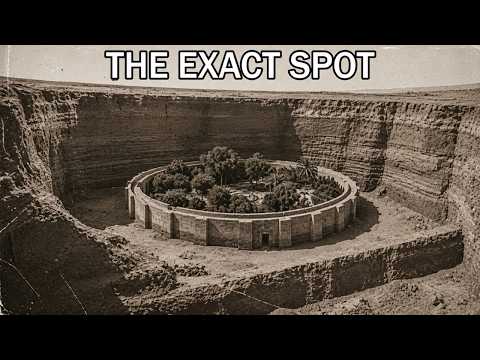
Nidintu, the old scribe who frames the film, is imagined: a composite of the last astronomer-scribes of Uruk, whose real names on the last tablets we do not know. The young scribe of Nineveh, the words people speak and the scenes inside homes, temples and palaces are dramatised from the evidence above. The pictures are reconstructions, not photographs.
📚 SOURCES AND FURTHER READING
Hunger, H. and de Jong, T. (2014), Almanac W22340a from Uruk, the latest datable cuneiform tablet, Zeitschrift für Assyriologie
Cuneiform Digital Library Initiative, P005340 (the Kushim tablet, MS 1717)
Penn Museum, Disk of Enheduanna
Louvre, Code of Hammurabi stele; Avalon Project (Yale), Code of Hammurabi translation
British Museum, I am Ashurbanipal exhibition; complaint tablet to Ea-nasir (British Museum 131236)
Britannica: Uruk, Sargon, Ashurbanipal, Ishtar Gate, Cyrus the Great, Seleucid kingdom, Nineveh
World History Encyclopedia: Enheduanna; partially vitrified tablet from Nineveh
Biblical Archaeology Society, George Smith's other find, the Babylonian flood tablet
The Conversation, The recovery of cuneiform, the world's oldest known writing
Sachs and Hunger, Babylonian Astronomical Diaries (via Wikipedia summary)
🔥 ChronoKindle brings the deep past to life: Ice Age humans, ancient Egypt, Rome, Sumer and the first civilisations, told as stories you can feel. Subscribe for more journeys into the ancient world.
💬 Which of the seven lives would you want to step into for one day, and why?
#Mesopotamia #Cuneiform #AncientHistory