In Interstellar, one hour on Miller's planet costs seven years back on Earth. Is that physics or fiction? We follow the evidence from Einstein's 1907 idea to atomic clocks that feel a height difference of one millimetre, GPS satellites, real black holes, and the gravitational waves that earned Kip Thorne a Nobel Prize. Then we work out what it would really take to get a factor of 61,000, and where the film chose drama over physics. Contains spoilers.
0:00 One hour, seven years
1:57 Part 1: Gravity Slows Time
5:12 Part 2: Speed Slows Time Too
8:22 Part 3: Your Phone Knows
11:12 Part 4: Are Black Holes Real?
15:22 Part 5: The Recipe for Seven Years
18:38 Part 6: Could Miller's Planet Exist?
21:16 Part 7: How Do You Get There?
24:31 Part 8: What a Black Hole Really Looks Like
26:44 Part 9: What the Film Invents
30:00 Part 10: Ripples in Spacetime
Key sources:
K. S. Thorne, The Science of Interstellar (2014); Thorne, ApJ 191, 507 (1974).
O. James, E. von Tunzelmann, P. Franklin, K. S. Thorne, Class. Quantum Grav. 32, 065001 (2015).
T. Opatrny, L. Richterek, P. Bakala, "Life under a black sun", Am. J. Phys. 85, 14 (2017).
Pound and Rebka, PRL 4, 337 (1960); Hafele and Keating, Science 177 (1972); Gravity Probe A (1976).
Chou et al., Science (2010); Bothwell et al., Nature 602, 420 (2022); N. Ashby, Living Reviews in Relativity (2003).
Event Horizon Telescope Collaboration (2019, 2022); LIGO Scientific Collaboration and Virgo, GW150914 (2016); nobelprize.org (2017).
Animated diagrams are illustrations, simplified and not to scale. Values are rounded. Some figures (such as the spin needed for seven years) are our own calculations from the published formulas.
Film images are official press stills, shown briefly for commentary and criticism. No film footage, sound or music is used.
Narration uses an AI voice. Script and research by K18 Studio.
Footage and image credits:
Interstellar press stills: Paramount Pictures / Warner Bros. (used for commentary)
Black hole animations: NASA Goddard / J. Schnittman; NASA/JPL-Caltech/R. Hurt (IPAC); NASA SVS / Caltech-IPAC, R. Hurt; NASA Goddard CI Lab; NASA
M87*: Event Horizon Telescope Collaboration (CC BY 4.0)
Cygnus X-1 illustration: NASA/CXC/M. Weiss
Galactic Centre and S2: NASA/JPL-Caltech/ESA/CXC/STScI; ESO/MPE; ESO/L. Calçada; ESO/M. Kornmesser; ESO
NGC 1365: ESA/Hubble & NASA, J. Lee and the PHANGS-HST Team; Saturn: NASA, ESA, CSA, STScI, M. Tiscareno, M. Hedman et al.
Sky and observatories: ESO/C. Malin; P. Horálek/ESO; ESO
Earth, Sun, Moon: NASA, Apollo 17; NASA Goddard / M. Román, J. Stevens; NASA / SDO; NASA SVS / Ernie Wright; NASA / WMAP Science Team
Spaceflight: NASA; NASA / Robert Markowitz; NASA Langley; NASA Glenn Research Center; NASA/JPL-Caltech; US Naval Research Laboratory; NASA / Paul E. Alers
Atomic clocks: G. Baxley / JILA / NIST; JILA / NIST; Burrus / NIST; Binarysequence, Wikimedia Commons (CC BY-SA 3.0)
Historical photos (public domain): Lucien Chavan; F. Schmutzer / ETH-Bibliothek Zürich; Orren Jack Turner / Library of Congress; Henri Manuel / Wellcome Collection; Friedrich Müller / SUB Göttingen
Jefferson Laboratory: Bostonian13 (CC BY-SA 3.0); Pan Am 707: Lars Söderström (CC BY-SA 3.0); Mount Washington: Famartin (CC BY-SA 4.0); Kerr and Thorne portraits: Bengt Nyman (CC BY-SA 4.0, CC BY 2.0); Nobel laureates: Bengt Nyman (CC BY 2.0)
Qiantang tidal bore: Colin Speakman (CC BY 2.0)
LIGO interior: NOIRLab/LIGO/NSF/AURA/T. Matsopoulos (CC BY 4.0)
GW150914 audio: LIGO Hanford data, Gravitational Wave Open Science Center (CC BY 4.0), pitch shifted to be audible
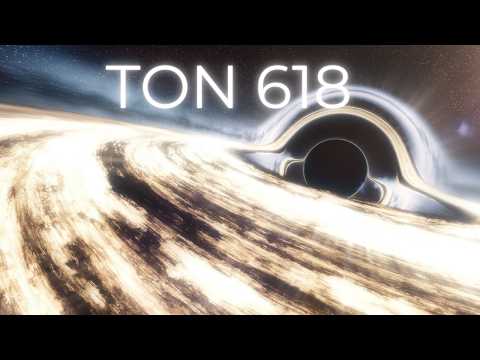
Thumbnails: NASA Goddard / J. Schnittman; one test thumbnail is an AI illustration made with Google Flow (not a real image and not a film still)
Intro and end screen (Cosmic Cliffs): NASA, ESA, CSA, and STScI, J. DePasquale (STScI)
Music: "Serene View" by Arulo (Mixkit).
#Interstellar #TimeDilation #BlackHole