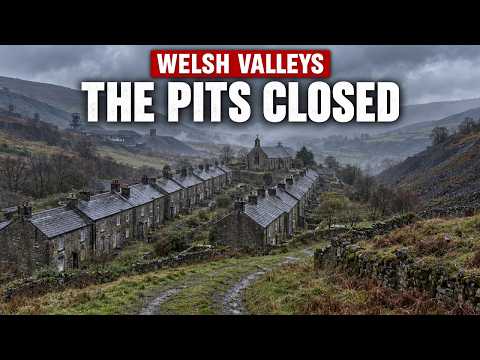
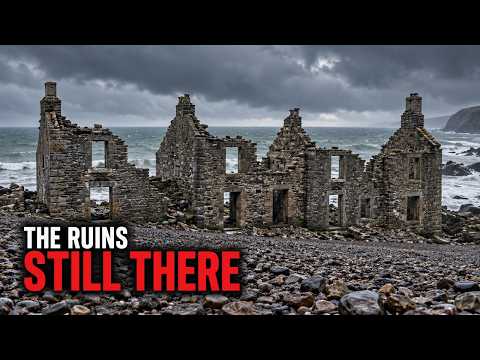
Between 1888 and 1967, Britain flooded 47 valleys to build reservoirs. Seven of those valleys held villages with shops, churches, schools and graveyards. Mardale Green in Cumbria. Derwent and Ashopton in Derbyshire. Capel Celyn in Wales. West End in Yorkshire. Stocks-in-Bowland in Lancashire. Llanwddyn in Powys. Each was acquired under compulsory purchase, demolished before flooding, and told it was for the national good.
July 2022 brought the driest summer on record. Reservoirs fell to half capacity. Stone walls rose from the mud at Ladybower, then bridge arches, then the full ruins of Derwent village for the first time since 1945. Photographers arrived within hours. The images went viral. Foundations of 50 cottages, a pub, a post office, all laid bare in the drained lakebed. The question nobody asked: why did Britain flood these villages in the first place, and what did the drought reveal about the settlements nobody remembers being told about?
The drownings followed a pattern. Post-war industry needed water, cities needed water, new suburbs needed water. Engineers went looking for valleys that would not cost much to empty. Rural, sparsely populated, far enough from anywhere that mattered. The orders came from Westminster, the engineers came from the cities, and the valleys had no vote that could stop it. At Mardale Green, 104 bodies were exhumed and reburied 12 miles away. At Derwent, the church spire stuck 20 feet above the waterline until 1947, when the water board packed it with explosives and blew it into the reservoir. 3,000 people turned up to watch. At Capel Celyn, it was not just a village that drowned but the last entirely Welsh-speaking community in the Tryweryn valley. Every resident spoke Welsh as their first language. When the water rose in 1965, it drowned a culture. The drowning became a rallying point for Welsh nationalism and sparked over 50 bombings between 1963 and 1969.
The droughts kept coming. 1976, 1995, 2003, 2018, and six more between 2018 and 2024. Each time the water fell, more emerged. Packhorse bridges with three arches intact. Cobbled lanes running in straight lines across dried mud. Garden walls, gateways, the remains of a grocer's shop. At Chew Valley Lake in 1976, gravestones appeared upright in the silt, rows of them, names still legible. The 1952 exhumation had missed at least 47 graves, possibly more. At Catcleugh Reservoir in 2010, a walker reported stones with dates carved into them, arranged in rows: 1823, 1891, 1902. Nineteen grave markers that were never cleared in 1905.
In August 2022, two volunteer divers entered Ladybower Reservoir and found the village hall at 60 feet down, roof intact. Inside: 14 wooden chairs, a table, a noticeboard still mounted, and a locked metal filing cabinet. The cabinet contained 127 documents, meeting minutes from 1938 to 1943, a village census, and 43 personal letters residents had left behind. It was the most complete archive of a demolished British village ever recovered from underwater. Ground-penetrating radar at other sites located stable blocks with roof beams still in place, shop walls standing to full height, schoolroom floor tiles undisturbed after 90 years underwater. The clearance teams had sealed buildings, not stripped them.
In 2023, Rhys Meirion, a Capel Celyn descendant, filed a legal claim against Liverpool City Council seeking formal recognition of the village's destruction. The case was settled out of court. The terms were never disclosed, but what leaked was fragmentary: a private apology to the families, a memorial fund, a commitment to preserve submerged sites. The other water authorities said nothing. Descendants of Mardale Green and Derwent wrote asking for similar recognition. Silence.
Severn Trent announced in March 2025 that Derwent reservoir will be drawn down 18 meters for dam repairs, starting in June and running through November. For six months, the village will be fully exposed for the first time since 1945. Historic England has submitted a formal application to list the packhorse bridge as a Grade II structure, which would legally require its preservation even when the reservoir refills. If granted, it sets a binding precedent for every drowned village in England. The cost estimate for permanent heritage access at all seven sites is $43 million over 10 years. United Utilities has called it operationally impossible. Three MPs have co-sponsored a Private Member's Bill that would create a new category of protected submerged heritage site. It has 89 signatures. The water companies are lobbying against it.
Seven villages lie beneath British reservoirs. When the water drops, their walls break the surface, and for a few weeks the drowned world comes back.