Andrew Skurka on Pro Tips for Older Hikers
9.5K views · Nov 23, 2026 · Education

Comments · 92
@chase-life · 5 hours ago (edited)
Great video. I am 68 and recently completed the Appalachian Trail and am now looking at the PCT. I learned some of this the harder way. One thing was, I wondered why people took zeros. I found out then if I pushed it like a 20 mile day, I really needed a zero day to recover (a good argument for splitting that 20 mile into two 10 mile days). I learned for me, that taking a zero every 12-15 days really helped me recover.<br><br>If you are older, and especially if you have a looser budget... spend the money to get lightweight. My base weight was 11.5 pounds. This does not mean being uncomfortable. I had a nice tent, sleeping pad, pillow, etc. <br><br>Pacing steps. As you mentioned, this really helps. I had not thought of it and a fellow hiker mentioned it to me on those Georgia mountains on the AT. The steeper the climb, the shorter the steps.<br><br>Treking poles. Not just having them, but learning to really use them to help transfer the work from your legs to your arms. Push on them on the uphills. I see many hikers use them more as just "feelers" on the uphills. Push on them!<br><br>Ibuprofen. If you read the labels, you are not supposed to be taking this over the age of 65, which is not common knowledge. Having said that... it really does help on those climbs.<br><br>Pee bottle. This ended up being one of my favorite bits of gear. I highly recommend a flexible one with a wide mouth, if you can find one.<br><br>Nutrition is important, you need energy. I used the app Chronometer to review my meals. I made the mistake of not getting enough calories in. At the start of my hike, losing a bit of weight was welcome. I never changed my perspective and by mile 1000, I had lost too much muscle and was losing my trail legs. I made a new effort to eat more, especially in towns. <br><br>Same with water, stay hydrated. Use electrolytes. For me, I made sipping water as easy as could be, so I would do it more often.<br><br>Myself I tried and hated using a thicker more cushioned shoes... it was a lot easier to twist my ankles. I ended up going back to Altra Lone Peaks. Very minimal rock plate, so that was the trade off. My soles ached in Pennsylvania. But of course, shoes are very personal. I also found as a general rule, for me, using toe socks and regular socks over them, meant I did not get any blisters (exception walking in wet shoes for 20 miles in one day).<br><br>I was really shocked, being someone that took pride if how good my balance and physical agility was...to learn it was much less in my older age. I fell a lot. Especially on wet rocks and boulders. I found replacing my shoes more often, even if they were not worn out, helped with keeping the soles grippy. As I told my partner, you only had to be careful on the dirt, acorns, rocks, roots, leaves, and boulders. Everything else is fine.<br><br>I was also surprised at how it was easy to lose things from beiing out of my routines and element. I learned I liked fewer bits of gear and always tried to put things in the same place. My first morning on Springer Mountain, spending way too much time looking for my spoon, only to find I stuck it in my shoe...was just the start of this lesson.<br><br>I used a sport watch to monitor my heart rate on climbs. As a previous cardiac patient, I would use a heart rate of 150 beats per minute to stop and rest.<br><br>And if you are older and have the funds... use the hostels, eat in town when you can, shuttles are great.
53
@Der-olle-Hansen · 3 hours ago
Even from a young age, it was never about the kilometers or miles for me - it was about the experience. In fact, long stretches can be counterproductive: the "faster, higher, further" mentality creates a kind of tunnel vision on the trail, where you stop noticing anything to the left or right.<br>Now, at 68, I simply step aside and let the others rush past - sweaty and panting.<br>I take a sip of water, bite into a piece of delicious chocolate, and let my gaze wander over the magnificent landscape.
9
@peterrowland5911 · 2 hours ago
My Elder advice is keep moving. Repeating what we all know.
5
@jerrystinner6946 · 4 hours ago
Excellent video. I turn 80 next month and have been backpacking since the 1970's. I train everyday of the week. I have through hiked the John Muir Trail every summer since 2015 (SOBO). I now take more zero days, hike at a slower pace (10 to 12 miles per day instead of 17 to 20 miles per day), and watch my diet and water intake. I no longer have arches and I wear Altra Olympus shoes with a thicker sole. Balance is a big issue and I don't sleep well like I used to. I religiously use trekking poles and I'm a total Dyneema snob. I recently purchased a Thermorest Neoloft air mattress and Zenbivy sheet and quilt which will hopefully help with my sleep. See you next summer on the JMT!
16
@maritimegirl3612 · 3 hours ago (edited)
Thanks for this video. I’m 65. Five years ago I switched to a hammock. I bought an ultralight setup at 4.6 lbs for my summer kit with tarp, hammock and the insulation. It’s a game changer. Better sleep, better recovery. Getting up to pee is easy; no crawling on the ground. It provides a built in chair for camp if you sit sideways. And I always have a dry place to prepare meals under my tarp when it rains. I’m in Eastern Canada so trees are abundant. I can’t recommend it enough.
6
@WilliamRose-dv1cs · 5 hours ago
I want to try base camping. It takes some research but hike into a camp spot that has interesting areas nearby and then do day hikes for a few days. It takes the pressure off having to do miles each day, allows a zero or nero if needed but you still get to enjoy the outdoors. Just my observation but if camp is set up 10 miles from the trailhead it won't be too hard to find some solitude.
7
@dianemiller4187 · 3 hours ago
I’m a 72 year old backpacker and have learned and implemented all the things Andrew has mentioned in this video. Because I don’t intend on quitting backpacking I have had to adjust my experience to my age as he described. This has allowed me to continue to get out into the wilderness areas I love. Going on trips with Andrew’s company has been a helpful way to learn many of the skills to do this. Thanks Andrew!
3
@Iofflight78 · 2 hours ago (edited)
Plyometrics, unilateral exercises, lateral movement, jumping and twisting / rotational exercises I've added them all to my gym routine because weight lifting alone while great isn't enough anymore as a 57 year old. I also invested the most money into good sleep system so I can hopefully get sleep because I'm a crappy sleeper anyway.
1
@robinferguson8911 · 3 hours ago
That was such a good video ☺️ I'm a 56 year old female and did some hiking this summer (all of the Tahoe Rim Trail and half of the JMT heading SOBO). I originally set out to complete both trails but realized I couldn't keep up with my younger, stronger hiking buddies. I let them go on and did my last week of hiking alone and it was wonderful going at my own pace and taking extra rest stops. I met an Australian hiker who told me she "thorough hikes" instead of "thru-hikes", she even brought swim goggles! I'm slower than I once was but I love the slower pace, and I am so thankful to be out there regardless of how far I get.
4
@ucancallmejoe · 5 hours ago
62 year old High Sierra backpacker here. <br><br>I still do three to five day trips primarily off trail in the Yosemite/Ansel Adams area (e.g. Lost Lakes, Register Creek, Lake Catherine, etc.). <br><br>I also keep it flexible by going solo. The last time I backpacked with a group was fifty years ago in the Boy Scouts. It did not go well. It is a unique experience to only have nature as your hiking companion for days at a time. <br><br>This keeps my itinerary free. If I don't feel up to the day's plans then the plans change. If I make a stupid mistake, I don't have to listen to another person explain my poor decisions. <br><br>Ok. So my tips. <br><br>1 Strength training. Hit the weights. Nothing crazy. High reps. Low weight. Just enough to maintain. <br>2 Learn your VO2 max and keep it high somehow. Lots of tips on youtube for that. <br>3 I carry both an ACR PLB and a Garmin Inreach. The ACR can punch through tree cover and slot canyons. Also, backcountry insurance. Cheap and possibly worth it. <br>4 Nasal strips for those nasal passages - must have over 10000 ft. <br>5 Four season rectangular sleeping pad with crazy high R value. <br>4 Boots with good ankle support (Hoka Kaha for me). <br><br>What I should do but dont<br><br>1 Take longer breaks. I usually diesel through until I collapse. Muscle memory from my younger days. <br><br>2 Stop winter backpacking. I just finished a trip up to Thousand Island Lakes and there were no footprints but my own. The trailhead parking lot at Rush Creek trailhead was empty. Everyone else seems to have common sense. It is really hard on the body trudging through snow - at any age.<br><br>And yes, I do have a dyneema backpack, tent and rain poncho. And all down is 900 fill or greater. ;)<br><br>I will probably stick to my solo backpacking routine until I run out of steam. Not slowing down for now!
12
@garretchristensen · 5 hours ago
I started long distance hiking the exact same day as Skurka and am almost the same age. I love the mellowed-with-age Skurka. Reminds me of the time when we were both still young and he asked me (with clear disdain) if I'd settled down. No! I protested quite defensively. Old age comes for all of us eventually. 😆
7
@tomnoyb8301 · 4 hours ago
Recovery: The single most important recovery factor is the first ten-minutes upon arriving at camp for the night. Prepare and carry recovery drink powder, preferably of your own making. Drink (or eat) Recovery powder immediately upon ceasing exertion. Before setting up tent, before airing-out quilt, before filtering water. The very first thing is consume those few-ounces of powder. Gear Skeptic has the best video on the how's and why's. It will solve your recovery issues. You will feel 22yrs old in the morning. But the powder must be consumed immediately upon hiking ending. Simple too. 1/2 protein, 3/8 Glucose, 1/8 Fructose.
5
Up next

Andrew Skurka on What It Really Takes to Backpack Alone
The Trek and Andrew Skurka · 29K views

I climbed *almost* every country's highest point in Europe. Here's my ranking & what's next
Natasha Bergen · 36K views

2026 Child Neurology Society Annual Meeting
Neurology Journal · 4 views

It's Worth Being Angry About This
Hank Green · 604K views

Is a Bigger Backpack Better? 70L Ultralight Comparison
DIRTY JAR HIKES · 1.3K views

20 Things British Preppers Keep Secretly Stockpiled – One Costs Just £5
Henry Moore · 19K views

Andrew Skurka on What Most Hikers Get Wrong About Footwear
The Trek and Andrew Skurka · 59K views

20 Christmas Gifts for Hikers: 10 I Want, 10 I Recommend
Your Trail Buddy · 1.1K views

I'm Starting Over
Marques Brownlee · 911K views

Russia, Trump And A 'Friendship' That Shocked America: Senator Whitehouse STUNS Congress | N18G
CNN-News18 · 54K views

10 Pieces of Bikepacking Gear I Stopped Using (And Why)
Tristan Ridley · 58K views

Andrew Skurka on the Only 12 Backpacking Clothes You Really Need
The Trek and Andrew Skurka · 157K views

My Biggest Backpacking Gear Hits and Misses of 2026
The Trek · 21K views

New Weather Balloons Are MINDBLOWING - Smarter Every Day 318
SmarterEveryDay · 192K views

The Ultralight Domino Effect: Why Lighter Gear Isn't Always Better
Extra Ultralight · 19K views

How to Pack Light for Camino de Santiago and Avoid Overpacking
Camino Hacks and Tips · 49K views

The Undisputed GOATs of Backpacking Gear
Justin Outdoors · 12K views

How to Fix Your Sleep Tonight: A Psychiatrist's 5-Step System
Dr. Raj Loungani, MD | Psychiatry · 293K views

Watch This BEFORE You Buy Hiking Gear
Oscar Hikes · 40K views
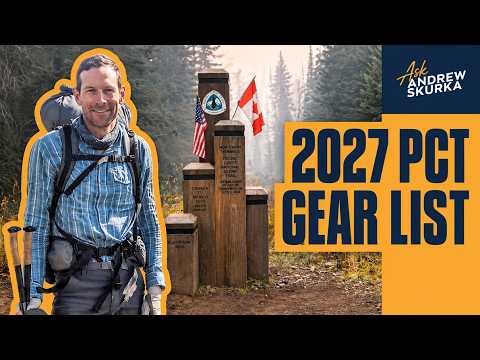
Andrew Skurka on 2027 Pacific Crest Trail Backpacking Gear
The Trek and Andrew Skurka · 38K views