The Rise and Fall of the Cray Supercomputer
1M views · Jul 7, 2024 · Education

Comments · 1.5K
@joeszep · 2 years ago
Cray's naming scheme doomed the company. While people would buy a Cray-X or a Cray-Y computer, no one would buy a Cray-Z computer...
1.1K
@thelittlehooer · 2 years ago
Cray was a whimsical man, too. When asked what tools he uses to design supercomputers, he was very specific: a 2B pencil. Anything harder or softer simply didn't leave the most desireable lines. When someone pointed out that Apple used a Cray to design the Macintosh, Cray said he is using a Macintosh to design the next Cray.
218
@randyscorner9434 · 2 years ago
I worked at Intel designing CPUs from 1980 through 2002. In the 80's we watched with interest the "supercomputer wars" which definitely influenced how we approached new processors. We didn't have enough area for large-scale parallelism but started by dedicating an unheard-of portion of the die to a Floating Point Unit. I designed that unit which was used in the 960 series, the 387 and eventually the 486. I was the design manager of the P6 (Pentium Pro/II) where we employed much more parallelism in addition to many techniques that had previously failed (out-of-order processing, speculative execution, register renaming, etc.). The Cray was always an inspiration, and in the late 90's we arrayed our processors and took the computing crown for a while. Interestingly, I knew the guys who started Ncube and even helped them fix their layout plots to avoid some fatal flaws. Those were heady times. We'[re now working on quantum systems, an even headier topic!
634
@thomcarr7021 · 2 years ago (edited)
A friend of mine had a scrapping business . He got the Cray account. He could only go through the plant at night when almost no one was there. One guy was always there, wearing a flannel shirt , drinking coffee and reading papers. It was none other than Cray. As time went on , my friend would make small talk while drinking coffee with him. Cray would even explain some of what he was working on. It was pretty funny, a guy hauling out trash talking with the worlds premier computer designer.
74
@georgegonzalez2476 · 2 years ago (edited)
My father worked for CDC at the time Cray was working on the 8600. Cray wasn't keeping HQ up to date as to how things were progressing. They were progressing very slowly. Norris sent my dad, who he knew was a laconic, hardheaded type like Cray, to take a field trip to Chippewa Falls to ask Cray how things were going. That was an inspired decision as Cray spilled the beans, the 8600 was unlikely to ever work due to cooling and reliability issues. <br><br>Dad borrowed some of my facsimile paper, a paper coated with toxic but conductive metal powder. If you apply current to the paper you can do a crude analog simulation of heat flow. The flow lines didn't look promising.<br><br>My dad brought the bad news back to Norris and he quickly wound down the 8600 project, and that prompted Seymour to leave CDC.
575
@singletona082 · 2 years ago
The Cray-1 was not just the best super computer of the day, but it was also Art.
263
@djdawso · 2 years ago
One minor correction to the video - The CRAY systems weren't C-shaped for cooling purposes, but rather to minimize the length of the backplane wires in order to reduce signal propagation delay. Cooling in the CRAY-1 and a few subsequent systems was provided by freon flowing through the vertical aluminum bars between the columns for the circuit boards, which were layered on both sides of heavy copper plates to conduct the heat from the circuit boards to the cold bars. Very elegant!
346
@mp29643 · 2 years ago (edited)
I met Mr. Cray when he was installing a Y-MP at the Air Force Weapons Laboratory at Kirtland AFB in Albuquerque. I was a young Lieutenant and they actually used one of my finite element models as a benchmark.
314
@jimbates6227 · 2 years ago
I once met Seymour Cray. I was a Field Engineer for Data General working in the Minneapolis field office. Cray Research was using a Data General Eclipse computer. I don't recall why. They had a hardware problem with the DG system at their Chippewa Falls facility and I repaired it. It was well after 5:00pm when I finished. I walked the halls of their building to find someone to sign my Field Service Report. That's when I met Seymour Cary, and he signed my FSR that night. I won't forget that encounter or his signature. I was 20 years old but still knew who he was and his legend.
139
@JamesHalfHorse · 2 years ago
"Which in bird culture is considered a dick move" You got me with that one.
109
@davidglad · 2 years ago
It's not at all surprising Warren Buffett declined to invest in a company that took a really smart guy to run it. Considering he has said he prefers companies that could be run by a ham sandwich.
500
@GregSr · 2 years ago
In 1986, I worked for a company (Dynamotion) that provided equipment to Cray Research. Specifically, we provided circuit board drilling machines that could drill holes as small as 0.0039" diameter. That's about the diameter of a human hair. I was the applications engineer for Dynamotion. The drilled holes were then interconnected in a board stack using gold wire. Each one inch by one inch board had 2200 holes interconnecting 16 chips on each multi-layer board. The drill bit was spinning at 120,000 RPM. The spindle shaft was floating on air bearings. Ball bearings produced too much heat and vibration. Back then, air bearing spindles were leading edge. Back in the early 1990's, Chippewa Falls was my "home away from home". That facility is now TTM Technologies.
53
Up next
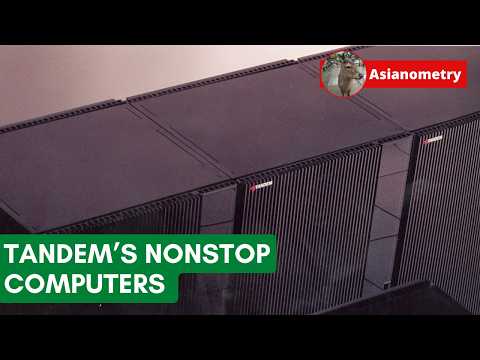
The Remarkable Computers Built Not to Fail
Asianometry · 333K views

What's All This About Gallium Arsenide?, lecture by Seymour Cray
Computer History Museum · 28K views

Legends of the RISC Wars
Asianometry · 340K views

Why the UK's IBM Failed
Asianometry · 633K views

The Chip Company That Helped Build Silicon Valley — Then Lost Its Lead
Obsolete Empires · 2.1K views

The most beautiful formula not enough people understand
3Blue1Brown · 1.5M views

What Once Saved Intel
Asianometry · 236K views

Itanium: Intel’s Great Successor
Asianometry · 314K views
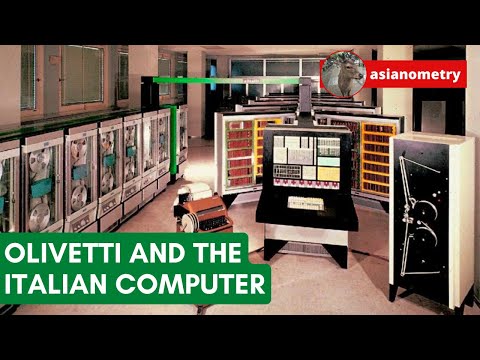
Olivetti & the Italian Computer: What Could Have Been
Asianometry · 279K views

The Closest Thing We Have to Alien Technology
Veritasium · 59M views

Texas Instruments Made a Computer (& It Failed)
Asianometry · 370K views

Chilling Chips: A Computer Cooling Chronicle
Asianometry · 172K views

The Ridiculous Engineering Of Jet Engines
Veritasium · 15M views

The Quantum Mechanics Behind the Periodic Table
Perhaps Barksley and Bub Explains · 80K views

The Dawn and Dusk of Sun Microsystems
Asianometry · 1.7M views

Colossus - The Greatest Secret in the History of Computing
The Centre for Computing History · 1M views

How IBM Lost the PC to Compaq, Intel & Microsoft
Asianometry · 338K views

The Fast and Furious Rise of Korean Semiconductors
Asianometry · 284K views

Every Confusing Thing About How Antennas Work Explained Slowly (For Sleep)
Cosmo Explains · 38K views

Google's Quantum Computer Just Crossed a Line Nobody Has - no joke
Fexl · 211K views