#1849 Linear Optocoupler (part 1 of 3)
28K views · Apr 30, 2024 · Science & Technology

Comments · 106
@JxH · 2 years ago
A wise man once advised, "Never use a 1k resistor; people will assume that you just guessed."
66
@rickeymh · 8 months ago
Wow! This is provoking a lot of memories for me. I was working for a now defunct company called 'circuit processing apparatuses' back in 1980. We were trying to use a HP photo-Interrupter to detect movement of a product in a vacuum. To ensure no false triggering, we gated the signal at a couple hundred KHz. However, we quickly realized that the bandwidths of these HP devices were not up to the challenge. My lead Engineer, pointed out this same system that you were explaining. Through a lot of trial and error we were able to get this circuit to work. Great memories.
2
@JxH · 2 years ago
Been there, done that. <br>Used a bulkhead (bolt-shaped) optocoupler to couple audio into a system where we had to ensure that absolutely nothing went the other way.<br>The LED and Phototransistor were given the old Y=mX+b treatment to linearize and center them within the available dynamic range.<br>We didn't even spend much time analyzing it, but very simply employed trimmer pots, with very generous range, to set the bias (offset) and gain on both sides of the bulkhead.<br>Twiddled four trimmer pots, while viewing with a 'scope. It worked like an absolute champ.
9
@cmuller1441 · 2 years ago
For the first simple schematic you should use a current source not a voltage buffer with a resistor. It's easy: just connect the feedback to in- to the point between the diode and the resistor.<br>This should already improve linearity.
16
@Manf-ft6zk · 2 years ago
This is a good compensation circuit which reminds also of how to work with thermocouples to measure rf power by comparing it with dc power. It depends on finding matching couplers or the special matched dual coupler. <br>An alternative to transmit an analog signal with optocouples is to convert the analog signal with analog means to analog pwm, which can be in fact analog but looks of course very much digital and is not quite as fast as with the optocouples.
4
@Dieseleux · 2 years ago
HCPL-7800 work well!
1
@Savan_Trivena · 2 years ago
Your movies are thrilling like a crime. 😬
1
@cnvogel · 2 years ago
Burr Brown ISO100 was a very fancy version of that scheme, in one huge ceramic package.
5
@JacquesMartini · 2 years ago
"Pro tips" from the stone age! OMG! The two separate optocouplers are obsolete for decades! IL300 is friend if you REALLY wanne do it plain analog, which is still OK in many situations. Modern isolation amplifiers all work digital using a delta sigma converter on the input, transmitting digital (optical, inductive or capacitive) and converting back to analog using a filter. Works like a charm! If you REALLY learn something usefull, get an IL300 and play with it!
3
@darrylgodfrey9604 · 2 years ago
Thank-you for this video - you unlocked something that was a mystery to me for some time.
@4DRC_ · 2 years ago
Perfect timing! I was just pondering about isolated analog inputs the other day :D
@y_x2 · 2 years ago
A IC like that IL300 was used in many telephone modem.
Up next

#1850 Linear Optocoupler (part 2 of 3)
IMSAI Guy · 7K views

Has the world lost the fight against heat? - The Climate Question podcast, BBC World Service
BBC World Service · 184K views

3 High Side MOSFET Drive Circuits
The Circuit Archive · 77K views

EEVblog 1609 - Composite Amplifier Tutorial + Practical Demo
EEVblog · 58K views

OASE 11391 BG FiltoMatic UVC 24
⭐ Nova Picks

How to Characterize Crystal Parameters Using a Vector Network Analyzer (VNA)
All Electronics Channel · 24K views

#1851 Linear Optocoupler (part 3 of 3)
IMSAI Guy · 7.8K views

How a Failed British Computer Company Built a $30 Billion Empire
Computer Secrets · 649 views

#724 CPC Compound Parabolic Concentrator
IMSAI Guy · 19K views

#1781 Gyrator (part 1 of 4)
IMSAI Guy · 12K views

120/240V to logic level optoisolator (with schematic)
bigclivedotcom · 188K views

Five 555 Circuits You May Never Have Heard Of
Doctor Volt · 81K views

It's Over: Bonds COLLAPSE to WORST Levels Since 2002 - Netherlands BANS Microsoft
House of El · 226K views

Op-Amps - Using Operational Amplifiers
DroneBot Workshop · 403K views

Current Sense Amplifiers (1/2): Why not to use an OpAmp (CMRR etc.)
Robert's Smorgasbord · 110K views

EEVblog #932 - How Does A HV Differential Probe Work?
EEVblog · 124K views

Every Confusing Thing About How Antennas Work Explained Slowly (For Sleep)
Cosmo Explains · 38K views

EEVblog 1464 - TOP 5 Jellybean Comparators
EEVblog · 62K views

#639 Transistor Curve Tracer (part 1 of 10)
IMSAI Guy · 11K views

3 Simple Tips To Improve Signals on Your PCB - A Big Difference
Robert Feranec · 128K views

Why a Magnet Doesn't Actually Run Out of Energy
Sleep On Physics · 123K views

{1145} Optocoupler Current transfer ratio CTR
Haseeb Electronics · 6K views
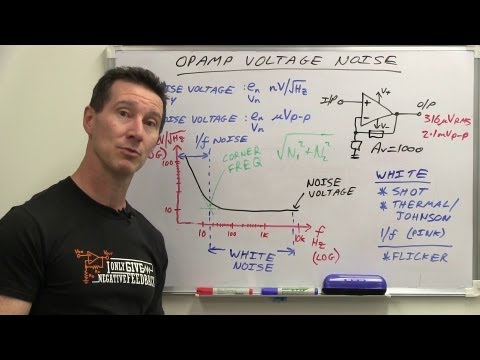
EEVblog #528 - Opamp Input Noise Voltage Tutorial
EEVblog · 159K views
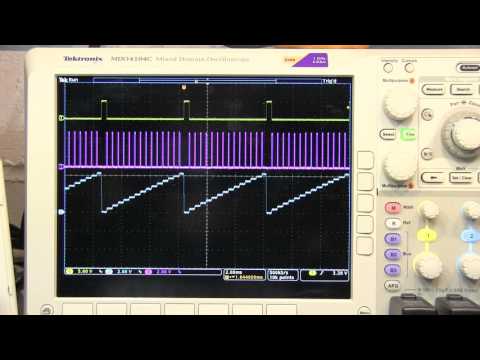
#231: Circuit Fun: Stairstep generator using 555 and op amps
w2aew · 60K views

Something BIG Just Happened Over Lithuania… NATO Takes EMERGENCY ACTION
The Frontline Show · 129K views

The Rise and Fall of Dekatron Tubes Before Transistors Took Over
Vintage Electronics Archive · 3.1K views