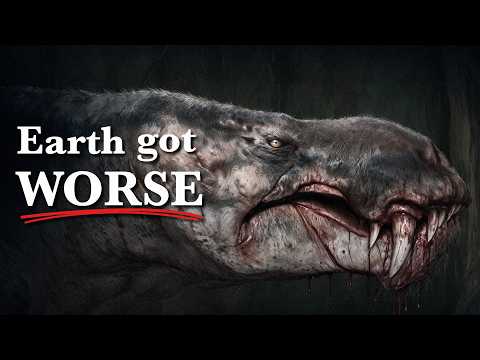
The last woolly mammoths did not die out with the ice age. A population lived on one Arctic island for six thousand years after the species had gone everywhere else, and the youngest animal we know of is a laboratory number on a bone: 4,024 years ago.
Nobody can tell you what killed them. That is not the usual documentary hedge. In the last few years the two standing explanations were both taken away — one by genetics, one by chemistry — and nothing has replaced them.
What the record actually says, and where it stops:
• Twenty-one mammoth genomes, all cut to the same depth of sequencing, published in Cell in 2024. That last part is the whole finding: sequencing one animal deeper than another makes it look more damaged, and the earlier comparison had exactly that flaw.
• The bottleneck was brutal — the three best-fitting models require an effective population size of about eight. Effective size is not a headcount. How many animals were standing on that island, the DNA does not say.
• They recovered to an effective size of two to three hundred within twenty generations, and then held for six thousand years. Mildly harmful mutations kept piling up; the severe ones were purged.
• Demography runs level right up to the end, and then the record stops: there are no genomes at all from the last ten generations, the very stretch a fast collapse would have to live in.
• The obvious suspect is people, and the dates make that a poor fit. The earliest human trace on Wrangel Island is 3,583 years old — more than four centuries after the last known mammoth.
• The isotopes say the food was fine: no narrowing of the diet, no decline in quality, no sign of slow starvation. The authors note their own limit — a short crisis would not show up in bone at all.
• What is new is a method, not an answer. A 2025 study learned to tell microbes a mammoth actually carried from the soil that moved in after death. Six groups came through the filter. None of them is a killer.
Four possibilities are left standing, and the hunters we cannot rule out. Not one of them is proven, and the authors allow that several may have acted together. What can be closed is not a version but the old explanation: the textbook case of a small population dying of its own genetics does not survive contact with the corrected data.
Nothing here was filmed. Everything here can be checked. The imagery is AI-made unless credited; every figure, date and quotation comes from the published research listed below. The science is sourced — the visual detail is interpretation.
CHAPTERS
0:00 A laboratory number on a bone
1:28 The island, and six thousand years
4:00 How was that even possible
6:41 Twenty-one genomes
10:15 What is left
16:16 A bone with a number
SOURCES
Dehasque, M., Morales, H.E., Díez-del-Molino, D., Pečnerová, P., … Vartanyan, S., Dalén, L. 2024. Temporal dynamics of woolly mammoth genome erosion prior to extinction. Cell. doi:10.1016/j.cell.2024.05.033
— the 21 genomes, the bottleneck and the recovery; the cause of the end "remains unclear", and the extinction "happened rapidly".
Dehasque, M., Pečnerová, P., Muller, H., … Dalén, L., Lister, A.M. 2021. Combining Bayesian age models and genetics to investigate population dynamics and extinction of the last mammoths in northern Siberia. Quaternary Science Reviews 259. doi:10.1016/j.quascirev.2021.106913
— the dating: mammoth 4,024 cal BP, human trace 3,583 cal BP, and the century-long window after the last dated animal.
Rogers, R.L. & Slatkin, M. 2017. Excess of genomic defects in a woolly mammoth on Wrangel island. PLoS Genetics 13. doi:10.1371/journal.pgen.1006601
— the original "mutational meltdown" case.
Fry, E., Kim, S.K., et al. 2020. Functional Architecture of Deleterious Genetic Variants in the Genome of a Wrangel Island Mammoth. Genome Biology and Evolution. doi:10.1093/gbe/evz279
Arppe, L., Karhu, J.A., Vartanyan, S., Drucker, D.G., Etu-Sihvola, H., et al. 2019. Thriving or surviving? The isotopic record of the Wrangel Island woolly mammoth population. Quaternary Science Reviews. doi:10.1016/j.quascirev.2019.105884
— the isotopes, the sulfur trend, the drinking-water hypothesis and the authors' caution about it.
Guinet, B., Oskolkov, N., Moreland, K., Dehasque, M., Chacón-Duque, J.C., et al. 2025. Ancient host-associated microbes obtained from mammoth remains. Cell 188. doi:10.1016/j.cell.2025.08.003
— the 483 datasets, and Pasteurella in eleven mammoths, Wrangel among them.
Graham, R.W., Belmecheri, S., Choy, K., Culleton, B.J., Davies, L.J., et al. 2016. Timing and causes of mid-Holocene mammoth extinction on St. Paul Island, Alaska. PNAS 113. doi:10.1073/pnas.1604903113
— the island where the question does have an answer.
Radiocarbon (2026). doi:10.1017/rdc.2026.10197
— Bayesian age models over more than seven hundred radiocarbon dates from northern Siberia, 164 of them from Wrangel Island.