LaunchPad: Ancient Greek Vase Production and the Black-Figure Technique
280K views · Apr 15, 2013 · Education

Comments · 45
@ElagabalusRex · 10 years ago
On second thought, making a counterfeit Amasis looks like more trouble than its worth.
49
@soulak6332 · 5 years ago
Thank you for the clarity of process!!
4
@jeparturu · 1 year ago
I love this video, very educational ❤
2
@rzeka · 6 years ago
Spot-on How it's Made impression, I love it
2
@Forresters-j1d · 1 year ago
wonderful and informative - thank you for this walkthrough!
@LucasPenteado-s5v · 1 year ago
Amazing
@robcoghan5204 · 5 years ago
Terse, outstanding!
@lilyborrego9482 · 5 years ago
To make a vase, workers first mined naturally occurring clay and fixed it with water in the outdoor pools <br>Impurities of the clay would sink to the bottom <br>As the water evaporated, it left behind a layer of purified clay, which was then kneaded by workmen to make it more malleable <br>To start to form a vase, a mass of clay is centered on a potter’s wheel <br>In ancient times, the wheel would have been rotated manually by the potter or his assistant <br>Moden electric powered wheel works the same way <br>With his hands, the potter forms a depression in the clay <br>By pulling outward and upward slowly, he carefully forms the clay into the desired shape depending on the type of vessel <br>We do not know exactly what tools ancient craftsmen employed, but in addition to their hands, they may have used wood, metal, and sponges. <br>The next day, the vessel has dried and excess clay is trimmed away and the excess is smoothed <br>A separately made food is applied for stability. Handles made from coiled clay complete the shape of the vessel <br>Once the vessel has been shaped, it is prepared for painting <br>A fine clay, called slip, is painted onto the area that the artisan whished to be black <br>To provide a background for further decoration, an unpainted area will be decorated with a scene [ainted in the black-figure technique <br>After the clay had dried to a leathery, hard texture, the base painted could make preliminary sketches in charcoal which would disappear later during firing <br>Using the charcoal sketched as a guide, slip would be used to ass silhouetted forms, often human figures <br>Details and internal lines were then incised through the slip to reveal the lighter colored clay below <br>Additional details are usually made with red ochre <br>When fired, it would turn purple to depict blood, clothing, etc <br>To portray white, a pure clay with minimal iron oxide was used, often chosen to depict women’s skin, marble objects, animals, and patterns <br>With the painting complete, the vessel was ready to be fired in a kiln <br>This 3 set process lasted 6 to 8 hours <br>but since there was no precise thermometers or accurate clocks, it required great precision and experience <br>First, the temp was raised to about 1500 degrees Fahrenheit <br>By allowing air into the upper chamber of the kiln, an oxygen-rich atmosphere was created <br>This produced red ferric oxide in both the clay and slip, which caused both to turn red <br>Second, the temp was raised further to about 1700 degrees Fahrenheit <br>Air vents were closed and damp wood or wet leaves were placed in the stoking tunnel of the kiln <br>This created an oxygen-poor and carbon-rich environment <br>This produced black ferrous oxide in the clay and slip, which turned both from red to black <br>At this point, the slip became a glossy shell that was resistant to any further changes <br>In the third and final step, the air was permitted to enter the upper chamber of the kiln again, creating an oxygen-rich environment once more <br>The surface of the vessel not covered in sleep turned from black bac to red, and the glossy, slipcovered areas-such as figures-remained black <br>The kiln required around 12 hours to fully cool down, after which the vases could be removed
10
@ChefKhaliebRufael · 11 years ago
How much do/did vases like this usually weigh?
2
@blkhistorydecoded · 6 years ago
In some of the Ancient Greek Black figure art you can tell that the blackness was scratched off. Making it seem that underneath was originally White but purposely painted Black over it.
5
@comicluigi7 · 2 years ago
I miss this kind of narrator
@AlexeyChesnok · 7 years ago
Slip had to have some low-melting point additives otherwise it wouldn't create glossy sealed surface. Any info on what these might be?
4
Up next

Black Figure vs Red Figure Ancient Greek Vase Painting Techniques (76)
Lucas Livingston · 43K views

Make Pottery At Home Without a Kiln (Or Anything Else)
Andy Ward's Ancient Pottery · 1.5M views

Master Vases of Ancient Greece
GBH Forum Network · 12K views

The Mary Ann Frable Lecture in Ancient Art | “It’s Showtime! Greek Vases and Ancient Performances”
Virginia Museum of Fine Arts · 1.7K views

Why Workers In India Risk Their Lives To Recycle Your Old Clothes
Business Insider · 361K views

Trump meets his favourite dictators and threatens to take on the ICC | Planet America
ABC News In-depth · 168K views

Making CLAY POTS With 60 years Experienced Hands
TMA+ · 11K views

Canada PM Mark Carney Gives Trump Impersonator The Stage To MERCILESSLY Roast US President | N18G
CNN-News18 · 1.2M views
The Stunning Roman Mosaics Hidden Under A Molehill | Time Team | Odyssey
Odyssey - Ancient History Documentaries · 1M views

Figures in Red: Red-figure technique in ancient vase painting
Museum of Fine Arts, Boston · 60K views

How to Center Clay — A Beginner's Guide
Florian Gadsby · 2M views
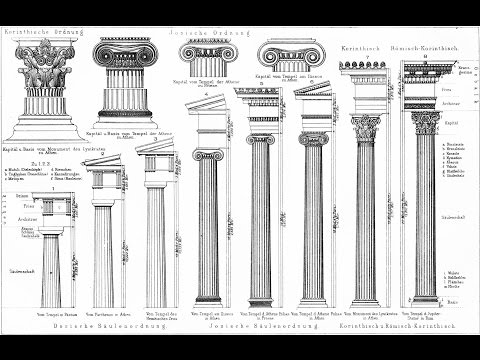
The classical orders
Smarthistory · 1.3M views

Ancient Greece in 18 minutes
Arzamas · 5.1M views

The Art of Making a Tapestry
Getty Museum · 1.9M views

Roman Mold-Blown Glass
Corning Museum of Glass · 128K views

African Pottery Forming and Firing
Christopher Roy · 1.7M views

Making Greek Vases
Getty Museum · 332K views
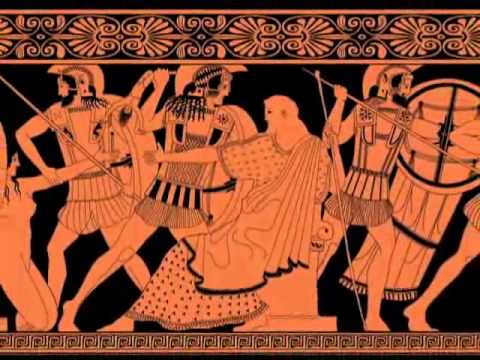
Greek Studies: Vase Paintings, Telling Stories with Pictures
teachgreecevideos · 83K views

Sakiori - the Japanese tradition of turning rags into riches
Sakiori - the other Boro · 284K views

Penthesilea bowl | Greek vase painting in practice | Τhe red figure technique
ATTIC BLACK: ΘΕΤΙΣ AUTHENTICS LTD · 39K views