Ramanujan Hegde (MRC) 3: Recognition of Protein Localization Signals
13K views · Aug 3, 2017 · Science & Technology

Comments · 12
@christiandiwo3591 · 6 years ago
Thank you, for this really well structured and easy to follow crash course! The whole process is beautifully visualised. Great job!
3
@rogerparker3422 · 6 years ago
Thanks - this has been a brilliant series of three presentations. I hope you do more in the future.
1
@nanotech_republika · 8 years ago
awesome presentation!
2
@michaelmacdonald2907 · 6 years ago
In my 'paint-buy-number' opinion -- That's Brilliant Work !!<br>What a great age to be alive. The technological tools and techniques for you to investigate this fascinating and pertinent field and also your willingness to describe your efforts to my crayon mentality. <br>Oh yeah, and great presentation.
1
@lastchance8142 · 4 years ago
It's always incomprehensible to me how so many thousands of highly complex macromolecule pathways and atomic-level interactions are accomplished by highly specific products presumably evolved by random mutations. Nobody can explain this.
@CarterColeisInfamous · 6 years ago
<a href="https://www.youtube.com/watch?v=FHcAIqYztlk&t=1048">17:28</a> thats sick AF
1
@scottnineteen · 5 years ago
Nah mate, even now, the ER is an interwoven 3D web which dynamically interacts with both a similar web of microtubules and perhaps all of the other organelles, that is the explanatory description of the cell.
@woloabel · 3 years ago
(On Tuesday of April 18, 2023). ON the Matter of PhD Ramanujan Hegde (MRC) on the Idea of Recognition of Protein Localization Signals in the Overall Matter of Proteomics and Protein Biosynthesis or Biochemistry Therein: 1) Amphipathic Peptide Residues of a somewhat Cognizant Rationale is my understanding of the SRP Protein, SRP-R -Sec61 Protein Translocon as the Prevailing Nature of all the Proteins aside from the Hydrophobicity on the Transmembrane Polymerization but Hydrophilicity Specificity is almost Unaffected or Highly Insensitive there to. At any rate, what about Isolation of the Protein of Interest and Amplification/Purification along with the Sequencing Analysis. I reckon by now Proteomics is almost as straightforward as Complementarity in Nucleic Acid (RNA/DNA). 2) I also do see the Protein Biosynthesis of the Pancreas a Highly relevant in a Medical Approach as is as a Pure Protein Translation-Translocation Exercise of Pure Science, for the Pathology of GMOs is straight Pancreatic Cell (Beta Mostly) Exhaustion sometimes to the Point of rendering the Translational Fidelity as the Primary Mechanism of Pathology and less so a Matter of Investigation of Medical Therapeutics. Maybe some form of High-Fidelity Reprogramming via some Enzymatic Correctional Gene Therapy is likely to garnish Pharmaceutical Interest but Not here. I rather Correct the Psychosis therein. 3) Ribosomal Consistency of a Ration of 50-50 Protein to Ribonucleic Acid has to also Permit this Intelligent Biochemistry as the Structural Part of the Ribosome can be Attributed exclusively to the Protein Side of the Organelle while the Ribonucleic Acid merely to Mediate Translation-Complementarity. Or this Dynamics also reminds me of the Protein Function in the Nucleus as Basically Carriers or Holders (Chromatin Stability of DNA being Primary in Such Design) of Deoxyribonucleic Acid (DNA) and Epigenetics Therein where the Methylome (Totality of DNA Nucleotide Methylation) or the 5' Cytosine-Phosphate-Guanosine-3' (CpG) serving to Repress of Upstream Genes, an Epigenetic Mechanism in Proliferation Pathology. Or Even the Understanding of Post Translational Modifications (PTMs) within the Histone, Histone Variants, or the Remodeling of the Nucleosome Entirely as a Function of Environmental Factors often Reflecting as Pathological Features. 4) Transmembrane Helices 5 and 6 are the most Amphiphilic and therein the Surfactant-lIke Flow of Proteins. I have read a 3.4 Angstrom Resolution yields a Vantage Point where SEC61-Gamma Endoplasmic Reticulum Side allows Translocation therein while all other Helices simply serve to various amphipathic Extents depending on the Ribosome-SEC61 Complex Orientation (Secretory versus Translocation Positions) and the Voorhees-Hedge Submission of 3.6 Angstroem Resolutions yields Another Sequence and Molecular Weight maybe there is Variation if Not Mutation. Anyway, nice to know pathology herein can be visualized for Possible Mechanism if any (Alzheimer's Disease but Certainly Huntington's Disease are herein Correctable if not Associated with Protein Translocation Deficits or Defects. I would reckon Variation in this Gene is not yet even Understood or Locus Localization for that Matter. Praises and Salutations. PhD Ramanujan Hegde, es geht sehr gut zu verheilen und wiedersehen Proteomiks der Gesundheit gegen Die Kranktierenstoff heran. Es immer soll die Naturalische Type Heilig Sein. Heil!
@hdhddhdb2894 · 6 years ago
مفاتيح
@rishaalsharma · 7 years ago
So does the first part of the protein chain always have to be hydrophobic?
1
Up next

Ramanujan Hegde (MRC) 2: Quality Control of Protein Localization
Science Communication Lab · 12K views

From the scientist's view: a conversation with Manu Hegde
MRC Laboratory of Molecular Biology · 4.5K views

Tom Rapoport (Harvard, HHMI) 1: Organelle Biosynthesis and Protein Sorting
Science Communication Lab · 46K views

I finally saw quantum physics with my own eyes... (It's spookier than I expected)
Veritasium · 21M views

Anne Bertolotti (MRC LMB) 1: A Historical Perspective on Protein Phosphatases
Science Communication Lab · 13K views
Kai Simons (MPI) Part 1: The role of lipids in organizing the cellular traffic.
Science Communication Lab · 22K views

The Secret to Mind Control - Nobel Prize 2026 EXPLAINED
Dr Ben Miles · 2.1M views
How Cells Make Membrane Proteins
NIH VideoCast · 2.3K views
Rachel Green (Johns Hopkins U., HHMI) 1: Protein synthesis: a high fidelity molecular event
Science Communication Lab · 101K views
Deshaies (Amgen) 1: A primer on the ubiquitin-proteasome system
Science Communication Lab · 50K views
Rothman and Schekman: Uncovering the Secretory Pathway
iBiology Science Stories · 7.3K views

Gia Voeltz (CU, HHMI) 1: Factors and Functions of Organelle Membrane Contact Sites
Science Communication Lab · 24K views

Trump Pressures Nvidia to Reinstate CEO Jensen Huang & He Tries to Explain Calling Putin His Friend
Jimmy Kimmel Live · 2.5M views

James Spudich (Stanford) 1: A brief history of muscle biology 1864-1969
Science Communication Lab · 14K views
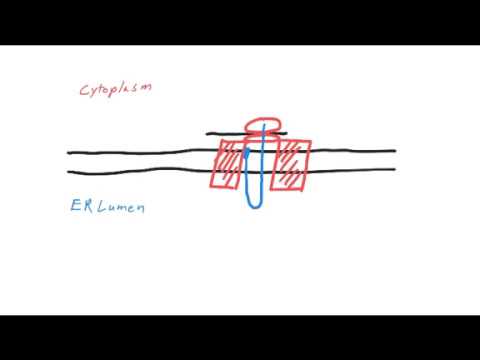
SRP and Protein Translocation: Mechanism
CellBiology · 40K views
Tom Rapoport (Harvard, HHMI) 2: How are cellular organelles shaped?
Science Communication Lab · 20K views

Ron Vale (UCSF, HHMI) 2: Molecular Motor Proteins: The Mechanism of Dynein Motility
Science Communication Lab · 221K views

The tale of tangled tau in Alzheimer's disease
MRC Laboratory of Molecular Biology · 6.8K views

Protein Transport in Mitochondria
Easy Peasy · 18K views

Tim Mitchison (Harvard) Part 1: Self-organization of microtubule assemblies
Science Communication Lab · 26K views