#SpaceHeater #FireSafety #ElectricalSafety
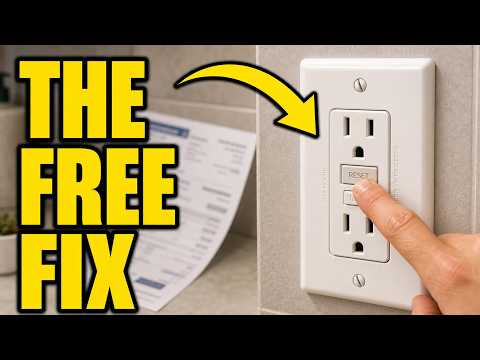
A $3 part can hit 300°F in your wall while your breaker sits there doing nothing
Right now there's probably a heater coming out of a closet somewhere and going
straight into an outlet nobody has looked at since 1968. In this one I run the
eight checks on the outlet itself — not the heater — in the order an actual
electrician would run them: the four that cost nothing and take twenty minutes,
then the three that need the power off and a screwdriver, then the one that
isn't a project at all, just a phone call.
I'm going to be straight with you up front, because this topic collects bad
advice: none of this is about the heater being dangerous. Modern heaters have
tip-over switches and overheat shutoffs and they're genuinely well-built. The
failure I'm talking about happens behind the faceplate, at a connection that's
been quietly getting worse for forty years, and it does not announce itself.
Federal investigators defined a fire hazard condition at a receptacle as the
cover plate screws reaching 300°F — and your breaker can sit through that
without tripping once, because a breaker watches current, and a bad connection
doesn't pull extra current. It forces the same current through less metal. The
difference comes out as heat.
Here's what we cover:
Why 1,500 watts is 12.5 amps on a circuit the code only lets you load to 12
continuous — and why the low setting is the free fix nobody uses
The fifteen minutes with the breaker off that tells you what else is sharing
your heater's circuit, and why one breaker feeding a whole floor is the normal
case in an older house
Extension cords and power strips: the two separate mechanisms that make them
fail here, and what the national fire code actually requires
What brown staining around the outlet slots is really telling you — not
cosmetic wear, a history
The ten-second grip test that tells you more about a receptacle than a home
inspection report
Warm plug vs. hot plug — the distinction almost nobody makes, and how it gets
people to ignore a real problem
Backstab connections: a spring clip biting one side of a wire, carrying 12.5
amps, passing inspection for forty years
The one place I stop and tell you flat-out not to follow me — panel work, and
the lugs that stay live with the main off
The nine-year window between 1965 and 1973, and the 55x number that outranks
every other check on this list if your house falls in it
The result: for most of you this ends in the first twenty minutes, with a
flashlight and no tools at all — a sticker read, a breaker flipped, a cord
moved, a piece of plastic looked at in good light. The expensive checks exist
because a handful of houses genuinely need them, not because everybody does.
The whole point of running the list cheap-to-expensive is that you stop as soon
as you find it.
⚠️ Safety note: This is general homeowner guidance, not a substitute for a
licensed electrician. Anything behind the faceplate happens with the breaker
off and confirmed off with a tester — "I'm pretty sure that's the one" is not
confirmation. Panel work is licensed work in most places for good reason, and
aluminum branch wiring is explicitly not a DIY repair: a copper pigtail twisted
on with a standard wire nut is worse than leaving it alone. If an outlet is
hot, discolored, or smells like warm plastic, stop using it and get a
professional on it.
💬 Tell me in the comments: go do Check 5 right now — plug the heater in, let
go, and watch what the plug does. Did it sit tight, or did it sag the second
you let go of it? I'd bet a solid third of you find a loose one tonight. And if
you're in an older house and you went and looked at your wire and found silver
instead of copper, say so — there are more of you than people think, and
somebody scrolling these comments needs to know they're not the only one.
▶️ Coming next: the one room in your house that never gets warm no matter what
you do, and the six reasons why — in the order a real tech would check them,
from the free one to the one that costs you a weekend.
#DIY #SpaceHeater #ElectricalSafety #FireSafety #HomeMaintenance #OldHouse
#HomeownerTips #WinterPrep #DIYHomeRepair #ElectricalTips