It Turns Out, Hybrids Are Really Hard On Engines
3M views · Oct 18, 2024 · Autos & Vehicles

Comments · 6.6K
@EngineeringExplained · 2 years ago · pinned
<b>*Let's address the common questions!*</b><br><b>1) Does this mean hybrids aren't reliable?</b> No! Just because something is challenging or problematic, does not mean there aren't solutions to overcome it. Toyota has repeatedly proven hybrids can be insanely reliable, as discussed in the video. Good engineering can overcome real problems. In the car world, it's often thought that "simple = better" but you can have something complex and reliable (Prius), and you can have something simple and unreliable (ahem, you know who they are). There's a lot of fascinating engineering that goes into making these things run reliably. <br><b>2) Are the problems overblown?</b> It depends! As mentioned in the video, it's completely scenario dependent on whether you build up water/fuel dilution over time. Modern hybrids will have algorithms to address this as much as possible - with scheduled longer run times to help boil off water. For long distances, you can get temps high enough, consistently enough, to get rid of water/fuel. Even still, versus non-hybrids, you will see lower average temperatures, and short trips can exacerbate this issue (especially if the engine is turning on/off during these trips).<br><b>3) How do older hybrids deal with these problems?</b> Many ways! One of the easiest solutions to ensuring you don't have too much oil/fuel dilution is a shorter oil drain interval. Changing the oil is a guaranteed way of getting those fluids out. The more frequently you do this, the less of a challenge it is. Modern engines are calling for longer and longer oil drain intervals - the video discusses a product which is designed to handle these longer intervals reliably. <br><b>4) What about electric oil pumps; does that help with start/stop?</b> Sure, in many modern hybrids you have electric oil pumps - this can help provide oil flow prior to re-starting the engine. But not all hybrids have electric oil pumps; plenty (especially older hybrids) have mechanical pumps that only run when the engine is running. When you don't have oil flow, you're reliant on the properties of the oil - what film is left behind, as well as additives (like ZDDP, as discussed) to protect the engine in these scenarios.
2.3K
@Scott8919 · 2 years ago (edited)
The amount of hybrids on the market going hundreds of thousands of miles on the original engine is proof automakers have enough measures in place to compensate for the issues raised here.
15K
@camtoufan3704 · 2 years ago
Sum up: this video is a promotion piece for Mobil1.
3.1K
@bizmar · 2 years ago
Recent research has shown that Nutella is a bad engine lubricant
3.3K
@The_Flying_Comrade · 1 year ago
im so screwed. It's 3am and I'm learning about hybrid oil :(
363
@tobberfutooagain2628 · 2 years ago
My Prius 200,000 miles, and running like the day I bought it. Same motor, same battery. Toyota figured it out.
1.2K
@Duckferd · 2 years ago (edited)
As a engineer who has worked in PCV systems, the first time we saw the condensation/moisture problem from repeated starts was not in PHEVs and hybrids... but actually normal ICE vehicles in dealership lots. During the winter, we noted that some dealers would move cars from one side of the lot to the other side as they clear the lot of snow. Over 30-40 of these 'cycles', they end up with substantial amounts of water in the crankcase, and we had to instruct dealers to leave the vehicles on to fully warm up to prevent this happening. Typically in small amounts this doesn't cause an issue, but as you imagine, problems started to crop up when that much water has accumulated in the engine. This experience was really useful when we got into PHEVs, because we developed two things: a counter to force the engine to turn on after a number of 'cold starts' to force a warmup cycle, and then an algorithm to modify (shorten) the oil change interval minder if the engine is still not given the opportunity to warmup (say if the customer has constant short drives). <br><br>As a tangentially related topic, moisture in oil is also how some oil catchcan manufacturers mislead, or at least inflate, claims about how well their products work. Today's PCV oil separation systems are basically like science experiments and incredibly efficient under most circumstances, but they do not filter out fuel and water vapour (those go back into the intake to be ingested). So when you see forum posts from oil catchcan manufacturers showing how much fluid they're capturing from new/modern street driven vehicles not subject to high G-loads, chances are that it's mostly water and fuel, and they never put that fluid into an oven to evaporate it and show you the true amount of oil they're actually capturing.
4.8K
@funlovingJohn · 2 years ago (edited)
Toyota Hybrid engines use 3 phase veriable speed water pumps and oil pumps controled by the engine computer. Even though the engine may not be running the water and oil pumps are running while driving. So thats two reasons why Toyota Hybrid taxi's with 600000 are still running strong.
2.9K
@technicolorProducer · 1 year ago
2010 Prius owner 210k....original owner/original battery no repairs outside of brakes...drove the vehicle from New England to Las Vegas (towing a utility trailer) where it stayed in the heat for 4 years . I have a truck but this is my daily driver and it drives like no with no rattles....usually 40+ mpg (would do better but I put on Michelin defenders on her and all of the plastic panels underneath are long gone. THANK YOU TOYOTA!!! Your cars have saved me a LOT of money!!!
79
@sf7234 · 2 years ago
Putting a sandwich over your tailpipe helps absorb the unwanted mayo
219
@trudgemankPhD · 2 years ago
Sounds like a solved problem, but I like being educated about solved problems.
902
@zahir585 · 1 year ago
This is sales pitch for mobile 1 products
63
Up next

I EXPOSE WHY HYBRIDS ARE POINTLESS!
carwow · 2.8M views

Jeep's New Hurricane 4 Engine Is Insane!
Engineering Explained · 875K views

Nobody understands the point of hybrid cars
Technology Connections · 3.1M views

Here’s Why Toyota Sales Are Dropping Like a Lead Balloon (And What I Hate About New Toyotas)
Scotty Kilmer · 599K views

Do Thin Oils Destroy Engines? Lessons From GM’s Massive Recall
Engineering Explained · 2.7M views

Toyotas New 15L Hybrid Engine Just Changed Everything
Latest Toyota News · 9.4K views

Mild Hybrid vs Full Hybrid vs Plug-in Hybrid vs EV vs ICE + Best and Worst Models From Each Category
driving 4 answers · 303K views

The Science Behind Million Mile Engines!
Repair Geek · 1M views

Don’t Hate — eCVTs Are Genius Transmissions!
Engineering Explained · 1.3M views

10 Features that make buying a new car a bad idea
Budget Mechanic · 2.6M views

TOYOTA UNLEASHED A $28,500 LAND CRUISER BUT AMERICA ISN’T ALLOWED TO BUY IT!
I Show Autos · 70K views

Honda Is Losing Everything: The $65 Billion Mistake
MAXIMUS · 665K views

The Truth About Hybrid Cars : It’s Worse Than You Think!
Just Have a Think · 157K views

Chinese EVs: Built To Lie
China Insider with David Zhang · 674K views

Toyota vs Honda Hybrids: Which One Has the WORST Hybrid System?
Dale's Garage · 187K views

Why Lobsters Are Boiled Alive, And What They Really Feel
Murph · 357K views

Owning A Lucid Has Been Super Disappointing
Engineering Explained · 1.5M views
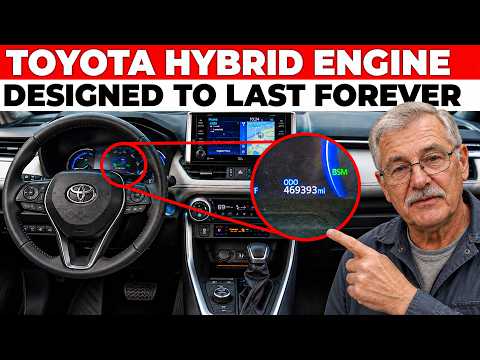
10 Shocking Reasons Why Toyota Hybrid Engines Last Forever
Ray Donnelly and Ray's Garage · 89K views

Once You Understand it, You Will Think Everything Else is Silly - Toyota E-CVT
driving 4 answers · 1.9M views

Every Engine With a Strange Mechanism Explained
Overscaled · 4.8K views