The Ear Training Exercise That REALLY Matters! Why Don't They TEACH It?!
222K views · Mar 1, 2022 · Education

Comments · 425
@LeviClay · 4 years ago · pinned
Blown away by how many of you are finding this video! That’s super cool!<br><br>Share it with your friends, and don’t be afraid to ask questions! I’m always here ❤️
54
@Rvictorbravo · 3 years ago
45 yrs ago I was a music major. My professor had us do this very thing. By the end the course we had transcribe Bach chorales, parts of Mozart sonatas, and some 12 tone rows that he would play. We also had to sight sing in front of everyone. I’m grateful for that training even today
96
@AWSKAR · 2 years ago
Ear training also requires some singing. You just have to practice the ear training exercises with singing even if you don’t want to.
5
@jrthiker9908 · 4 years ago
Great video. I'm a professional musician (conductor/pianist) and have utmost respect for transcribers. As a conductor, I need to hear the vertical sounds in my head when looking at a score, and my piano training helped immensely. 2 of my early piano teachers were also composers and made me do advanced level ear training and sight reading even as a 10 year old. An essential part of piano lessons included melodic, harmonic, and rhythmic ear training, complex jazz chords and having to transcribe 4 part chorales. Each lesson ended with sightreading a Mozart piano duet or a Bach prelude or fugue, no stopping allowed, if I goofed up I had to fake it and keep moving. And they made it fun. As a freshman at university I was able to test out of the entire first year theory class. All that early training laid a foundation for my conducting for which I'm eternally grateful. Only later did I realize how lucky I was, since most of my colleagues never got a fraction of that training, even in music school.
245
@andyharpist2938 · 3 years ago
I have been looking for someone to say this for a lifetime. <br>THIS is the skill we are all looking to acquire...not to learn that something is a "c minor 11 sus 4"..but to play what we WANT rather than know what we last played.
41
@pickinstone · 4 years ago (edited)
Ear training and rhythm are my favorite healthy rabbit holes. They key is to get over yourself and sing everything you know. That goes beyond hear a C and sing the 5th. That goes into singing bass movement of tunes you are learning, singing the melody while playing the bass movement, singing the 3rds of the harmonic movement. Helps you hear how harmony functions in a key center. <br><br>Being able to hold onto a key center in your inner ear, because most music--even jazz (don't me started on Giant Steps, you have to hear how it all returns back to B major)--is key centric. Sight singing. I learned most of my ear training by studying with Bruce Arnold and continuing to hone my ears with his digitized library--because he got the premise from the master of musicianship studies CHARLIE BANACOS. <br><br>Ear training isn't a parlor trick; it's a life long endeavor that should be practiced in conjunction with whatever you are currently working on. Practicing tritone subs? Sing the movements. Sing the lines. Practicing some Meshuggah song in an odd meter? Sing it! If you can hear it, you can own it. If you can sing it, you can song it--turn it into music.
122
@paddyodriscoll8648 · 3 years ago
Rick Beato made a rather good case for people losing the ability to develop perfect pitch in childhood, and, from that point on people can only develop their relative pitch. From what I’ve seen, the evidence does seem consistent with this claim….
5
@MaggaraMarine · 2 years ago
I think one way of learning the characteristic notes of different scales is to use the tonic triad as a reference point. There are only two tonic triads - major and minor. All of the other notes in the scale are always a step away from one of the notes in the tonic triad (1 3 5).<br><br>7 is below the 1.<br><br>6 is above the 5.<br><br>4 is above the 3.<br><br>2 is above the 1.<br><br>A good exercise is to sing the tonic triad, then sing a "tension" (i.e. a note outside of the triad), and then resolve it to the closest note in the tonic triad.<br><br>You can try this with different modes.<br><br>1 7 1 - 5 6 5 - 3 4 3 - 1 2 1 would be major.<br><br>1 b7 1 - 5 6 5 - 3 4 3 - 1 2 1 would be Mixolydian.<br><br>1 b7 1 - 5 6 5 - b3 4 b3 - 1 2 1 would be Dorian.<br><br>1 b7 1 - 5 b6 5 - b3 4 b3 - 1 2 1 would be Aeolian.<br><br>1 7 1 - 5 b6 5 - b3 - 4 - b3 - 1 2 1 would be harmonic minor.<br><br>You get the idea. (Maybe singing the full triad first would be the best idea, so sing 1 3 5 8 5 3 1 if the tonic triad is major, and 1 b3 5 8 5 b3 1 if the tonic triad is minor. Then sing the "tensions".)<br><br>I think using the tonic triad as a reference point makes it easier to learn to feel your position within the scale.
8
@alvodin6197 · 3 years ago
Ive been using ear training apps for 1.5 years at least 30 min per day and it helped, very slightly. What did help as you say: Hear melodies in your mind and figure out what intervals they are. Start with basic melodies from pop music. Humm along and know it, don't just guess on the piano. Really use your brain to know what is happening. I went from not playing by ear to being able to play most intermediate melodies at least, almost instantly. Still learning every day. It's so much more fun than just reading sheet music. Sorry classically trained musicians. Yes, ear training has life changing and made me appreciate music to a whole other level!
64
@DreamPurpleFloyd · 4 years ago
Great video. I started training my ears last year. At first I only did intervals/ triads/ scales recognition and while I was making progress, I was feeling like I couldn't get the 'color' of each interval, that I wasn't able to really internalize it. After I while I decided to try singing by 'anticipating', like Levi explains in the video above (ie: playing a note on the keyboard/ guitar and trying to sing a fifth above). Within weeks I could feel a real improvement. I could finally get the color of each interval!<br><br>Fast forward one year and now I am able to sing intervals, arpeggios and scales and I'm able to identify them quickly when I hear them. Of course it's not always perfect as I'm still a beginner, but I can garantee you this works. Hell, when I skip singing a few days (because I have a sore throat for example) I can almost immediatly feel like my recognition ability dropping a little bit.
72
@winstonwu-i9s · 1 year ago
Ear training feels like Identifying a personality. When I was in elementary school I learned to spell words by seeing words as a facial expression and a personality so I became a better speller.
2
@GodLoves-k8p · 4 years ago
Top shelf teacher! You explain and put it into context the best!
6
Up next

How To Play ANY Song By Just LISTENING With FRANK TEDESCO! - Ear Training Tips
Levi Clay · 97K views
Ear Training Feels Confusing Until You Fix This
Use Your Ear · 4.5K views

You DON'T NEED Music Theory To Have Amazing Ears - Just Try This!
Levi Clay · 24K views
How to really develop relative pitch! Why are intervals exercises ineffective?
Use Your Ear · 111K views

The #1 Secret of Ear Training
Use Your Ear · 79K views

The Best Scrabble Player is GENUINELY insane
s0ngbird · 12M views

Ear Training Is Broken — A Juilliard Professor Fixes It
Jazz Lab Music · 27K views

The Key to Identifying Musical Intervals by EAR!
Saher Galt · 21K views

The Path to Audiating Harmony Clearly... Experience 8 Breakthroughs
Kevin Ure (UreMusic.com) · 28K views

Chords by Ear: The Real Process
Max Konyi · 85K views

This ONE Audiation Exercise Will Change Your Ear Training FOREVER!
Levi Clay · 39K views

Christopher Hitchens TEARS APART John Lennox’s View of Paying for Another Person’s Sins!
Vikash Kushwah · 905 views
You Can Hear the Melody. Writing It Down Is Where You Lose It.
Kevin Ure (UreMusic.com) · 27K views

Ear Training — #1 Exercise to Recognize Notes Instantly
Use Your Ear · 391K views

You've Been Learning Intervals The Wrong Way
Aimee Nolte Music · 122K views

The Godfather of AI : Why The Machines Are ALREADY Conscious -Geoffrey Hinton
Ai Reality · 54K views

Struggling with Ear Training? SING CHORD TONES Instead
Beau Taillefer · 13K views

How Light Travels Without Moving: The Feynman Reality Check
Think in Physics · 257K views

How To Develop The World's Greatest Ear
Rick Beato · 1.7M views

Sonofield Ear Trainer - User Guide & Walkthrough
Max Konyi · 39K views
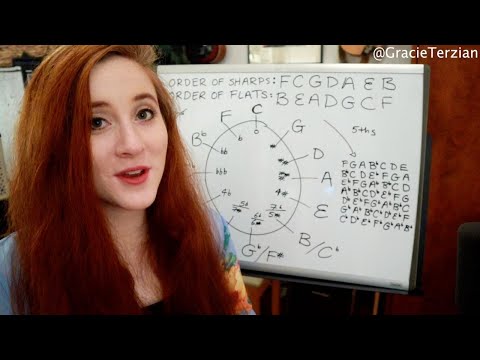
Circle of 5ths: Easiest Way to Memorize and Understand It
Gracie Terzian · 1.9M views

Sight Singing, Relative Pitch, and Solfege
Brad Harrison Music · 586K views

How to Train Your Ears for Music: Secrets to Pro Ear Training (and What Teaching Taught Me)
Kevin Ure (UreMusic.com) · 9.7K views

30–Min Ear Training Practice to Recognize Notes Instantly
Use Your Ear · 13K views

Important Ear Training Exercise for Guitarists (we need this!)
Sound Guitar Lessons With Jared · 22K views

Ear Training 101 - MASTERING INTERVALS
Rick Beato · 317K views