Single Story Colonies for Honey Production
85K views · Oct 2, 2022 · Pets & Animals

Comments · 167
@AhmedCharfeddine · 1 year ago
I have two remarks.<br>I am in North Africa, and most hives are single deeps.<br>1. Putting the excluder at wrong time causes swarming.<br>2. Adding the super to let the hive expand but using drawn comb only is also dangerous as it can cause swarming.<br><br>The queen in fact "does not like" used frames. It wants new frames. If you put drawn comb, the workers are quicker than the queen. If you use foundation, the queen is quicker and is able to lay before even the bees are able to finish it while in other situation whenever the queen tries to look for empty cell, it finds almost evry cell with some drops of honey or pollen.<br><br>So putting drawn comb is similar to having blocked growth, and having constrained the queen. That leads to swarming. <br>In addition, it also thought that yound workers want to draw comb. So if you do not give it foundation, it is kind of jobless, so it swarms.<br><br>Evry beekeeper, depending on the region, needs to allow his hive to expand (expansion = foundation frames) but the moment the bees shift to honey (new foundation are drawn very slowly), then we can shift to inserting drawn comb and evenb remove unfinished frames and put the excluder.<br><br>In my region many do not use the excluder. If you put frames in the super, the bees will enlarge them and put only honey there, most often.<br>When we use excluder, we just insert it for merely few days, then we remove it. Those few days are enough for bees to go to evry cell and start putting honey. Of course, no cell might be full with honey but the goal is achieved, the queen if she ever wants to go up she can't find where to lay, so she goes back. By doing so, the bees are not hampered by the excluder and they can move in/up very fast.<br><br>We also use some other techniques but they only apply to our harsh environment.
11
@BKPR-78 · 3 years ago
Been running singles for about 6 years now. They are definitely more demanding, if they aren’t hungry they are plugging out. That being said, I’d never go back to doubles. <br>I’ve found they absolutely will swarm after the flow starts. This year I even moved 4 empty frames in the middle of the brood box at the beginning of our flow and they still managed to fill them with nectar and build swarm cells. In my experience an empty above an excluder before the flow starts works best in our area, with way less work. I’ve also had years when I allowed her to run up into the super and lay, then shake down and put excluders in. The result was two heavy filled frames on the outsides of both the super and brood chamber. Putting the excluder in at this point essentially reduced the open area to lay to 6 frames. Instant swarm impulse.
3
@Justdoingstuff83 · 8 months ago (edited)
The benefit i see of double deeps thru winter is this;<br>When spring comes I need those drawn combs with the extra honey and pollen to make splits. <br>Sure I could wait a few weeks/feed them/both.... but I believe having empty brood combs with honey/honey/pollen/Frames makes it easier for what I want.<br>Once I make my splits I made 4 frame nucs so if they do well I can just pop on a honey super and move on I dont have to worry too much, itll just turn into a 2 colony hive, like a keepers hive but no frills.
1
@aidanquick3151 · 3 years ago
Great video, I've definitely seen better results from double brood boxes that we turn into singles when the flow starts. Mega colonies!
7
@mikerevendale4810 · 1 year ago
That's a great presentation! My hive management has changed greatly during my 40 years of beekeeping, thanks largely to such presentations. <br> Doubles with upper ventilation used to be the standard; and when spring arrived the bottom box was almost always empty.<br> Today I overwinter insulated, ten frame, single deeps without upper ventilation. That change resulted in lower winter losses, much less honey consumption, and epic brood nest expansion in late winter/early spring. <br>I'll definitely be sharing this video. Thanks!
3
@BrownAndDaughters · 3 years ago
You know, I ended up doing this on my own by accident this year. It just seemed like a good idea....I had no idea this was an actual method. I'm so happy to have an organized and simple outline to better guide me. Thank you!
16
@davidlewis4179 · 3 years ago
I was expecting to see Bob not Frank from Wilkes-Barre! With Mann Lake being less than 5 minutes off I-81 I've stopped there every time I go to see our grandkids south of Harrisburg since becoming a beekeeper. Frank talking bees has been one of the highlights of my (4 years) beekeeping career.
1
@MrBeachbums5 · 3 years ago
Great information! Thank you so much for sharing!
2
@dadu63 · 3 years ago
This is exactly what I been doing for several years. Thanks for sharing Bobby boy!
3
@OklahomaBeekeeper · 3 years ago
Great video, I run two different configurations as the 40 mile range I have hives are so different here in Oklahoma. I'm half in the edge what we call green country and westward to aired dryer area. I run singles in the east and single and a medium out west. <br> I enjoy seeing videos on both singles and single plus medium configurations. <br> I enjoyed your friend who runs singles with a medium and this one on singles. I don't think people know much about the other options. <br> Thanks again, Bob Binnie.
1
@danno1800 · 7 months ago
That was GREAT! Thank you very much…
3
@davidhorsley4657 · 3 years ago (edited)
Based on Bob's recommendation a month or so ago, I've been feeding 1:1.4 syrup this fall. We'll see how they do in spring 2023. Amarillo TX.
Up next
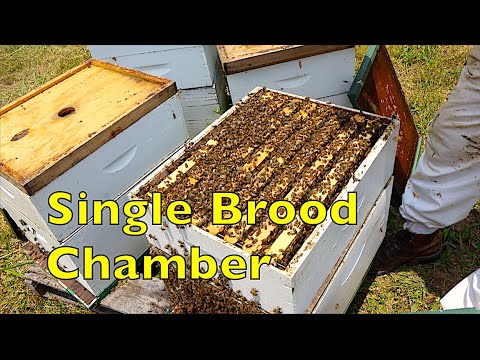
A Problem With Single Story Bee Colonies
Bob Binnie · 128K views

Preparing Bee Colonies For Winter / 3 Crucial Components
Bob Binnie · 30K views

Which Brood Chamber is Best?
Bob Binnie · 30K views

Running Single Deeps to Increase Honey Production
Mann Lake Bee Supply · 68K views

15 Old Beekeeping Tricks Grandma Never Wrote Down
Luke Beiller · 2.7K views

How I process my honey and store my honey supers chemically free over the winter.
Don Chesak · 17K views

Preparing Our Colonies For Winter & Rainy Day Chores
Bob Binnie · 69K views

Expanding Your Apiary
Bob Binnie · 193K views

Single Hive Management Explained
a Canadian Beekeeper’s Blog · 320K views

Best Bees For A Beginner Beekeeper
Duck River Honey · 20K views

Should You Double Brood Your Bees? A Clear Guide To When Double Brood Helps And When It Doesn't
Black Mountain Honey · 43K views

Double Screen Boards for Increased honey Production with Bob Binnie:
Colorado State Beekeepers Association CSBA · 35K views

Don't Split! Get a big honey crop with the Demaree method
Beekeeping with The Bee Whisperer · 175K views

Splitting Colonies 2023
Bob Binnie · 146K views

The Chemistry Behind Feeding Bees Part 1
Bob Binnie · 90K views

Why Managing Bee Hives as Single Brood Chambers Works
Devan Rawn · 438K views

Thoughts on Single Brood Management
Bees in the Weeds · 19K views

Expanding Your Apiary Part 1
Bob Binnie · 107K views

Using Swarm Cells For Splitting
Bob Binnie · 182K views
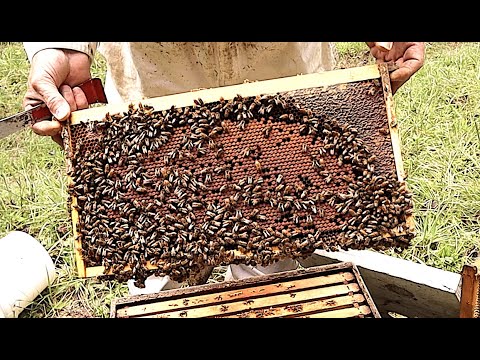
How We Prepare Bees For Winter Part 1
Bob Binnie · 169K views

Checkerboarding (More Honey, Fewer Swarms)- Dick Brickner Interview
Duck River Honey · 79K views

Single Brood Chamber Management Part 1
Sawmill Charlie's Bee Farm · 4K views

Single Brood Chamber Management: Why I Switched
Beekeeping University · 37K views

Hobbyist to Sideliner – Jacob Osborne’s Beekeeping Journey
Mann Lake Bee Supply · 87K views

What Flow Don't Want You to Know
Hoocho · 603K views

Single Brood Chambers - Fall and Winter
University of Guelph Honey Bee Research Centre · 37K views