00:00 — Why can't China copy Nvidia?
01:06 — Huawei, the Ascend 910 and the TSMC cutoff
02:18 — The four layers of an AI chip
03:16 — PART 1: Export controls, from the A100 to the H20
04:49 — The language problem: CUDA
05:49 — PART 2: SMIC's 7nm surprise and the factory gap
07:18 — DeepSeek and the $589 billion day
08:22 — PART 3: Huawei's roadmap and open-source CANN
10:43 — Moore Threads: copying the language
12:09 — Why can't China just copy it?
13:38 — 600,000 H200 chips stuck in Hong Kong
14:35 — Why China blocks the chips it needs
15:53 — Does China have a real shot?
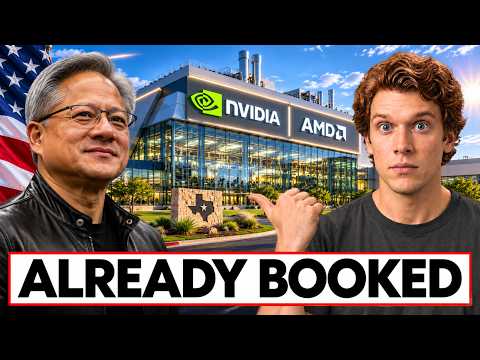
Why can't China copy Nvidia? China builds much of the world's electronics, launched a $47 billion chip fund and has Huawei, SMIC and DeepSeek. Yet Nvidia once held about 95% of China's AI chip market. This is the real story of the US-China chip war, and why 600,000 Nvidia H200 chips are sitting in Hong Kong.
You were told China can copy anything it gets its hands on. The truth is that an AI chip isn't one thing to copy. It's four layers stacked together: the design, the factory, the memory and the software. Miss one and the other three are worthless. The real villain isn't one export ban. It's an entire stack that no single country has ever built alone.
Everything in this video is based on documented facts: US Commerce Department export rules, teardowns by TechInsights, Reuters reporting, Huawei's public roadmap and Nvidia's own financial results.
RIGHT NOW, AROUND 600,000 NVIDIA H200 CHIPS ARE REPORTEDLY SITTING IN HONG KONG, APPROVED BY WASHINGTON AND BLOCKED BY BEIJING. JENSEN HUANG HAS JUST RESIGNED, NVIDIA HAS JUST REPORTED $115.8 BILLION IN ONE QUARTER WITHOUT CHINA, AND HUAWEI'S ASCEND 950 IS GOING GLOBAL. IF YOU WANT TO UNDERSTAND WHO WINS THE AI RACE, YOU NEED TO SEE THIS BEFORE THE NEXT HEADLINE. MOST PEOPLE STILL THINK CHINA IS JUST TRYING TO COPY NVIDIA. IT ISN'T.
China isn't refusing Nvidia's chips because it can copy them. It's refusing them because it can't, not yet, and it knows it never will if its engineers keep speaking Nvidia's language. Every chip that stays out forces developers onto Huawei's software.
The story rests on three pillars: the factory, where SMIC stretches older machines past their limits while ASML's EUV stays out of reach; the language, CUDA, which almost every AI engineer on Earth learned first; and the bet, Huawei's open-source CANN and a government willing to push 1.4 billion people to switch at once. This is the definitive explanation of the China-Nvidia standoff.
The #1 reason Beijing is blocking the Nvidia chips it needs
Why "China can copy anything" is completely wrong about AI chips
How SMIC made 7nm chips without the most advanced Western machines
The truth about DeepSeek and the $589 billion Nvidia crash
The open-source strategy used by Huawei to fight CUDA
Why the 600,000 chips in Hong Kong change everything from now on
The layer almost nobody talks about, and why it decides the chip war
The surprising link between air traffic control and the AI race
REFERENCES
US Commerce Department export controls (October 7, 2022) — the rules that cut China off from Nvidia's A100 and H100
TechInsights teardowns of the Huawei Mate 60 Pro and Ascend chips — SMIC's 7nm process and TSMC-made silicon
Nvidia quarterly financial results (November 17, 2026) — $115.8 billion in revenue and guidance assuming zero data center revenue from China
DISCLAIMER: This video is for educational and entertainment purposes only and is not financial or investment advice. We are not a substitute for a licensed financial advisor. Our mission is to break down the companies, the bets and the power struggles that shape the technology you use every day. See you in the next breakdown.
© CyberPulse 2026. All rights reserved.
#Nvidia #ChinaChips #Huawei #ChipWar #DeepSeek